Vehicle Break-Ins: Don’t Make It Easy for a Thief
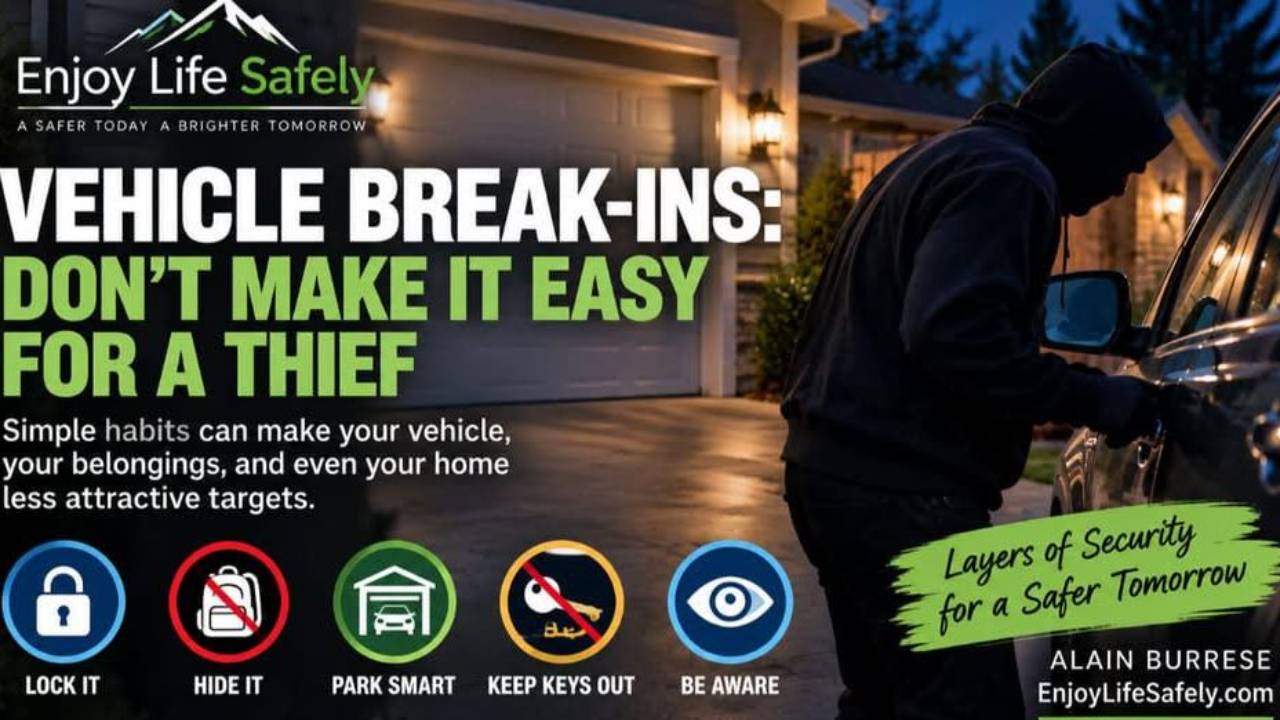
Simple habits can make your vehicle, your belongings, and even your home less attractive targets.
Recently, the Missoula Police Department issued a reminder to the community following reports of criminal trespass to motor vehicles.
Their message was simple: Vehicle break-ins are often crimes of opportunity.
While this particular warning came from police here in Missoula, Montana, this certainly isn't just a Missoula problem. Vehicle break-ins, thefts from vehicles, and vehicle theft happen in communities all across the country.
And that means the advice applies regardless of where you live.
One of the most important concepts I teach when it comes to personal safety is that you don't have to eliminate every possible risk. That's impossible.
What you can do is make yourself, your property, and your home a less attractive opportunity.
Start With the Obvious: Lock Your Vehicle
It sounds almost too simple to mention, but lock your doors every time you leave your vehicle.
Even if you're only going to be gone for a couple of minutes.
A thief checking door handles doesn't necessarily want to smash a window and attract attention. An unlocked vehicle gives them an easy opportunity.
Don't give them one.
And before walking away, make sure your windows are closed and your doors, trunk, and tailgate are secured.
These are small actions that take only seconds.
Don't Leave Valuables in Your Vehicle
Wallets, purses, cash, electronics, firearms, keys, and other valuables should not be left in an unattended vehicle if you can avoid it.
But there's another part of this that people sometimes overlook.
Don't leave things visible that LOOK like they might contain valuables.
A backpack may contain nothing more than gym clothes. A laptop bag might be empty. A shopping bag might contain something worth five dollars.
The criminal looking through your window doesn't know that.
They only see a potential reward.
If something must stay in your vehicle, put it in the trunk or otherwise out of sight. Better yet, do that before you arrive at your destination. Moving valuables into the trunk after you park can advertise exactly where you just put them.
Your Keys Don't Belong in the Vehicle
Never leave your keys or key fob inside your vehicle.
That includes the spare set.
Again, it seems obvious, but people do it.
Turning a vehicle break-in into a vehicle theft shouldn't be as simple as finding the keys inside.
Think About Where You Park
Whenever you have a choice, consider your environment before parking.
Look for areas that are well lit and visible. Consider foot traffic, lighting, cameras, entrances and exits, and whether someone could easily approach your vehicle without being noticed.
This is situational awareness applied to your property.
You're not looking around because you should be afraid.
You're simply paying attention.
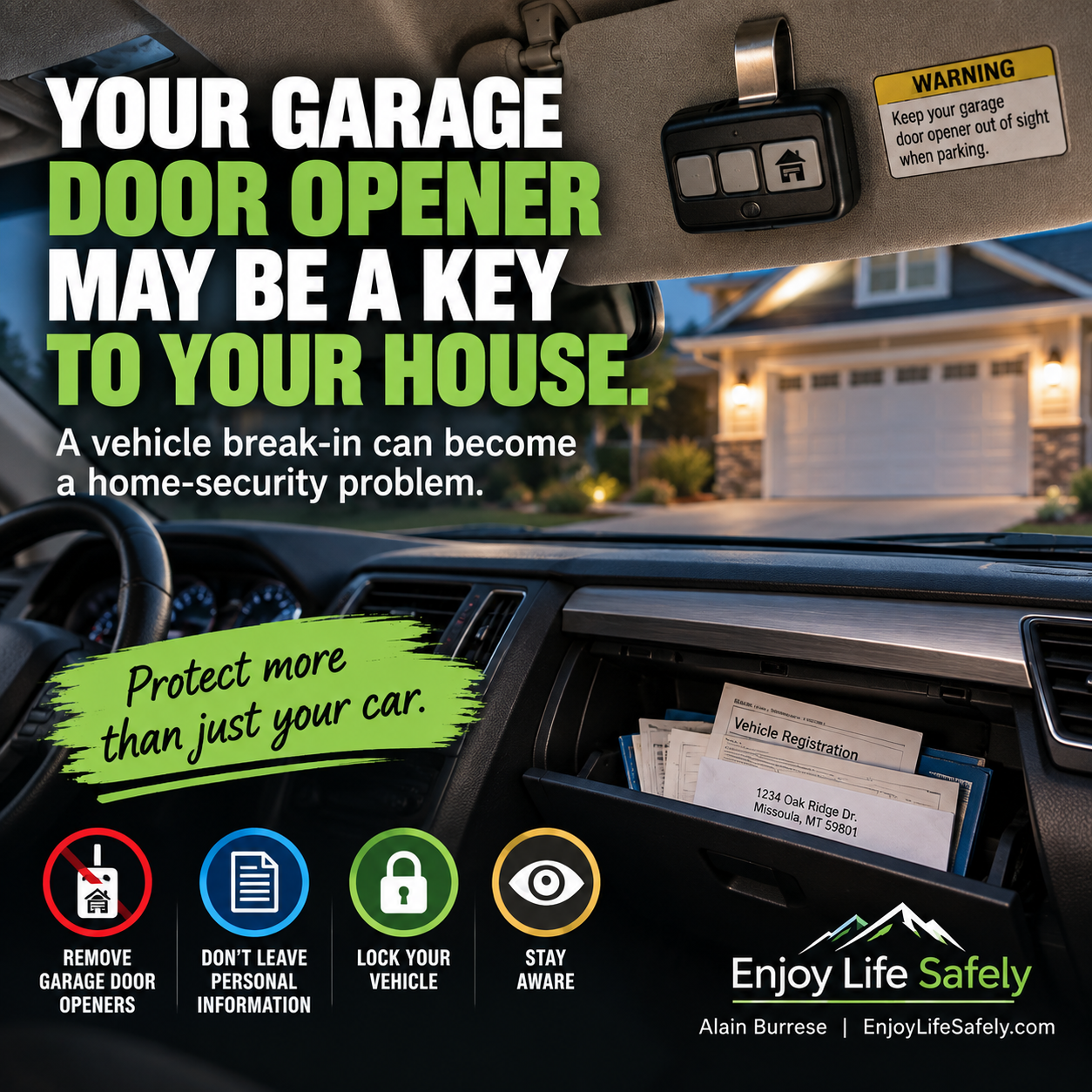
Your Garage Door Opener Can Be a Key to Your House
This was one of the most important points in the Missoula Police Department warning.
Think about what might be inside your vehicle.
You may have registration or other information that identifies where you live. You may also have a garage door opener clipped conveniently to your visor.
Now a criminal potentially has your address and a way to open your garage.
That's no longer just about protecting what's inside your vehicle. It could become a home-security issue.
If your vehicle is regularly parked outside, think carefully about leaving a garage door opener inside it.
And while we're talking about garages, use yours if you have one.
My wife and I are fortunate to have a garage, as well as a fenced property. That gives us additional layers someone would have to get past before reaching our vehicles.
We also have Rocky, our mini Australian Shepherd.
Rocky doesn't need to confront anyone to contribute to our security. His value is that he notices things. If someone is around our property who shouldn't be, there's a pretty good chance Rocky is going to know about it and let us know.
A fence, garage, lighting, locked doors, and an alert dog are all individual layers.
None is perfect.
Together, however, they make things more difficult for someone looking for an easy opportunity.
Don't Advertise What's Inside
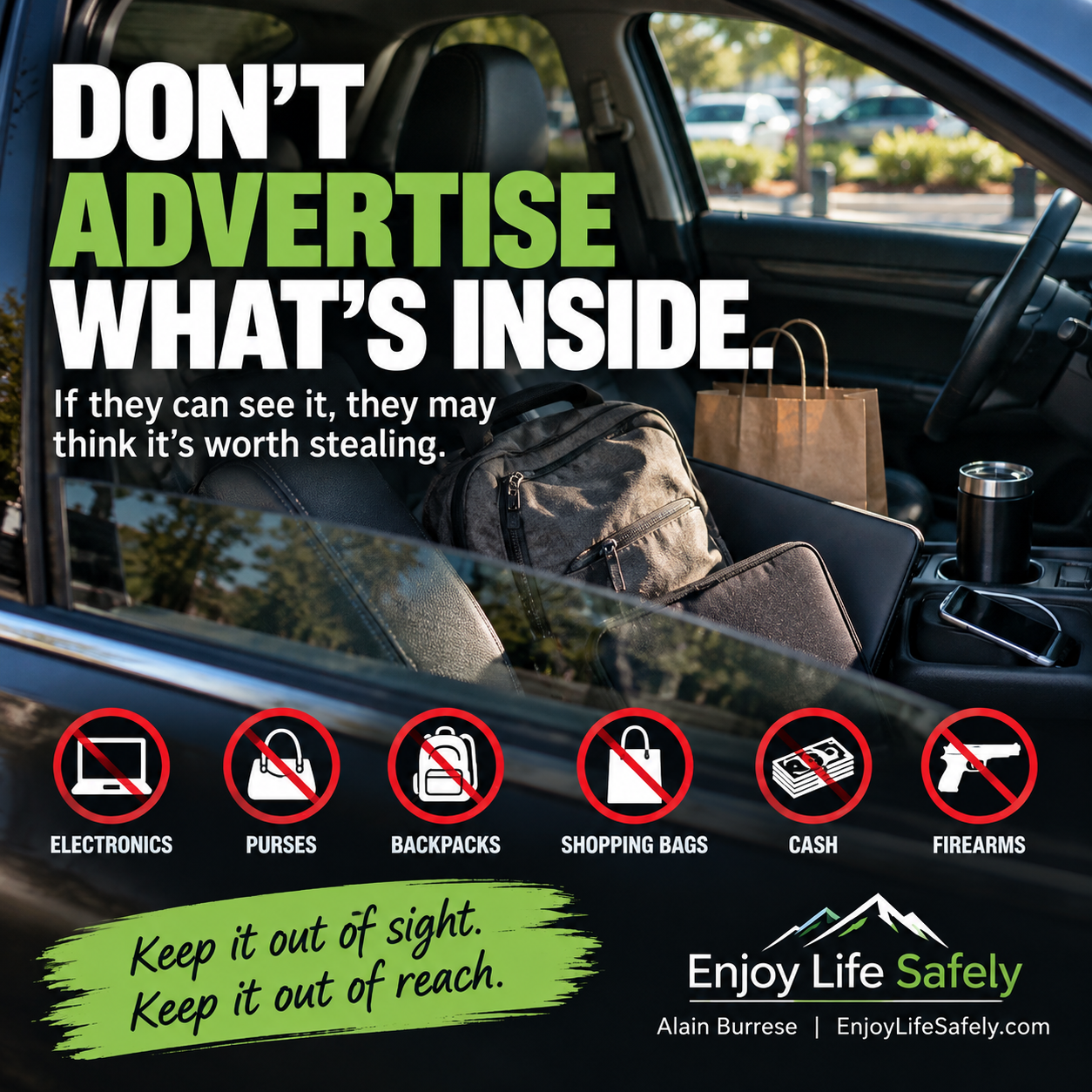
Take a moment to look through your vehicle as if you were someone considering breaking into it.
What can you see?
A purse?
Backpack?
Shopping bags?
Laptop case?
Loose cash?
Expensive sunglasses?
Firearm case?
Even a handful of change sitting in the console?
The question isn't whether you think something is worth stealing.
The question is whether someone looking through the window might think it's worth stealing.
A locked vehicle with nothing interesting visible inside is a much less attractive target.
Don't Forget What Your Vehicle Reveals About You
Protecting your vehicle isn't only about the objects inside.
Think about the information you're leaving behind.
Mail, paperwork, identification, work documents, access cards, keys, and other items can reveal information about where you live or work and potentially provide access to other places.
A thief may initially be looking for cash or electronics. Don't inadvertently give that person something more valuable: access or information.
If You See Something Suspicious, Pay Attention
Missoula Police also encouraged people to report suspicious behavior.
Someone walking through a parking area checking multiple door handles isn't normal behavior. Neither is someone systematically peering into a series of vehicles.
Notice what's happening around you.
If you believe a crime is actually in progress or there is an immediate threat, contact 911. Otherwise, use the appropriate local law-enforcement reporting method in your community.
You don't need to personally confront someone to be helpful.
Be a good witness.
Notice descriptions, location, direction of travel, vehicles, and other useful details while maintaining a safe distance.
Build Layers Instead of Relying on One Thing
There is rarely one magic solution to personal or property safety.
A locked vehicle can still be broken into.
A camera doesn't physically stop someone.
A fence can be climbed.
A garage can be entered.
A dog can't watch everything.
But that's not an argument against any of them.
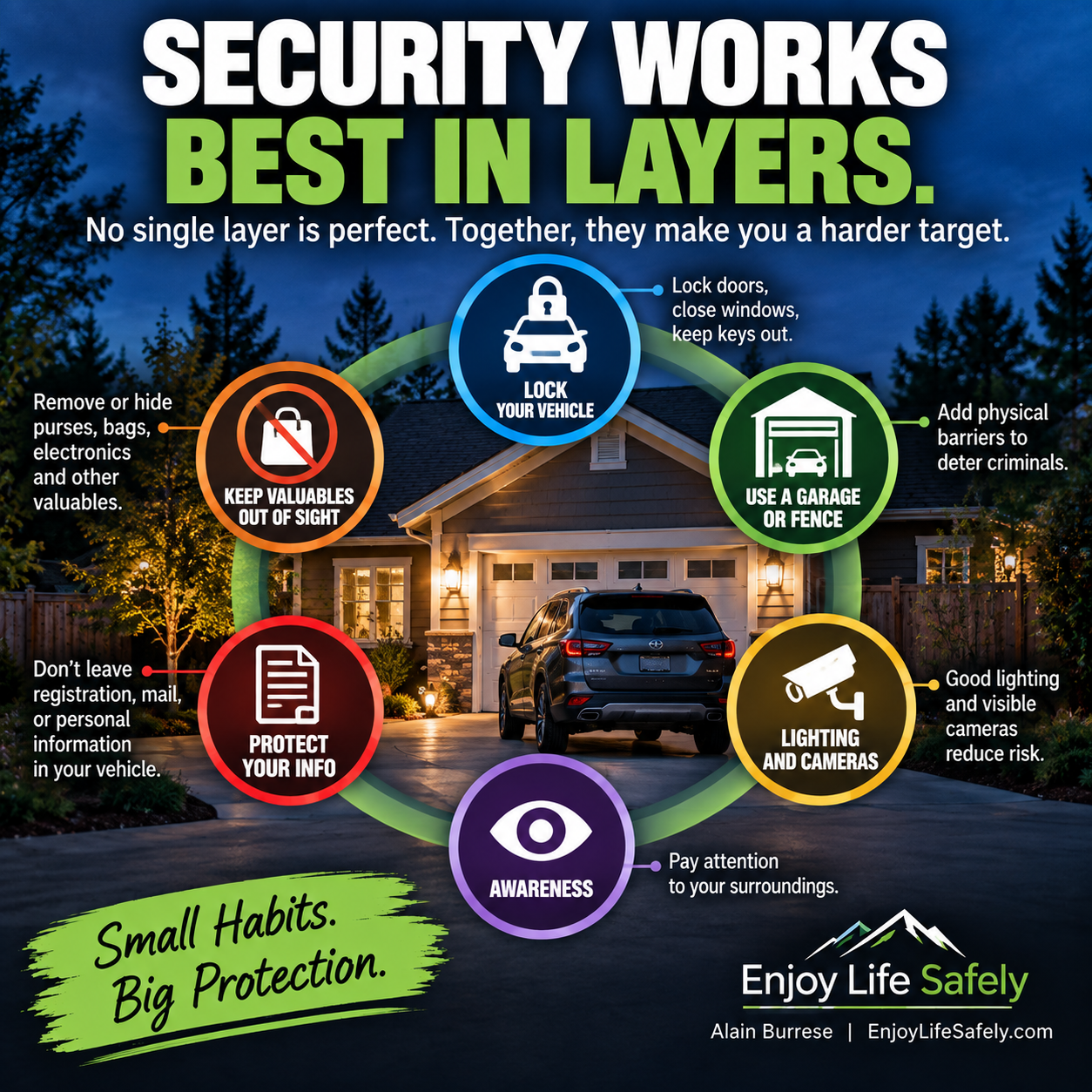
It's an argument for layers.
Lock the vehicle.
Remove the valuables.
Keep belongings out of sight.
Choose better parking when possible.
Secure your keys.
Think about the information you're leaving behind.
Use your garage if you have one.
Use lighting, cameras, fences, alarms, or other security measures where appropriate.
Stay aware.
Each layer makes the criminal's job a little more difficult and may make another vehicle or location look like an easier opportunity.
And that's an important principle of personal safety:
Don't make yourself the easiest opportunity.
You can't guarantee that you'll never become the victim of a crime. None of us can.
But you can develop simple habits that reduce your exposure and make it harder for someone looking for an easy target.
It doesn't require paranoia.
It requires awareness and a few extra seconds.
Be aware. Be prepared. Be safe.
Author