Improvised Weapons: The Mindset Matters More Than the Object
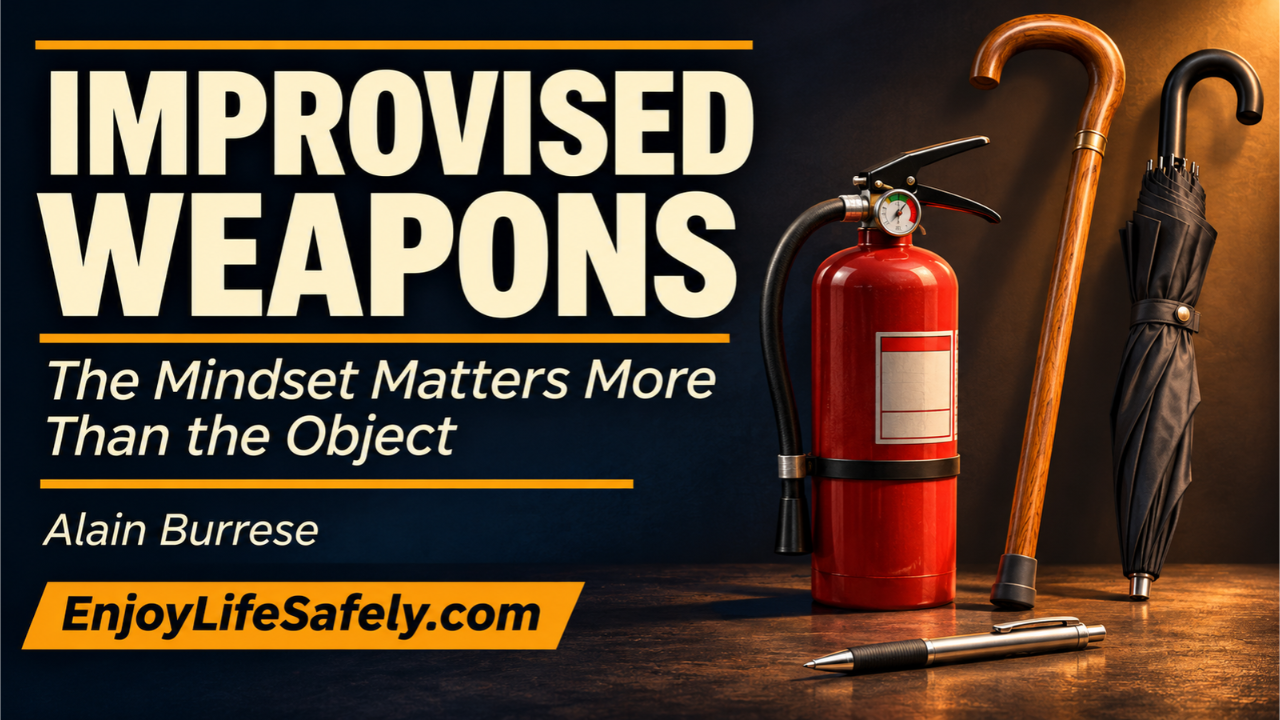
When I teach improvised weapons in my live classes, I emphasize something that sometimes surprises people: improvised weapons are more of a mindset than a collection of objects.
People often want a list. What should I look for? What can I use? Is a cane better than an umbrella? What about a pen or a fire extinguisher?
Those are useful questions. But the most important question comes before any of them: Can you recognize the defensive possibilities in what is available to you?

Start with preparation
Before we go further, let me be clear about something I teach: relying on improvisation is not the best plan.
My preference is to have an appropriate tool designed for personal protection, know how to use it, and train with it. Your choice will depend on your circumstances, what you can legally carry, the places you go, and what you are willing and able to use.
Simply possessing a defensive tool is not the same as being prepared. You need to understand its capabilities and limitations, be able to access it, and develop the skills to use it.
But your preferred tool may not always be available. You may be somewhere you cannot carry it. It may be out of reach when trouble starts. Or you may face a situation you never anticipated.
That is where the ability to improvise becomes valuable.

See possibilities in ordinary objects
Over the years, I have taught people to consider fire extinguishers, canes, umbrellas, pens, and many other everyday objects as potential defensive tools.
The lesson goes beyond memorizing those examples. I want people to understand that an object’s usual purpose does not define every possible use.
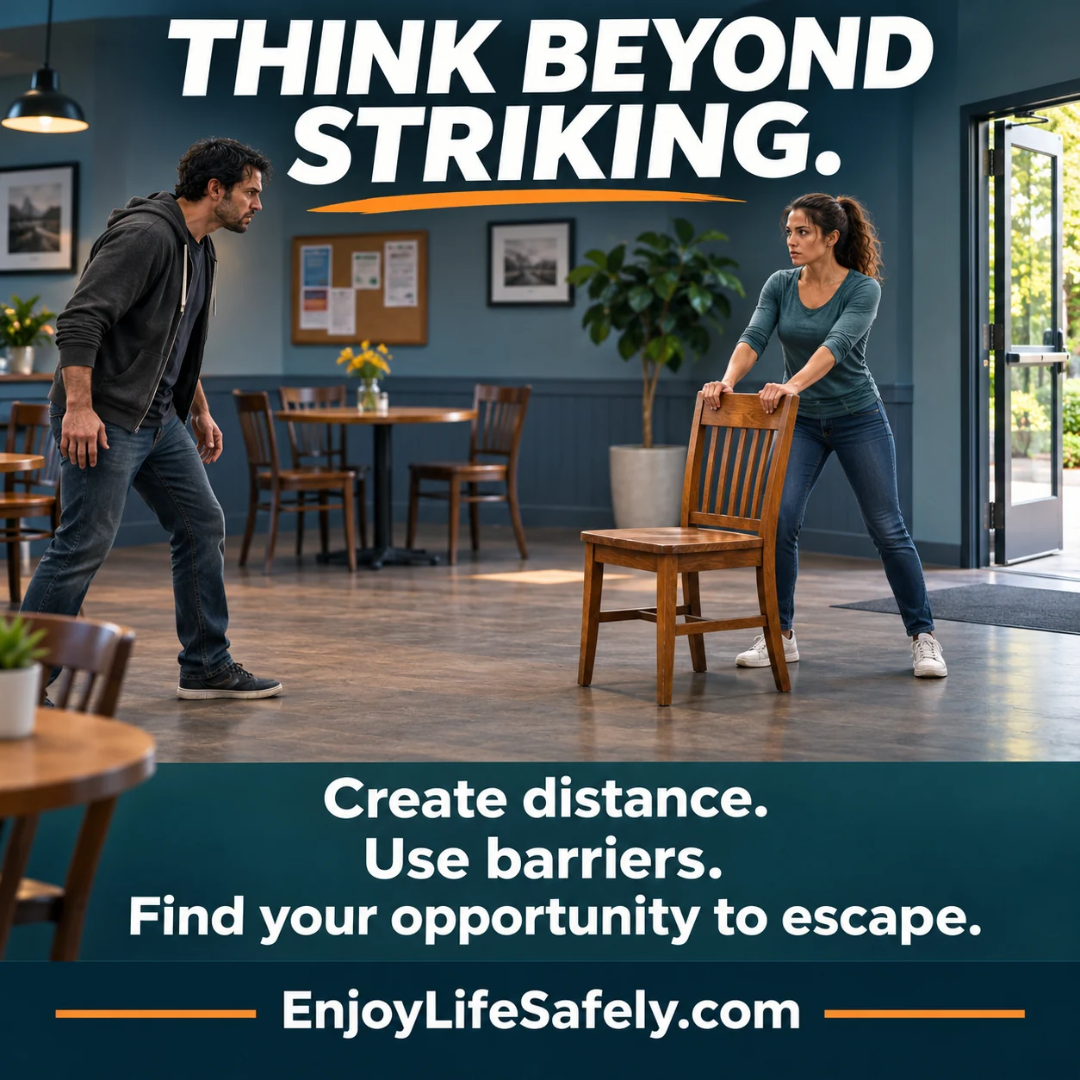
An umbrella keeps rain off your head. A cane helps you walk. A chair gives you somewhere to sit. In an emergency, an ordinary object may also help you maintain distance, put a barrier between you and an attacker, or create an opportunity to escape.
That last point matters. A useful defensive object does not necessarily have to be something you strike with. Something that helps you block access or get away can serve your purpose.
The goal is to protect yourself and reach safety. Keep that goal in mind when evaluating your options.
All objects are not equal
Recognizing possibilities does not mean pretending every object makes an equally effective weapon.
Size, strength, reach, weight, grip, and durability all matter. So do your abilities and the space around you. Something that looks useful may be awkward to handle, difficult to control, or too fragile to depend on.
A small pen and a sturdy cane offer very different capabilities. A fire extinguisher may be available in a workplace, but its weight and your ability to handle it matter. An object across the room may be less useful than something already within reach.
Mindset includes honest judgment. It means seeing both possibilities and limitations.
You do not want confidence built on a movie scene or a clever demonstration. You want practical understanding developed through training.
Train your mind before you need it
You can begin developing this mindset by occasionally looking at familiar surroundings with a different question in mind: What here could help me protect myself or get to safety?
Consider what is within reach, what could provide a barrier, and where you could move. Notice whether retrieving an object would take you away from an available exit.
This does not require walking through life afraid or treating every room as a battlefield. It is simply another part of being aware and prepared.
In training, explore how different objects feel and what their limitations are. Handling something in practice can quickly reveal the difference between an idea that sounds good and an option you can actually use.
Keep your options open
Prepare first. Choose an appropriate defensive tool when your circumstances allow, learn how to use it, and train with it.
Then develop the flexibility to respond when that tool is unavailable.
An improvised object offers no guarantee. Neither does a purpose-built defensive tool. But recognizing an option gives you something to evaluate and potentially use when you need it.
That is what I want people to take from this training: the ability to think, adapt, and act to protect themselves.
The object matters. The mind that recognizes its potential matters more.
Author