5 Tips to Attack Back and Defend Yourself
Avoiding violence is almost always the best option.
If you can recognize trouble early, leave, create distance, put a barrier between yourself and the threat, or de-escalate the situation, do it.
There is nothing weak about avoiding a fight.
You don't need to defend your ego. You don't need to prove how tough you are. And property can usually be replaced.
But sometimes avoidance doesn't work.
Sometimes you can't escape.
Sometimes the attack has already begun.
Sometimes you are protecting another person who can't escape.
And sometimes the threat is so immediate and dangerous that you have to act.
That's when you may have to attack back.
I deliberately use the words attack back rather than fight back. Fighting can imply two people willingly engaging each other. That's not what I'm talking about.
I'm talking about someone attacking you and forcing you to respond.
Your objective isn't to win a fight. It isn't to punish the attacker. It isn't revenge.
Your objective is to stop the threat and survive.
If you're forced into that situation, here are five things that can improve your ability to defend yourself.
Consider Carrying a Defensive Tool
A defensive tool can provide an important advantage when you're facing someone larger, stronger, younger, more athletic, or simply more violent than you are.
But carrying something doesn't automatically make you safer.
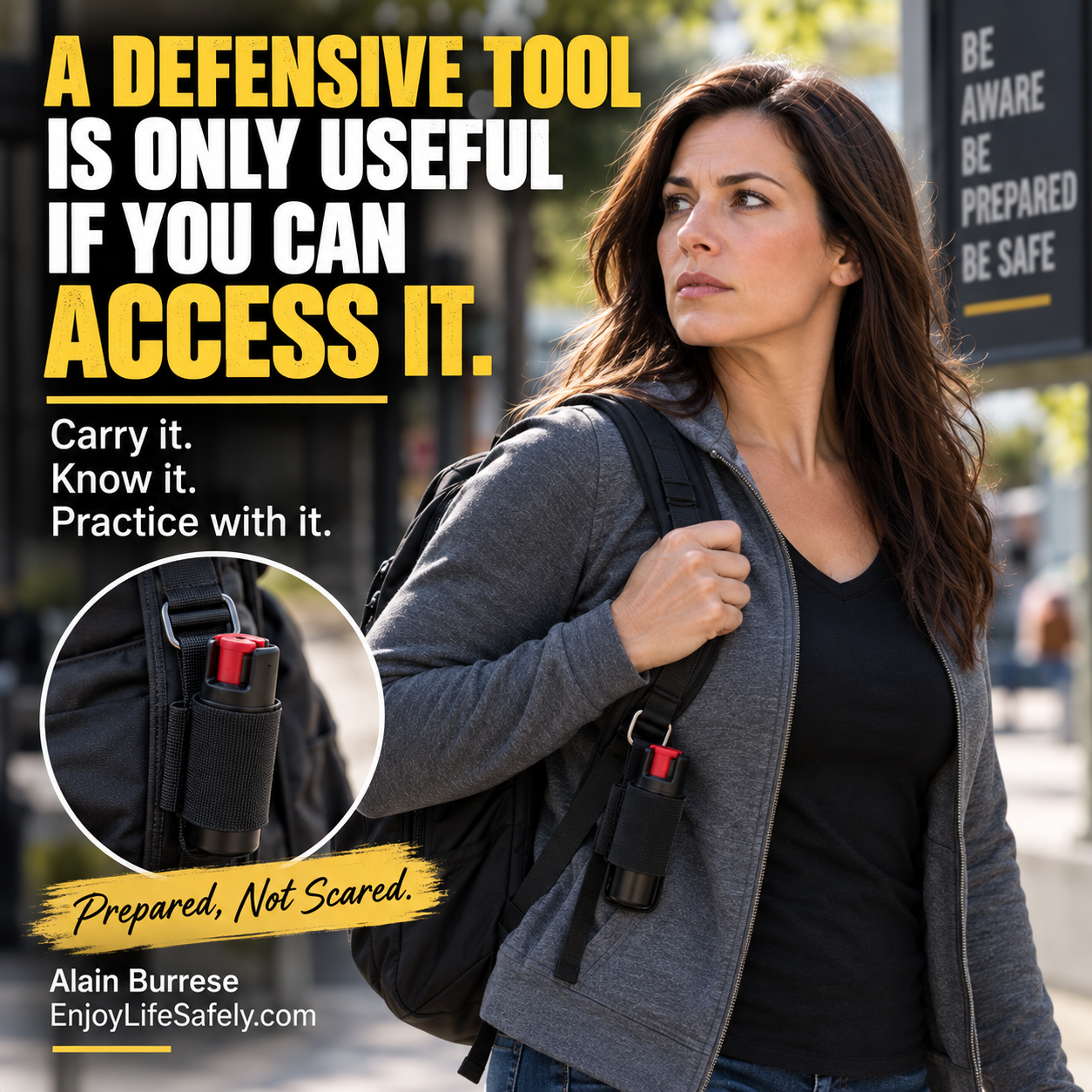
You need to understand the tool, know how to access it, and have practiced using it.
Firearms are one option for people who are legally permitted, properly trained, and willing to accept the tremendous responsibility that comes with carrying one. If you choose a firearm for personal protection, simply knowing how to shoot isn't enough.
You need to understand safe carry, access, deployment, retention, decision-making, and the laws governing defensive force where you live and travel.
There are also less-lethal defensive options.
One I personally recommend is Reflex Protect Presidia Gel, a defensive spray designed to affect the eyes and give you an opportunity to escape or take additional defensive action.
Other options may include conventional pepper sprays and certain impact tools, depending on the laws where you live.
Whatever you choose, don't just buy it and forget about it.
Ask yourself:
Can I access it quickly?
Can I use it under stress?
Have I actually practiced with it?
Do I understand its limitations?
Do I know when its use would be legally and ethically appropriate?
A defensive tool is only one part of your overall personal-safety strategy.
Learn to Recognize Improvised Weapons
What if you don't have a dedicated defensive tool?
Look around.
Your environment may contain objects that can help you protect yourself.
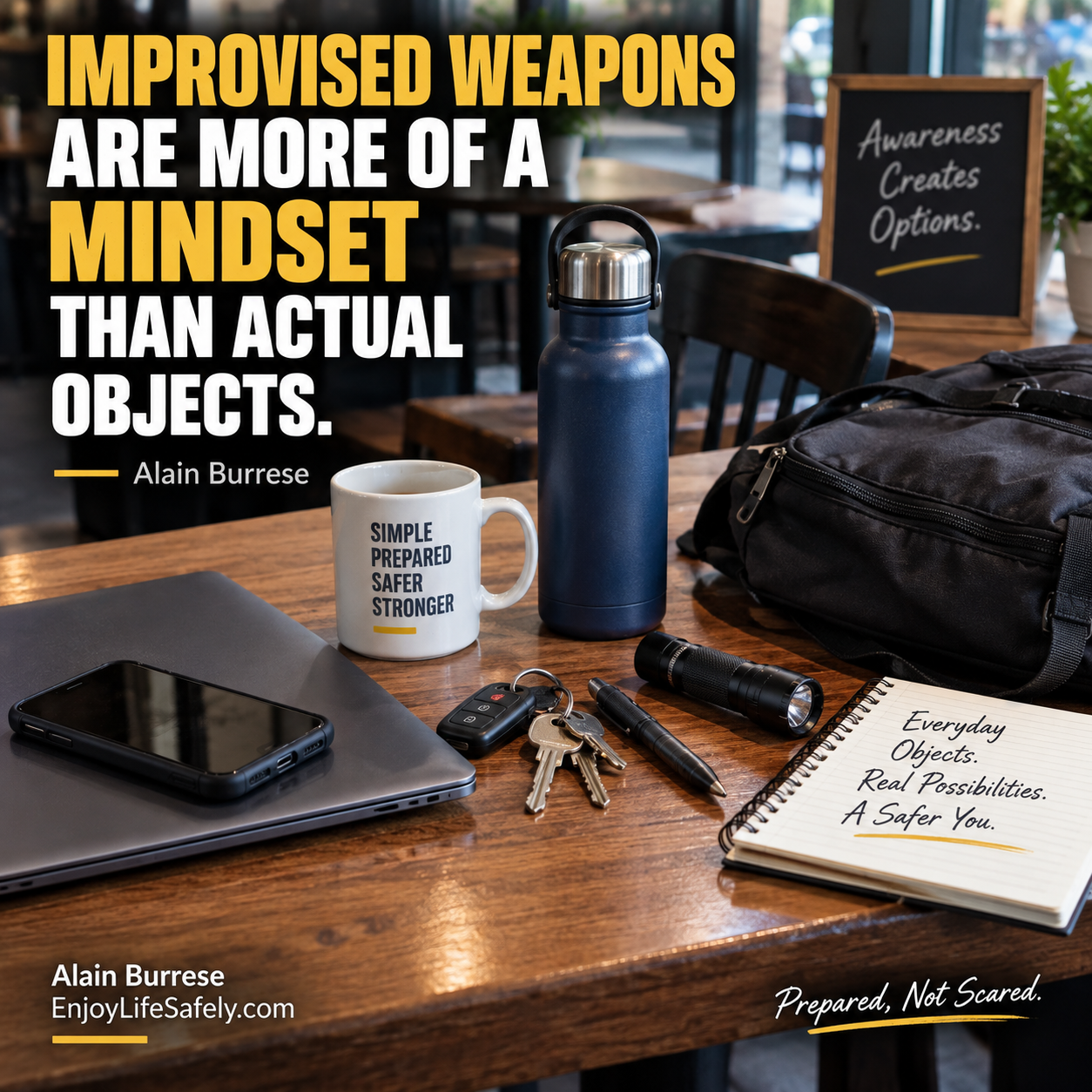
A chair can become a barrier between you and an attacker. A backpack can provide some protection. A flashlight can help you see and may serve other defensive purposes. Everyday objects may help you create distance, shield yourself, distract an attacker, or provide another advantage.
This is why I often say:
Improvised weapons are more of a mindset than actual objects.
The important skill is learning to look at your surroundings differently.
Instead of thinking only about what an object was designed to do, ask:
How could this help me survive right now?
That doesn't necessarily mean striking someone with it.
Sometimes the smartest use of an object is creating a barrier.
Sometimes it's opening an escape route.
Sometimes it's protecting yourself from blows.
And sometimes, when facing an immediate threat of serious harm, an available object may help you stop the attack long enough to get away.
Awareness of your environment gives you options.
Personal Alarms Can Attract Attention
Not everyone wants to carry a defensive weapon or spray.
A personal alarm can be another useful layer in your safety plan.
These small devices can produce an extremely loud noise designed to attract attention. That may startle an attacker, draw witnesses, or make someone reconsider continuing an assault.
But understand what an alarm cannot do.
It doesn't physically stop an attacker.
That's why I wouldn't rely on one as my only means of protection.
Think of it as another tool.
Activate the alarm. Move toward safety. Call for help when possible. And remain prepared to physically defend yourself if the attacker continues.
No single tool works every time.
Good personal safety comes from having multiple options.
Develop Practical Empty-Handed Skills
You may not have time to reach a defensive tool.
You may drop it.
It may malfunction.
Someone may grab you before you can access it.
Or you simply may not be carrying anything.
That's why empty-handed self-defense skills still matter.
You should know how to move, protect yourself, strike effectively, escape common grabs and holds, maintain your balance, and recover if you end up on the ground.
You don't need dozens of complicated techniques.
In fact, under extreme stress, simple is almost always better.
Hands, palms, elbows, knees, and other natural weapons can be used effectively when necessary. Rather than memorizing elaborate combinations, concentrate on a small number of reliable skills that you can perform aggressively under pressure.
And remember why you're using them.
You're not trying to demonstrate martial arts.
You're trying to create an opportunity to escape or stop an immediate threat.
I've trained in martial arts for decades, and I absolutely believe in their value. Martial arts can develop physical skills, confidence, discipline, resilience, and attributes that contribute to effective self-defense.
But practical self-defense and martial arts aren't always exactly the same thing.
If your primary goal is personal protection, make sure at least some of your training specifically addresses realistic violence, decision-making, stress, and the situations you're actually likely to encounter.
That's one of the reasons I created my Self-Defense Essentials course. I want people to have practical skills they can learn and practice without believing they need to become lifelong martial artists before they can become harder to hurt.
Training matters.
Improve Your Physical Condition
You don't have to look like an athlete to defend yourself.
But physical conditioning helps.
Strength helps.
Balance helps.
Mobility helps.
Speed helps.
And endurance definitely helps.
A violent encounter can be physically exhausting, even when it lasts only a short time. Adrenaline is surging. You're moving explosively. You may be struggling against another person's body weight. You may need to get back to your feet or move quickly to safety.
Being in better physical condition gives you more options.
That doesn't mean the strongest person always wins.
Technique, surprise, positioning, determination, environment, weapons, and many other factors can completely change an encounter.
But improving your fitness is one factor you can control.
And the benefits extend far beyond self-defense.
You don't need to become an elite athlete. Start where you are and work on becoming a little stronger, a little more mobile, and a little better conditioned.
The Most Important Weapon Is Your Mindset
There's something that connects all five of these tips.
Mindset.
A firearm won't help if you freeze and never access it.
Defensive spray won't help buried at the bottom of a purse.
An improvised weapon won't help if you never recognize that it's available.
Physical techniques won't help if you've mentally surrendered.
And fitness won't matter if you're unwilling to act.
You need to make an important decision before violence ever happens:
If I am attacked and cannot escape, I will do what I need to do to survive.
That doesn't mean looking for violence.
It means accepting that violence exists and preparing yourself to respond if it comes to you.
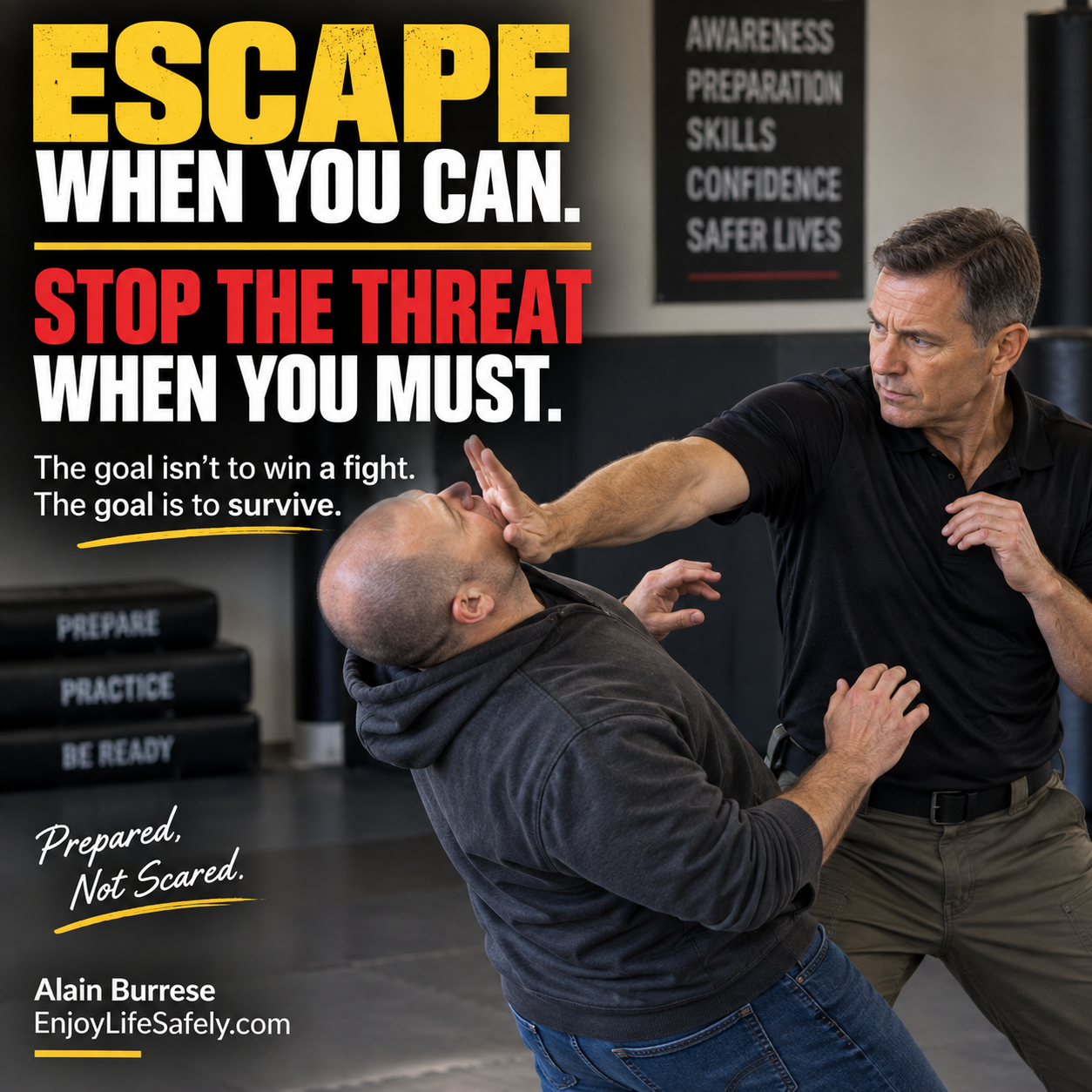
Escape When You Can. Stop the Threat When You Must.
Personal safety isn't about walking around afraid.
It's about developing awareness, skills, tools, and a mindset that give you options.
Avoid trouble whenever possible.
Recognize developing problems early.
Create distance.
Use barriers.
De-escalate when appropriate.
Escape when you can.
But understand that there may be situations where those options aren't available.
If someone is attempting to seriously injure or kill you or another innocent person, simply trying to escape may no longer be enough. You may have to take decisive action to stop the threat.
And if you're injured during the attack, that doesn't necessarily mean the attack is over.
You may still have to keep going.
Keep thinking.
Keep moving.
Keep looking for opportunities.
Keep attacking back until you can safely disengage.
The goal isn't to win.
The goal isn't to teach someone a lesson.
The goal is to survive and return home safely.
Be aware. Be prepared. Be safe.