The Power of the Elbow Strike: One of the Best Self-Defense Tools at Close Range
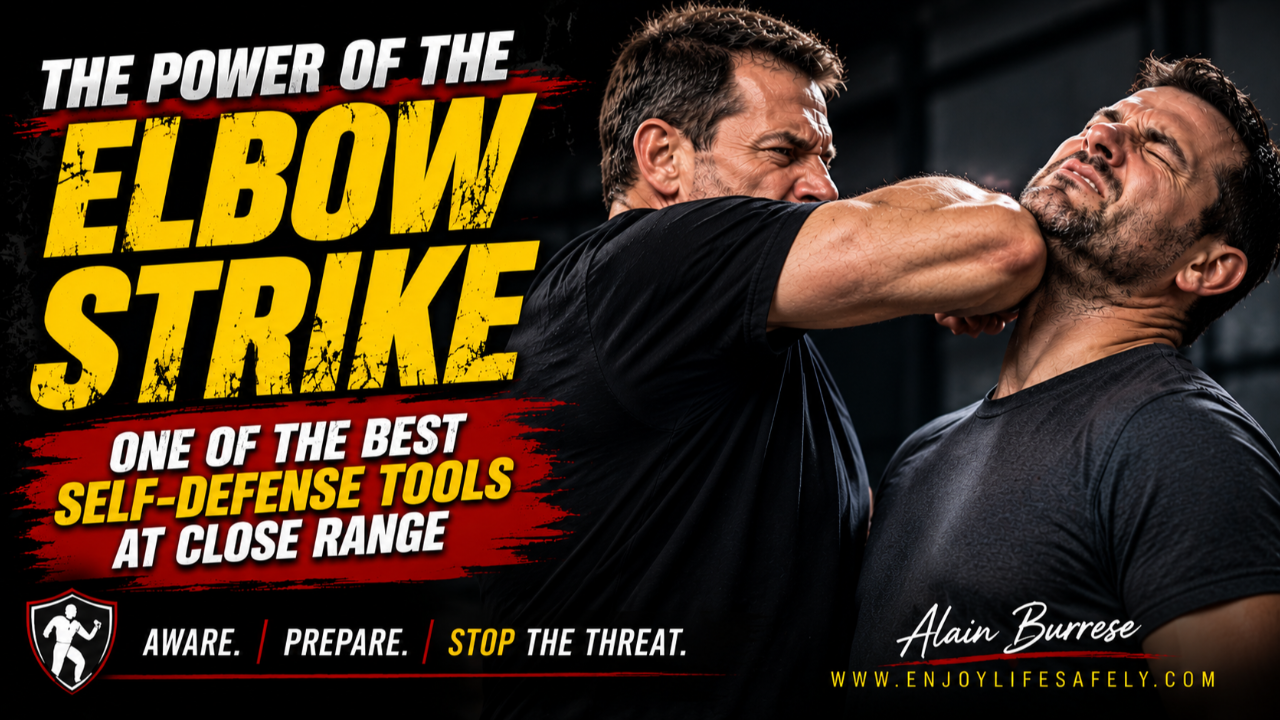
Years ago, while visiting Thailand, I attended a Muay Thai fight that left a lasting impression on me.
One fighter landed a perfectly timed elbow strike on his opponent's chin. The other fighter dropped instantly, completely unconscious. Two attendants carried a small stretcher into the ring, rolled him onto it, and carried him away so the next fight could begin.
I wasn't surprised that the elbow knocked him out—I already knew how effective elbow strikes could be. What stayed with me was just how quickly the fight was over. One well-placed strike ended the match instantly.
While I hope you never have to defend yourself, understanding how and when to use an elbow strike could make a tremendous difference if someone attacks you at close range.
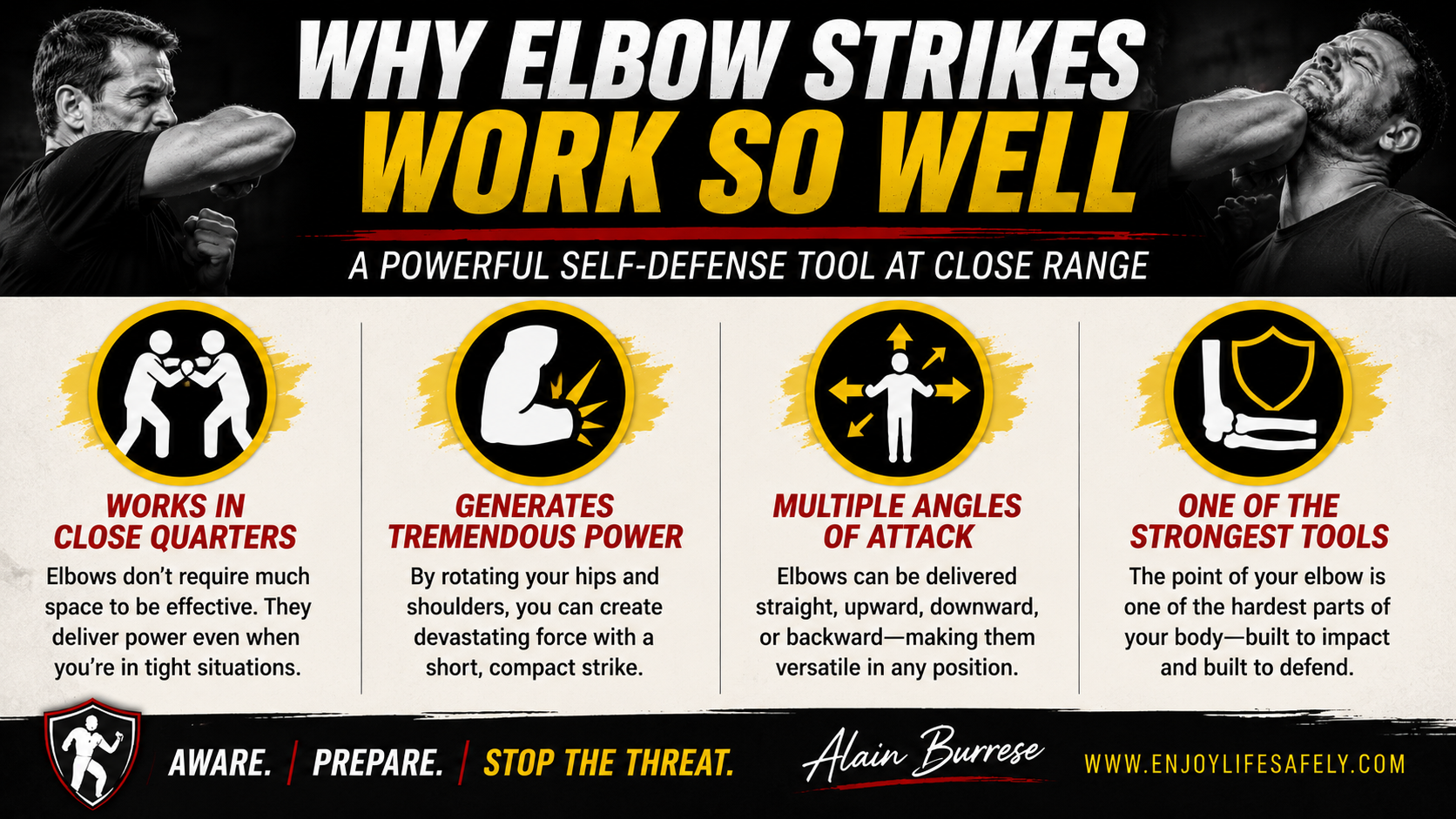
Why Elbow Strikes Work So Well
Many people immediately think of punches or kicks when they think about self-defense. Those techniques certainly have their place, but real attacks often happen much closer than people expect.
When someone grabs you, crowds your space, or pins you against a wall, your elbows become one of your best defensive tools.
They Generate Power at Close Range
Unlike a punch, an elbow doesn't require much room to be effective. Even with very little space, you can generate significant force by rotating your hips and shoulders into the strike.
That's why elbows are so valuable when an attacker is within arm's reach.
Your Elbow Is Built for Impact
The point of the elbow is one of the strongest and hardest parts of the human body. When used correctly, it can deliver tremendous force that may stun an attacker and create an immediate advantage.
The goal of self-defense isn't simply to throw a powerful strike. The goal is to stop the threat. Sometimes that means creating an opportunity to escape. Other times, it means continuing to defend yourself until the threat has ended. The appropriate response depends entirely on the circumstances.
They Can Be Delivered from Different Angles
One advantage of elbow strikes is their versatility.
Depending on your position, you may strike:
- Straight across
- Upward
- Downward
- Backward
This makes elbows useful whether you're standing, clinched with an attacker, or defending yourself in tight spaces.
How to Deliver an Effective Elbow Strike
Good technique matters more than brute strength.
Keep these principles in mind:
- Stay balanced with your feet underneath you.
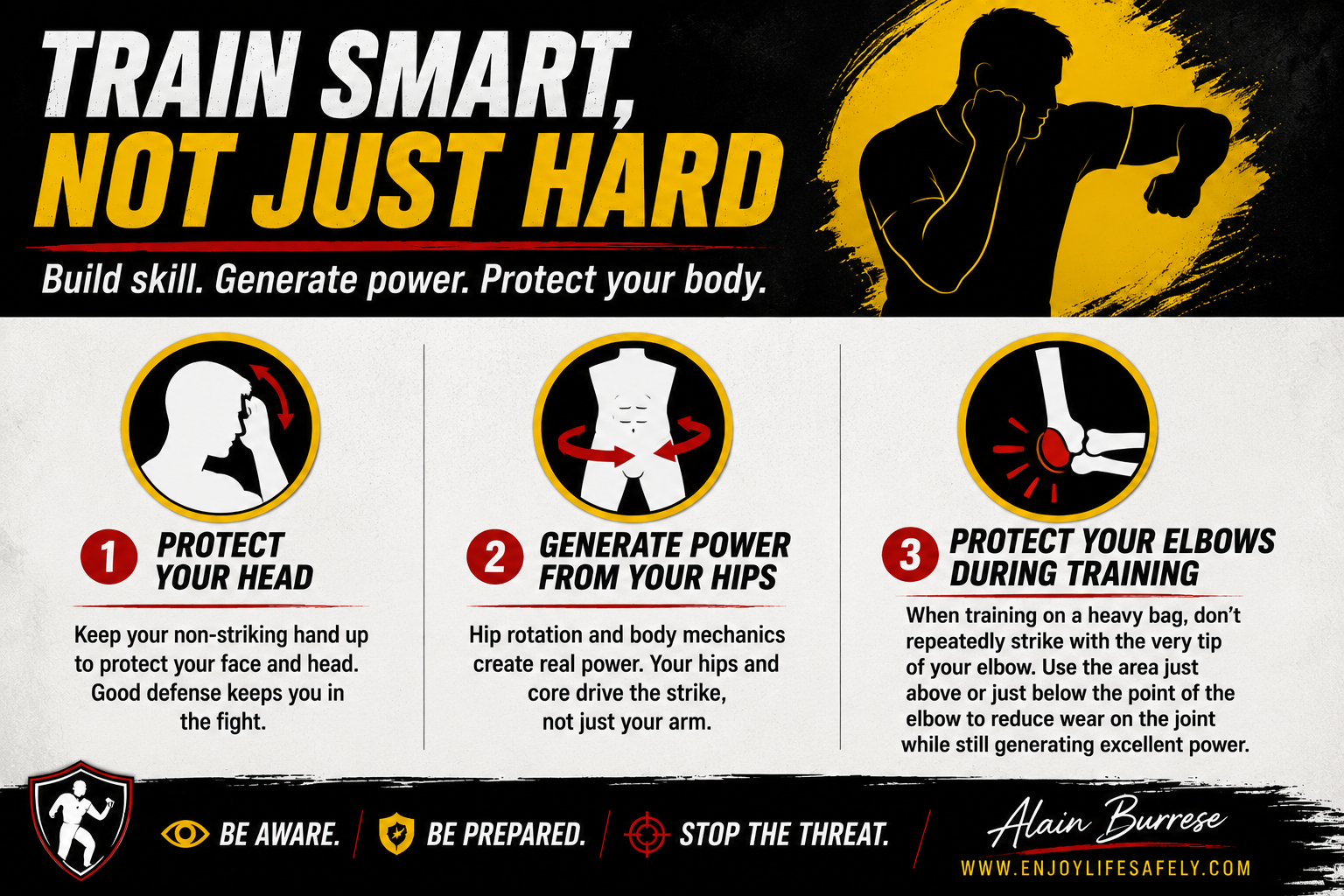
- Protect your head with your free hand.
- Rotate your hips and shoulders to generate power.
- Keep your elbow close to your body as you begin the strike. A compact motion is faster, more powerful, and gives your attacker less warning before impact.
- Strike vulnerable targets, such as the chin, jaw, nose, temple, or ribs, when legally justified and necessary to stop the threat.
After delivering an elbow strike, quickly assess what happened. If you've created an opportunity to escape safely, leave immediately and call for help. If the attacker continues the assault or innocent people remain in danger, you may need to continue defending yourself until the threat has stopped. Your objective isn't simply to land one strike—it's to stop the threat using only the level of force that is reasonable and legally justified under the circumstances.
Practice Smart, Not Just Hard
Like any self-defense skill, an elbow strike becomes more effective through consistent practice. Work with a qualified instructor, practice on focus mitts or a heavy bag, and train from realistic positions instead of only standing at a distance. Repetition develops confidence and helps your body react more naturally under stress.
One lesson I teach in my Self-Defense Essentials course surprises many students. Years ago, an experienced martial artist shared a piece of advice that I've never forgotten. He told me that if I wanted to keep training for decades, I needed to protect my elbows during practice.
When working on a heavy bag, avoid repeatedly striking with the sharp point of your elbow. Over time, that constant impact can take a toll on the joint.
Instead, make contact with the area just above or below the point of the elbow, depending on the angle of the strike. On a forward elbow, the contact area is slightly closer to the forearm. On a backward elbow, it's slightly closer to the triceps. You'll still generate excellent power while reducing unnecessary wear on your elbow over years of training.
That's a small adjustment, but small adjustments practiced consistently often make a big difference over a lifetime of martial arts training.
Build Skills You Can Rely On
Learning a technique is only the first step. Developing good judgment, understanding when force is legally and ethically justified, and practicing realistic scenarios are just as important.
Those are all principles I emphasize throughout my Self-Defense Essentials course. Beyond individual techniques like elbow strikes, you'll learn practical skills for awareness, avoidance, escapes, striking, and making sound decisions under pressure so you're better prepared to protect yourself and the people you care about.
Final Thoughts
The elbow strike is one of the simplest and most effective close-range self-defense techniques you can learn. It requires very little space, delivers tremendous power, and can be an invaluable tool when you're suddenly attacked.
Like any self-defense skill, however, its effectiveness depends on proper training and consistent practice.
Train realistically. Train consistently. Train wisely.
Build the confidence that comes from knowing you have the skills to protect yourself and those you care about.
Enjoy life safely.