Respect Nature: How to Safely Enjoy Wildlife From a Distance
There are few things better than encountering wildlife while you're out enjoying nature—especially when the encounter is unexpected.
Yesterday, my wife and I were hiking with Rocky on one of our favorite mountain trails. It's a place we hike regularly and where Rocky can often be off leash. He loves exploring the woods and attempting to catch chipmunks.
I say attempting because the chipmunks seem to have a pretty solid winning record.
As we were hiking up the trail, we spotted some wild turkeys ahead of us.
That immediately changed things.
We called Rocky back and put him on his leash. We didn't want him chasing or bothering the turkeys. And from a purely practical standpoint, those are pretty big birds. I wasn't particularly interested in finding out what might happen if Rocky actually caught up with one.
We continued up the trail and eventually let Rocky off leash again.
A little while later, we encountered something considerably bigger than a turkey.
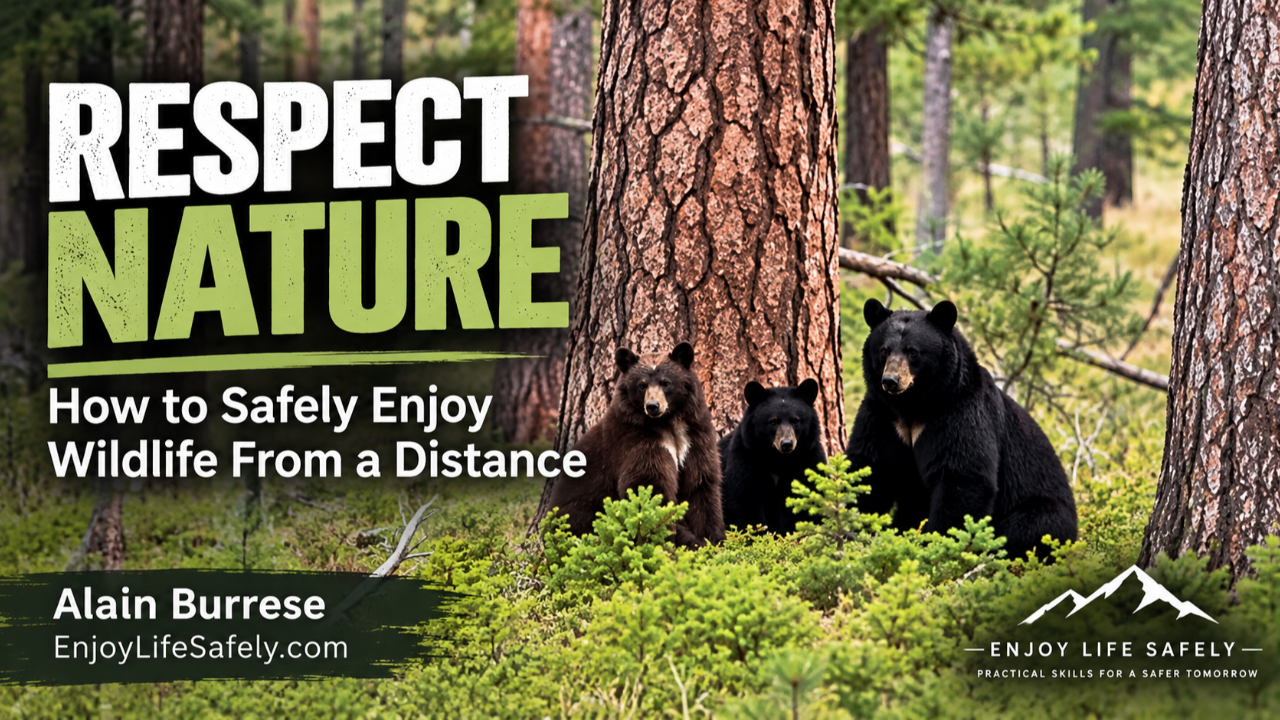
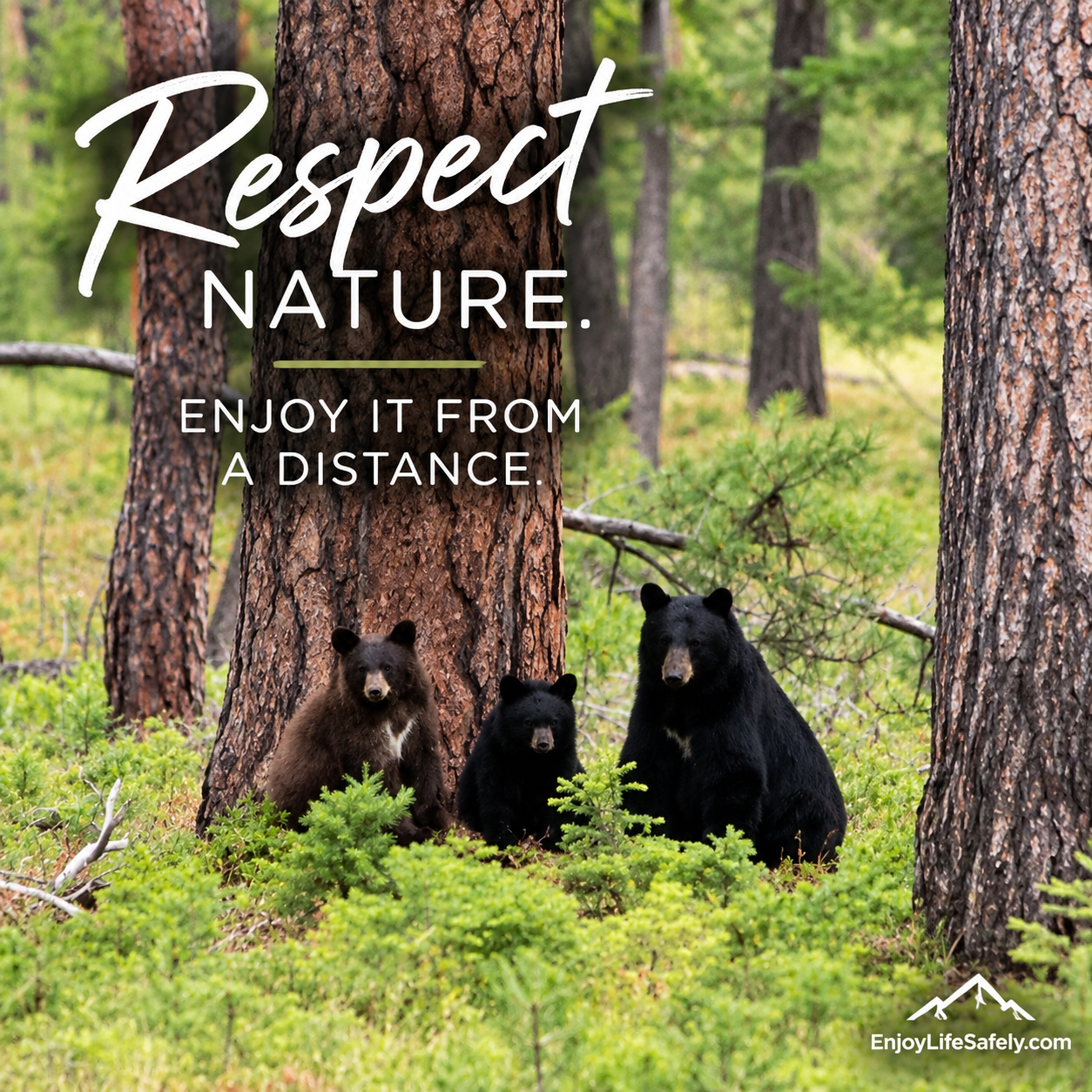
A mama bear and her two cubs.
An Unexpected Wildlife Encounter
The three bears were off the trail near a tree. Fortunately, they were far enough away that Rocky hadn't noticed them.
We immediately called him over and put him back on his leash.
Then we stopped and watched.
I pulled out my iPhone and zoomed in as far as I could to take some photographs and video. Even with the phone zoomed all the way in, the bears were still a good distance away.
And that's exactly where we wanted them to be.
The bears didn't seem particularly concerned about us. They were doing what bears do in the mountains, and we had the privilege of getting to observe them.
It was a pretty special moment.
But we didn't need to make it more "special" by getting closer.
A Better Picture Isn't Worth a Worse Decision
It would have been easy to think, If I just went a little closer, I could get a much better picture.
That's where people sometimes get themselves into trouble.
We see stories every year about people approaching wildlife because they want a photograph, selfie, video, Reel, or TikTok. Sometimes they're approaching bears. Other times it's bison, elk, moose, or other large animals.
Whatever the animal, the underlying mistake is often the same.
They prioritize getting the picture over making a smart decision.
Your phone's camera can zoom.
Your legs don't need to.
I was perfectly happy getting whatever pictures and videos I could get from where we were standing on the trail. I didn't need to sneak through the woods and get closer to a mama bear with two cubs.
No photograph is worth unnecessarily putting yourself—or the animal—at risk.
A better picture isn't worth a worse decision.
Wildlife Isn't There for Our Entertainment
One of the things I love about living in Montana is having opportunities to see wildlife in its natural environment.
But there's an important distinction between observing wildlife and interfering with wildlife.
Wild animals aren't actors.
They aren't props for our photographs.
And they aren't there to provide us with social-media content.
When we encounter them, we're entering their environment.
That deserves some respect.
Sometimes the best thing you can do is simply stand where you are, watch, appreciate what you're seeing, and then move along.
You don't have to interact with everything you encounter.
Give Wildlife Space
Different animals require different precautions, and circumstances matter. But one simple principle applies almost universally:
Give wildlife space.
Don't intentionally crowd an animal.
Don't chase it.
Don't corner it.
Don't try to get its attention so it looks toward your camera.
And don't keep moving closer because it hasn't reacted to you yet.
An animal remaining still doesn't mean it wants you there.
Distance gives the animal options, and it gives you options too.
That's especially important when dealing with large animals or a mother with young.
We certainly weren't interested in finding out how close we could get to that mama bear before she decided we were a problem.
Your Dog Doesn't Get to Make the Decision
Rocky loves being off leash on that particular trail, and part of the reason we enjoy taking him there is because he gets some freedom to run around and explore.
But that freedom comes with responsibility.
As soon as we saw the turkeys, he went on the leash.
When we saw the bears, he went on the leash again.
He didn't get a vote.
That's part of being a responsible dog owner outdoors. What might look like a fascinating animal to us might look like something to chase to a dog.
And that can create a bad situation very quickly.
It can disturb wildlife, put the dog in danger, and potentially create danger for the dog's owner as well.
At first, Rocky hadn't even noticed the bears. They were far enough away and down in the vegetation that he simply couldn't see them.
We were perfectly happy keeping it that way.
But that was about to change.
Pay Attention to What the Animal Is Telling You
While we were watching the bears, my wife accidentally stepped on a stick beside the trail.
CRACK!
It was loud.
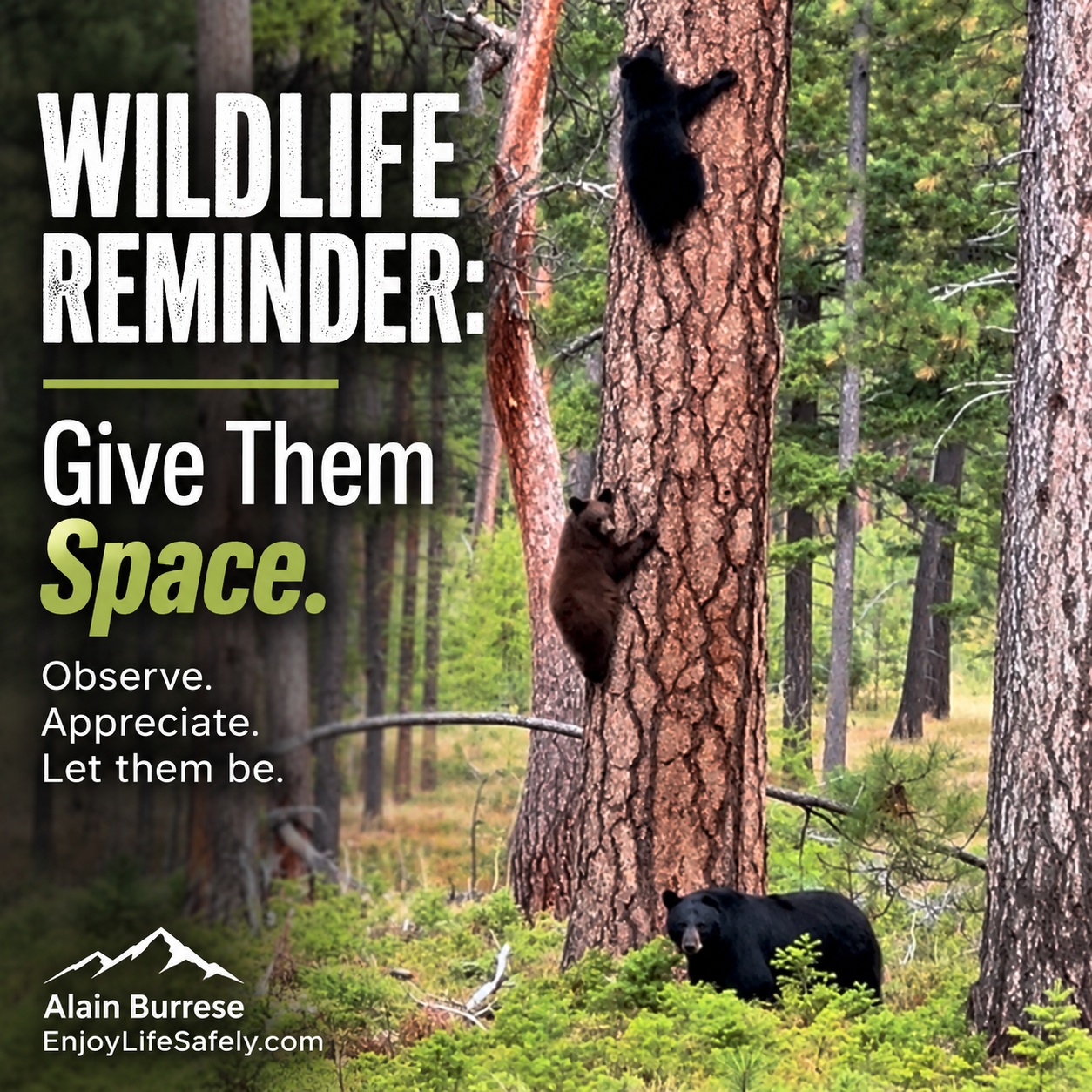
Mama bear immediately stood up, and the two cubs headed up the tree.
That was also the moment Rocky finally saw them.
Until then, he was simply too short to see the bears through the vegetation while they were on the ground. But once those two cubs started climbing the tree, he spotted them and let out a little woof.
Fortunately, he was already securely on his leash.
At that point, we had all the information we needed. The bears had reacted to the noise, Rocky now knew they were there, and there was absolutely no reason for us to hang around and potentially make the situation more stressful.
So we continued down the trail and left them alone.
That's another important part of situational awareness outdoors: pay attention when circumstances change.
The bears' behavior had changed. Rocky's awareness of them had changed. So our behavior changed too.
Sometimes the smart decision is simply to recognize that you've enjoyed the moment long enough and it's time to move on.
The Goal Isn't to Get as Close as Possible
Later in our hike, the trail switchbacked and brought us below the area where we'd originally seen the bears.
We looked back up the mountain and could see them meandering around again.
They had apparently gone right back to doing what they had been doing before that stick cracked.
That's exactly what we wanted.
We didn't need the bears to remember us.
We didn't need an exciting encounter.
We certainly didn't need a story about how close we'd gotten to a mama bear.
We already had a good story.
My wife and I were hiking in the mountains with Rocky and got to spend a few minutes watching a mother bear and her two cubs in the wild.
That's pretty special all by itself.
Respect Nature and Let Wild Animals Remain Wild
Personal safety isn't about avoiding everything that carries some degree of risk.
If it were, we'd never leave the house.
It's about recognizing potential hazards, making good decisions, and reducing unnecessary risk while still enjoying your life.
That applies in cities.
It applies when traveling.
And it applies in the mountains.
Seeing wildlife in its natural environment can be an incredible experience. Take the photograph. Shoot some video. Watch for a while. Appreciate how fortunate you are to be there at that particular moment.
Just don't let the desire for a closer look turn a wonderful experience into a dangerous one.
We came home with some great pictures and videos.
Rocky stayed safe.
We stayed safe.
And the bears got to remain bears.
That's a pretty good outcome.
Respect nature. Respect wildlife. Enjoy them from a distance, and let them be.
That's another way to Enjoy Life Safely.