Practical Self-Defense: Simple Skills That Can Help Keep You Safe
When many people think about self-defense, they picture complicated martial arts techniques, high-level combat skills, or physically overpowering an attacker. The reality is that effective self-defense is usually much simpler than that.
The best self-defense skills are practical, easy to learn, and accessible to people of all ages, sizes, and fitness levels. Whether you're a college student walking across campus, a parent running errands, a professional traveling for work, or a senior citizen enjoying retirement, self-defense should be something you can realistically apply if you ever need it.
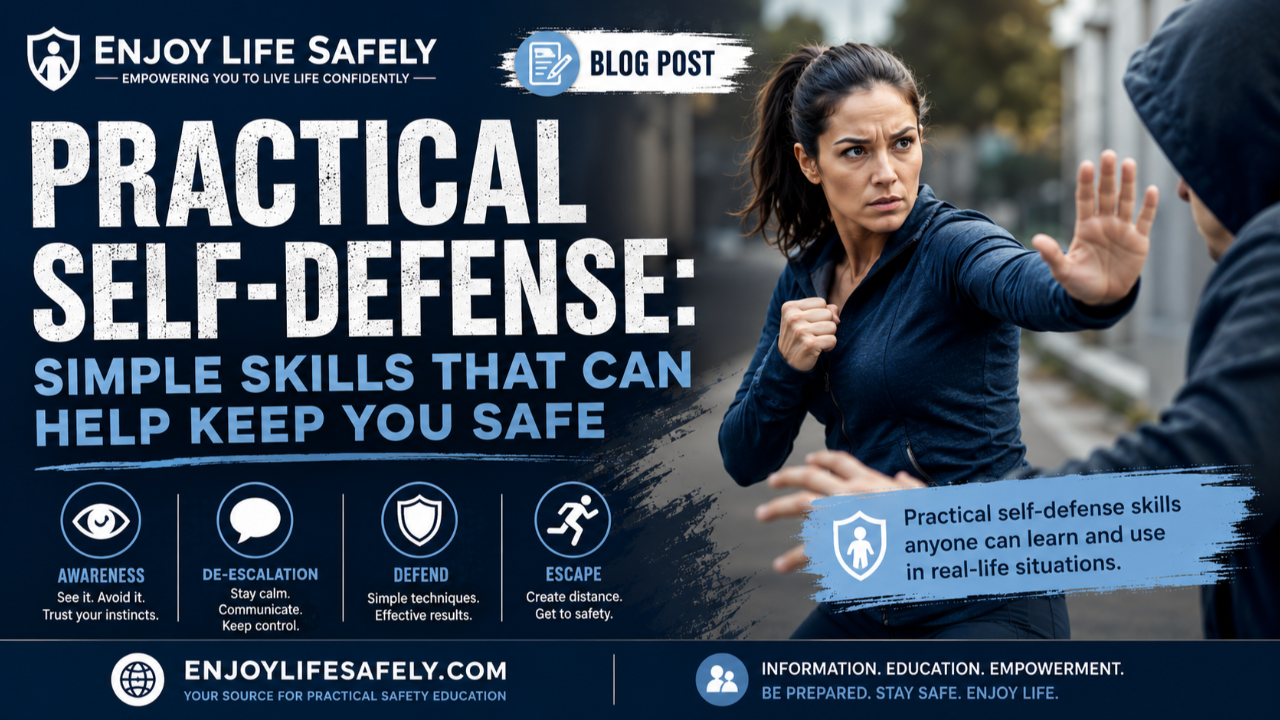
Over the years, I've trained people from a wide variety of backgrounds. One thing I've learned is that simple techniques consistently outperform complicated ones under stress. When fear, adrenaline, and chaos enter the picture, people fall back on what is easiest to remember and easiest to perform. That's why practical self-defense focuses on awareness, avoidance, de-escalation, and simple physical skills rather than flashy techniques.
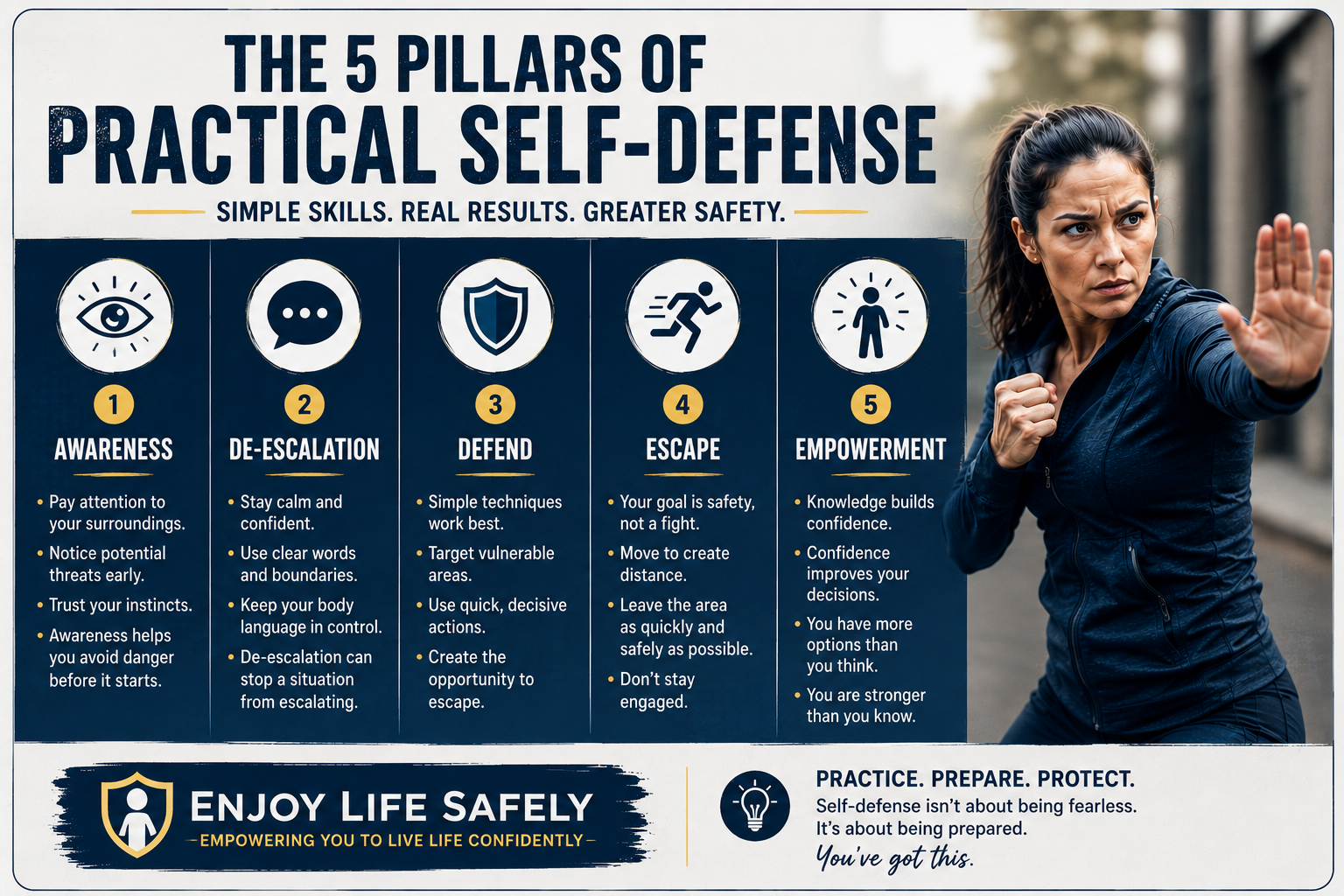
Awareness: Your First Line of Defense
The most effective self-defense tool you possess is your awareness.
Situational awareness allows you to recognize potential problems before they become emergencies. Paying attention to your surroundings, avoiding unnecessary distractions, and trusting your instincts can help you identify danger early enough to avoid it altogether.
Too many people move through their day buried in their phones, wearing earbuds, and paying little attention to what is happening around them. Criminals often look for easy targets, and distracted individuals can become attractive opportunities.
Being aware doesn't mean being paranoid. It simply means being present.
Notice who is around you. Pay attention to unusual behavior. Identify exits when entering a building. Be aware of who is approaching you in parking lots, gas stations, or other public places. Small habits like these can make a significant difference in your personal safety.
Awareness also includes recognizing pre-incident indicators. Aggressive body language, invasion of personal space, excessive anger, unusual fixation, or attempts to isolate you can all be warning signs that trouble may be developing.
The sooner you recognize a problem, the more options you have to avoid it.
The Power of De-Escalation
One of the most overlooked self-defense skills is the ability to calm a situation before it turns physical.
De-escalation involves using communication, body language, and emotional control to reduce tension and create opportunities to disengage. In many situations, avoiding a fight is far safer than winning one.
Simple techniques can include:
- Speaking calmly and confidently
- Maintaining a non-threatening posture
- Setting clear verbal boundaries
- Avoiding insults or challenges
- Creating physical distance when possible
- Looking for opportunities to leave the area
Many confrontations are driven by emotion. When you remain calm and composed, you often prevent a tense situation from spiraling out of control.
That doesn't mean every situation can be talked down. Some attackers are determined, impaired, or actively seeking violence. However, having de-escalation skills gives you another valuable tool in your personal safety toolbox and may allow you to avoid physical confrontation altogether.
When Physical Self-Defense Becomes Necessary
Sometimes avoidance and de-escalation fail.
If you are facing an immediate threat, physical self-defense may become necessary. When that happens, simplicity becomes even more important.
I teach that self-defense is not about winning a fight. It is about stopping the threat long enough to get to safety.
Your goal is not to submit an attacker, teach them a lesson, or stay engaged in a prolonged struggle. Your goal is to create an opportunity to escape.
This is why practical self-defense focuses on vulnerable targets and straightforward techniques. Areas such as the eyes, nose, throat, groin, and ears can often be affected regardless of an attacker's size or strength. A quick, decisive action directed at a vulnerable area may create the opening needed to break contact and get away.
Likewise, learning simple escapes from common grabs, holds, and attacks can provide effective options without requiring years of training.
The key is not complexity. The key is effectiveness under stress.
Confidence Through Preparation
One of the greatest benefits of self-defense training isn't physical at all.
It's confidence.
People who have developed awareness skills, practiced verbal boundaries, and learned basic defensive tactics often move through the world with greater confidence and less fear. They know they have options. They know they have prepared. They know they are not completely helpless if a dangerous situation develops.
That confidence often influences how others perceive them as well. Predators frequently seek easy targets. Someone who appears alert, confident, and aware may be less attractive than someone who appears distracted and vulnerable.
Confidence doesn't guarantee safety, but preparation can dramatically improve your ability to respond effectively.
Self-Defense Is for Everyone
One of the biggest misconceptions about self-defense is that it's only for young, athletic, or highly trained individuals.
Nothing could be further from the truth.
Good self-defense training should be practical, inclusive, and adaptable. Children, teenagers, adults, seniors, and individuals with physical limitations can all benefit from learning simple safety and self-defense skills.
The goal is not to create fighters. The goal is to create safer, more prepared people.
That's one of the reasons I developed my Self-Defense Essentials course. It focuses on practical concepts, awareness, de-escalation strategies, and simple defensive techniques that ordinary people can learn and apply in everyday life. Effective self-defense doesn't have to be complicated to work.
Final Thoughts
Self-defense skills should be simple, effective, and accessible to everyone.
By developing situational awareness, learning de-escalation tactics, and practicing straightforward physical defensive skills, you dramatically improve your ability to respond to potential threats. More importantly, these skills help you avoid many dangerous situations before they ever become physical.
The ultimate purpose of self-defense is not fighting. It is protecting yourself, protecting those you care about, and getting home safely.
When you feel more confident in your ability to handle life's challenges, you're free to do something important: get out there, experience more, and enjoy life safely.