Get Off the X: The Most Important Thing to Remember in Any Emergency
When something dangerous happens, one of the worst places you can remain is exactly where the danger is occurring.
That sounds obvious.
But emergencies don't always bring out clear, rational thinking. People freeze. They hesitate. They wait to see what happens next. Sometimes they don't recognize the seriousness of the situation until precious seconds have already passed.
That's why there is a simple concept I want you to remember:
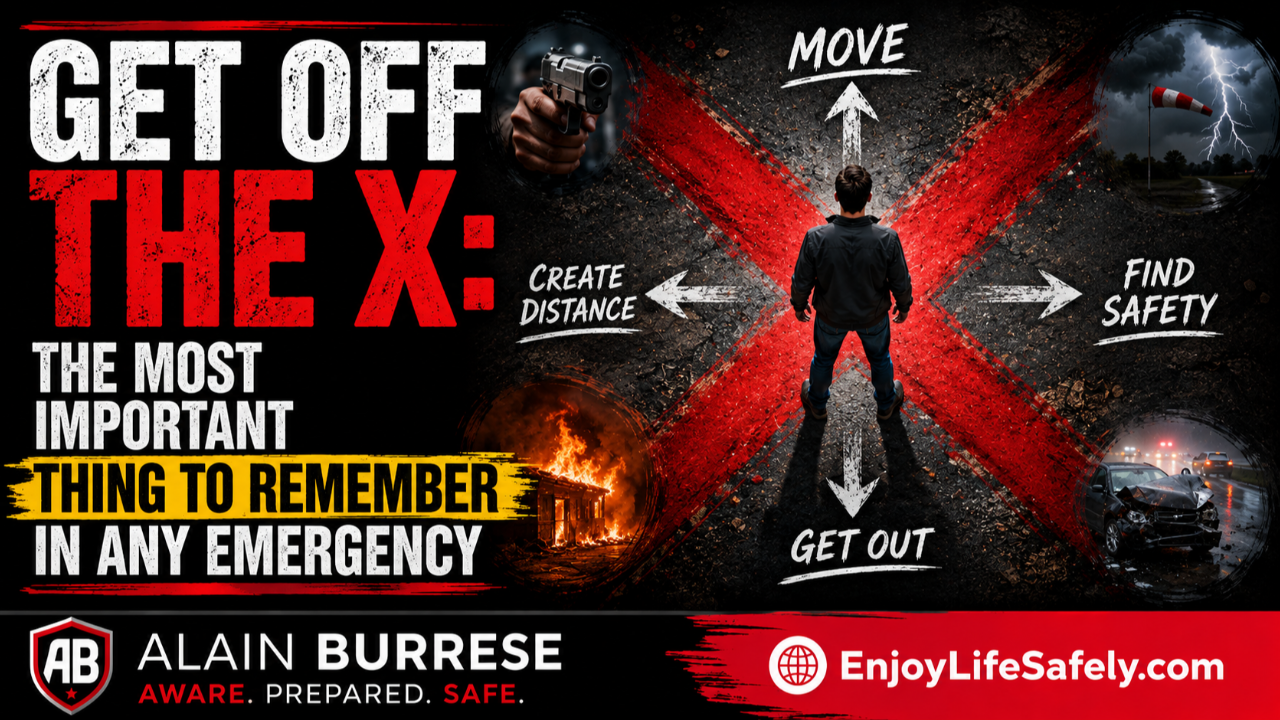
Get off the X.
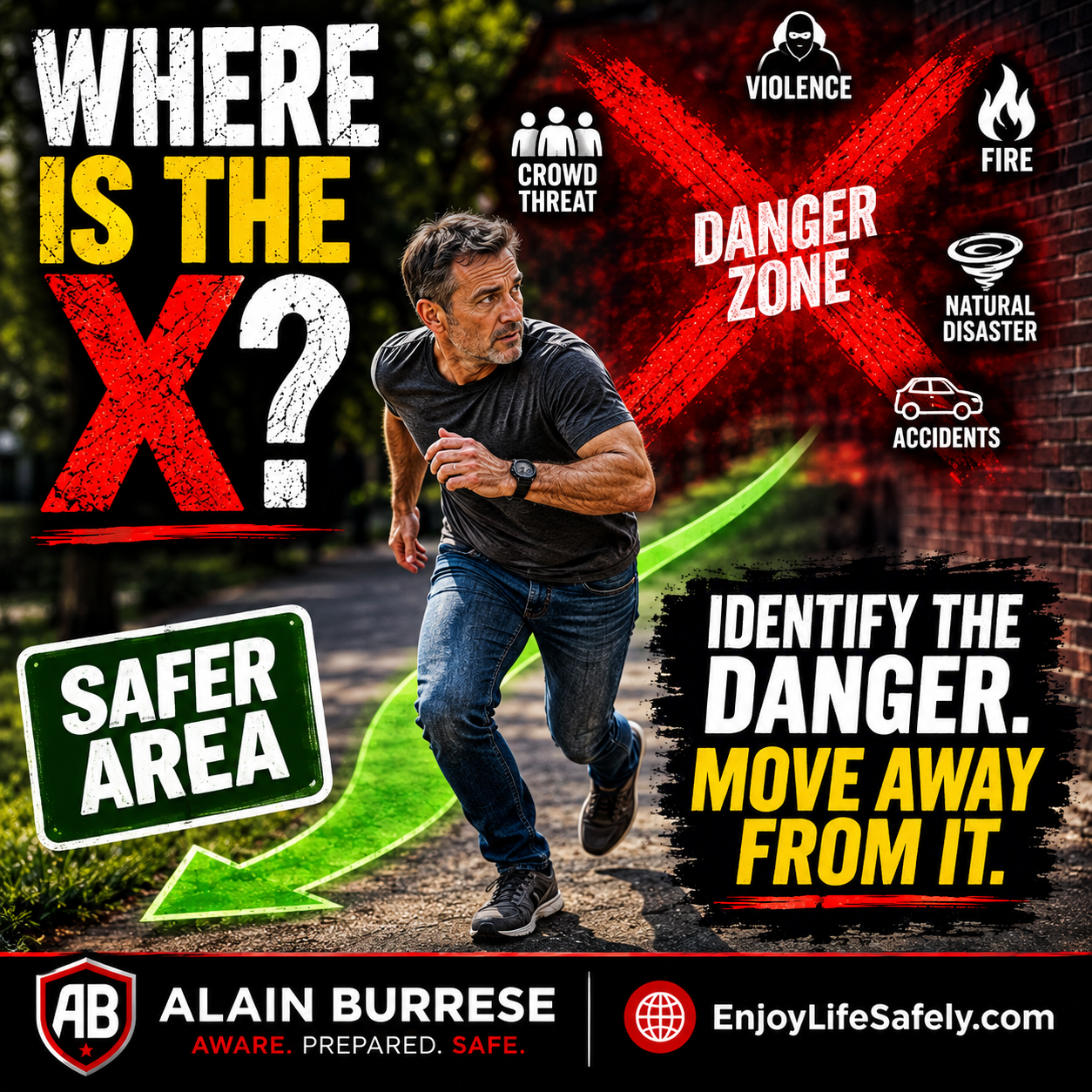
The "X" is the danger zone. It's the place where something bad is happening, or is about to happen.
If you're standing on the X, your first priority should usually be to move away from it.
A Lesson From Jason Hanson
I've had the pleasure of speaking with Jason Hanson, founder of Spy Escape and Evasion and a former CIA officer. Although we haven't met in person, we've both endorsed each other's work, and our missions have overlapped in an important area: helping ordinary people become better prepared to protect themselves and their families.
Jason discusses the concept of getting off the X in his book Spy Secrets That Can Save Your Life: A Former CIA Officer Reveals Safety and Survival Techniques to Keep You and Your Family Protected.
His message is simple:
"People who move, survive."
Jason applies the idea to many different dangerous situations. If someone is attacking you with a knife, don't remain where the attacker expects you to be. Move. If a major storm is approaching and evacuation is appropriate, don't wait until you're trapped in the danger zone. Leave.
The specific emergency changes.
The principle doesn't.
Get off the X.
What Is the X?
Think of the X as the point of greatest danger.
Sometimes that point is obvious.
If a vehicle crashes through the front of a building, the area immediately around the vehicle is an X.
If someone begins shooting inside a public place, the attacker's location and line of fire create an X.
If a fire starts in your kitchen, the area around that growing fire is an X.
If you're standing in the path of rising floodwater, you're on an X.
If an aggressive person is closing distance while threatening you, the place you're standing may quickly become an X.
Other times, the X is much larger.
An approaching hurricane can turn an entire neighborhood or community into a potential danger zone. A wildfire can do the same.
The important question isn't whether you can literally draw an X on the ground.
Ask yourself:
Where is the danger, and what can I do to move away from it?
The Problem With Freezing
Human beings don't always react to danger the way they imagine they will.
Most people have heard of the fight-or-flight response. But freezing is also a very real response to danger.
Something unexpected happens and, for a moment, the brain struggles to process it.
Is that really happening?
Was that a gunshot?
Is that person actually threatening me?
Should I leave?
What is everyone else doing?
Those questions can consume valuable time.
You may not be able to completely eliminate the possibility of freezing. It's a natural survival response. But you can prepare yourself to recognize it and move through it.
Recognize what is happening.
Breathe.
Decide.
Act.
The goal isn't to develop a perfect plan while danger continues unfolding around you.
The goal is to take effective action.
Movement Can Change the Problem
Getting off the X doesn't mean running around without purpose.
Movement needs a reason.
You may be moving toward an exit.
You may be moving behind cover or another barrier.
You may be creating distance from someone threatening you.
You may be moving out of the path of a vehicle.
You may be leaving a building because you smell smoke.
You may be evacuating an area before a storm arrives.
The common denominator is that you're changing your relationship to the danger.
Distance can buy you time.
Barriers can provide protection.
Movement can make you a more difficult target.
Leaving early can prevent you from becoming trapped.
Sometimes a few steps can dramatically change the situation.
Other times getting off the X might mean driving hundreds of miles.
Don't Wait for Everyone Else
One reason people sometimes remain on the X is social proof.
We naturally look at other people to determine how we should respond.
If everyone else is sitting calmly, we assume everything must be okay.
If nobody else is heading toward the exit, we hesitate to be the first person to leave.
That can be dangerous.
You don't need permission from the crowd to protect yourself.
If something doesn't look right, pay attention.
If you believe you should leave, leaving early is often much better than leaving late.
Maybe you misread the situation.
That's okay.
I'd rather move away from a potential problem and discover I didn't need to than remain in a dangerous situation because I was worried about looking foolish.
Your safety is more important than avoiding a few seconds of embarrassment.
Getting Off the X During Violence
The concept becomes especially important during violent encounters.
If someone is approaching you aggressively, distance matters.
Move.
If someone produces a weapon, don't remain rooted in place if movement gives you a safer option.
Move.
If an active attacker begins hurting people, getting away from the attacker is generally your best option when escape is available.
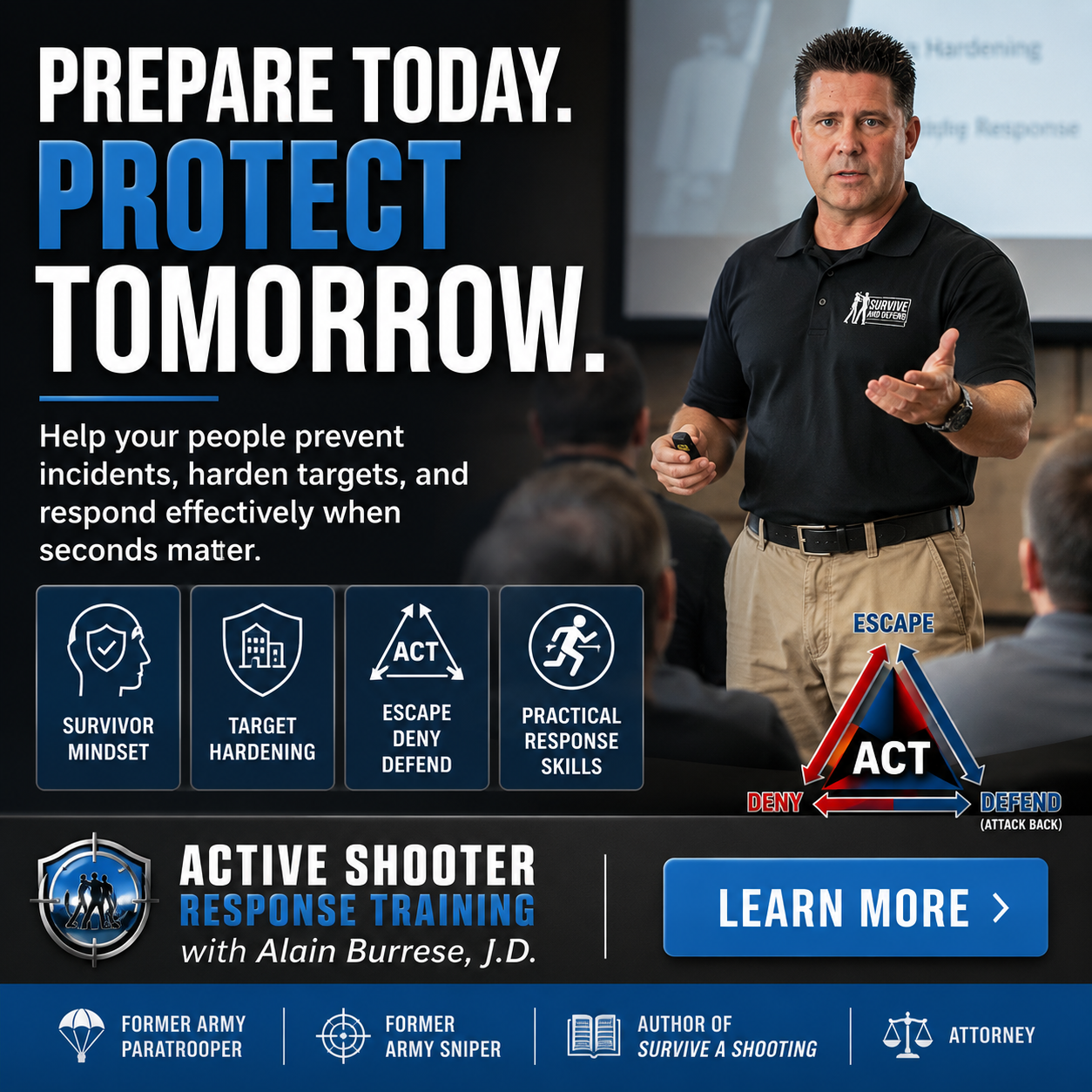
This connects directly to what I teach in my Active Shooter/Threat Response training.
My model is:
Escape. Deny. Defend.
And at the center is ACT.
If you can escape the danger, escape.
If you can't escape, deny the attacker access to you. Lock, block, barricade, create obstacles and put barriers between yourself and the threat.
If those options fail and you're forced to defend yourself or others, attack back with decisive force.
The circumstances determine the specific response.
But there is something these responses have in common.
You're doing something.
You're not simply remaining on the X hoping the danger goes away.
Getting Off the X Starts Before the Emergency
There's another important lesson here.
You don't always have to wait until the emergency begins to get off the X.
Situational awareness may allow you to recognize a developing problem before it becomes an immediate threat.
You notice an aggressive confrontation developing at a bar.
Leave before it becomes a fight.
You notice someone behaving strangely in a parking lot and moving toward you.
Change direction, create distance and move toward safety.
Weather authorities are recommending evacuation because of an approaching hurricane.
Don't wait until the roads are jammed and the storm is on top of you.
You smell smoke or notice something unusual in a building.
Investigate from a safe position and be prepared to leave.
The earlier you identify danger, the more options you generally have.
That's one of the greatest benefits of situational awareness.
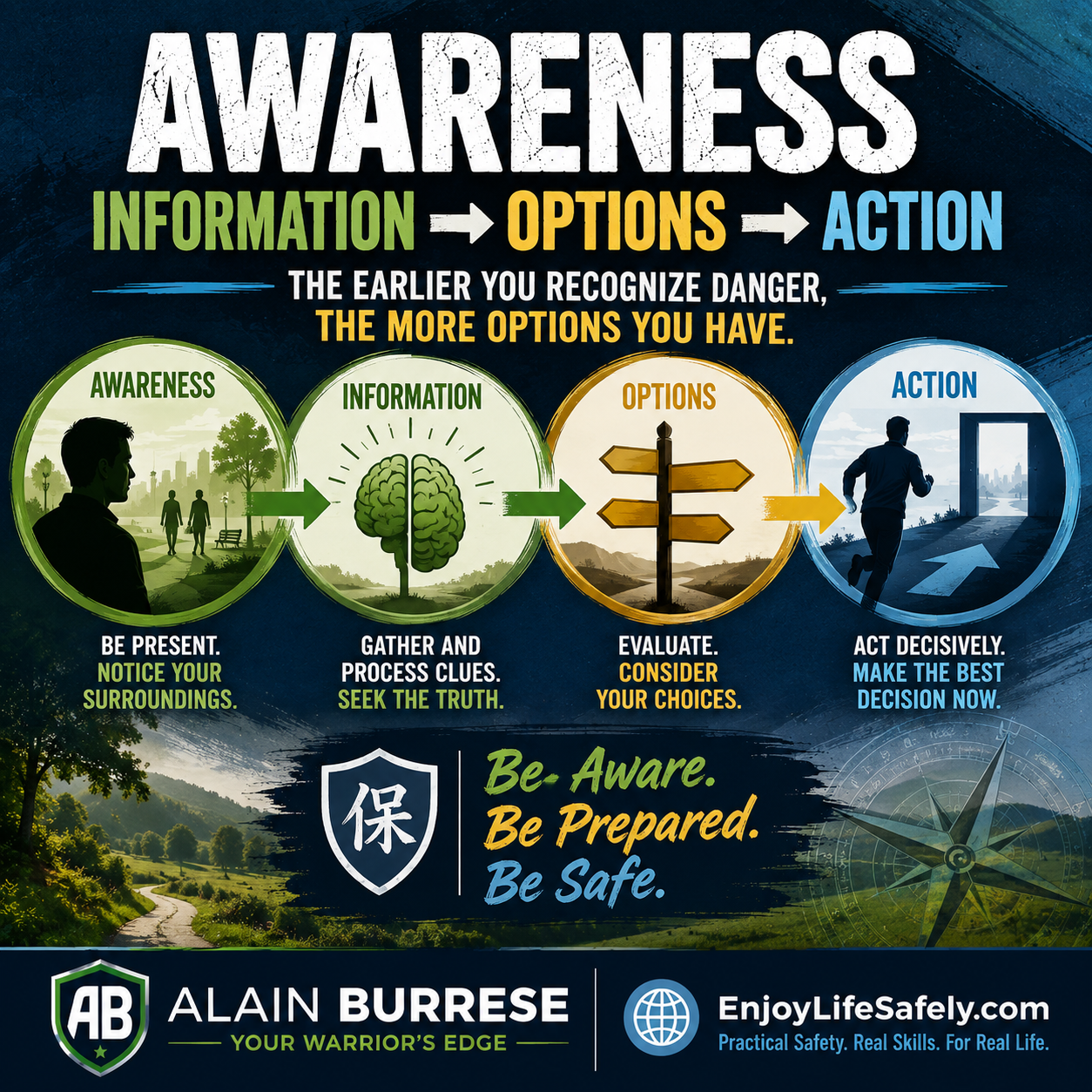
Awareness gives you information.
Information gives you options.
Options give you the opportunity to act before circumstances take those options away.
Sometimes the Best Move Is Before Anything Happens
This also connects to one of the most important principles I teach about personal safety:
Avoidance is a successful defense.
You don't get extra points for waiting until something becomes dangerous.
If you recognize a bad situation developing and simply leave, you won.
There was no confrontation.
No physical technique was required.
No weapon was needed.
Nobody got hurt.
You saw the potential problem and got off the X before the X became truly dangerous.
That's personal safety at its best.
Know Where You're Going
There is another side to this principle that's important to understand.
Moving away from danger is good.
Moving toward another danger isn't.
That's why awareness still matters during an emergency.
Where are the exits?
Where is the threat?
Where are other hazards?
Where can you create distance?
What barriers are available?
Where is a safer location?
You don't need perfect information. Emergencies rarely provide it.
But even a quick assessment can help you make better decisions.
Don't just move.
Move with purpose.
Practice Seeing the X
You can actually practice this concept during your normal day.
It doesn't require living in fear or constantly imagining terrible things happening.
Just occasionally look around and ask yourself a few questions:
Where would danger most likely come from here?
Where are the exits?
If something happened right now, where would I move?
What could I put between myself and a threat?
Am I somewhere I could easily become trapped?
This takes seconds.
Over time, it helps develop a habit of noticing options before you need them.
That's what preparedness is supposed to do.
It isn't about being scared.
It's about developing useful habits so you're more capable when something unexpected happens.
Get Off the X
Emergencies come in countless forms.
Violence.
Fire.
Severe weather.
Vehicle crashes.
Natural disasters.
Medical emergencies.
Every situation requires different decisions, and there is no single response that works for everything.
But "Get off the X" is one of the simplest emergency principles you can remember.
Identify the danger.
Don't freeze there.
Create distance when possible.
Use barriers when appropriate.
Escape when you can.
Take decisive action when you must.
You can't control every emergency.
You can control how prepared you are to respond.
So if something dangerous happens, remember those four simple words:
Get off the X.
Be aware. Be prepared. Be safe.