Enjoy a Safe and Happy Halloween
Real Risks, Simple Precautions, and a Lot of Fun
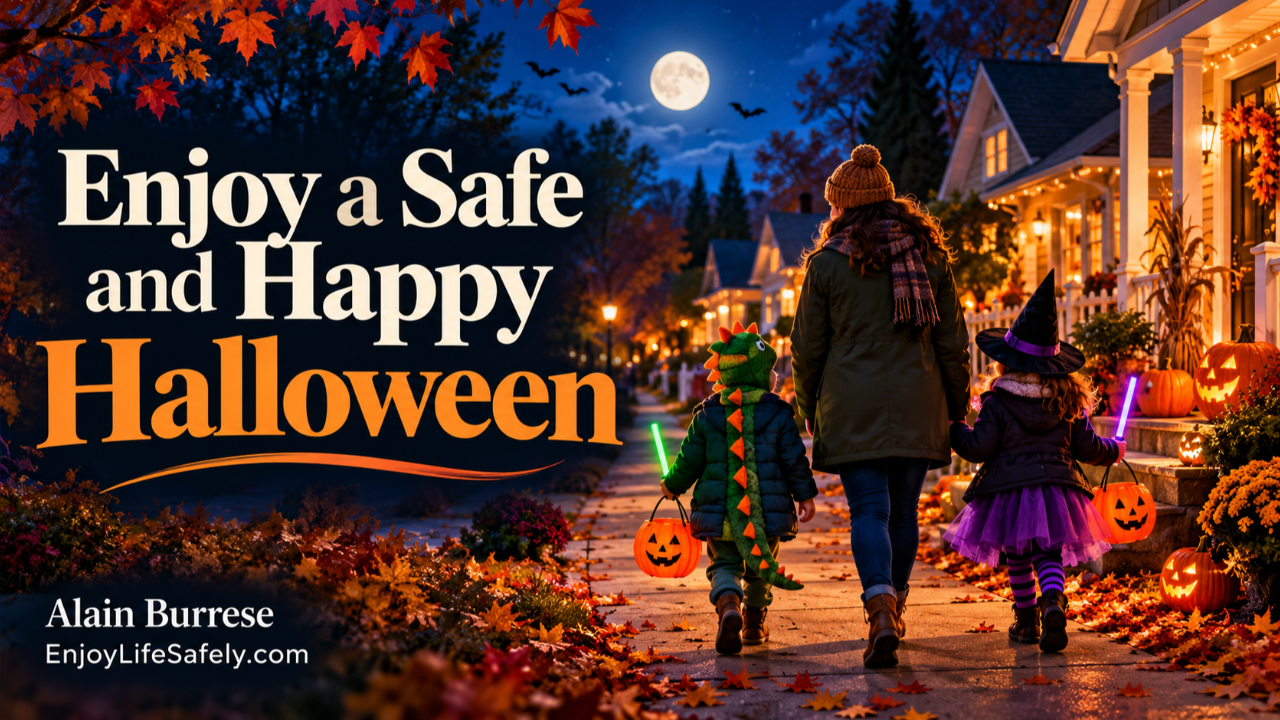
Halloween should be fun. Kids get to dress up, neighbors get to visit, and adults get an excuse to wear a ridiculous costume and enjoy a party.
One Halloween when I was in college, I went to the parties dressed as Santa Claus. It was something different, and I thought it would be a good joke. Who says Santa can’t show up a little early?
Yet every October, familiar warnings return. Someone shares a frightening story about poisoned candy. Someone else passes along a warning without checking whether it actually happened. Before long, a neighborhood celebration starts sounding like a survival exercise.
We can take safety seriously and still enjoy the holiday. It starts with understanding what the evidence actually tells us, then taking a few practical steps that make a difference.
That’s the Enjoy Life Safely approach: prepared, not scared.
Let’s Put the Candy Myths in Perspective
You’ve probably heard the stories about strangers handing out poisoned candy or apples filled with razor blades. They have been circulating for generations.
Sociologist Joel Best has studied reports of Halloween candy tampering for decades. In his research overview, he reports that he has been unable to find a substantiated case of a child being killed or seriously injured by a contaminated treat collected while trick-or-treating. Many reported incidents turned out to be hoaxes, misunderstandings, or events with a different explanation.
One frequently cited tragedy did involve poisoned Halloween candy. In 1974, Timothy O’Bryan died after eating candy containing cyanide. His father was convicted of murdering him. That was a terrible crime, but it was not a stranger randomly poisoning neighborhood children.
That doesn’t mean every report of tampering is false or that tampering is impossible. Washington Poison Center describes actual cases as extremely rare. The evidence does not support treating random candy poisoning as a routine Halloween threat.
Go through your children’s treats together. Discard open or damaged packages and anything you cannot identify. Think of this as an ordinary food safety check, including allergies and choking hazards.
Before sharing a scary warning online, check its source. Is there a confirmed incident, or only a screenshot of someone repeating what someone else heard?
Give Traffic the Attention It Deserves
One Halloween danger has strong evidence behind it: vehicles and pedestrians sharing busy streets after dark.
A study in JAMA Pediatrics examined U.S. traffic fatality data from 1975 through 2016. Researchers compared Halloween evening with the same hours one week before and one week after. They found 43 percent more pedestrian fatalities on Halloween, with particularly large increases among young children. This was a population comparison, not a measurement of the risk of each individual walk.
The practical takeaway is straightforward. Children are excited, visibility is limited, and drivers need to expect people in places they might not normally see them.
For Families Walking the Neighborhood
Practice the basics before the first candy stop:
- Use sidewalks where available. Without one, walk facing traffic along the far edge of the road.
- Cross at intersections or crosswalks when possible. Stop and look in every direction, including for turning vehicles.
- Avoid crossing between parked cars. A child can be hidden from an approaching driver until the last second.
- Put phones away while walking and crossing.
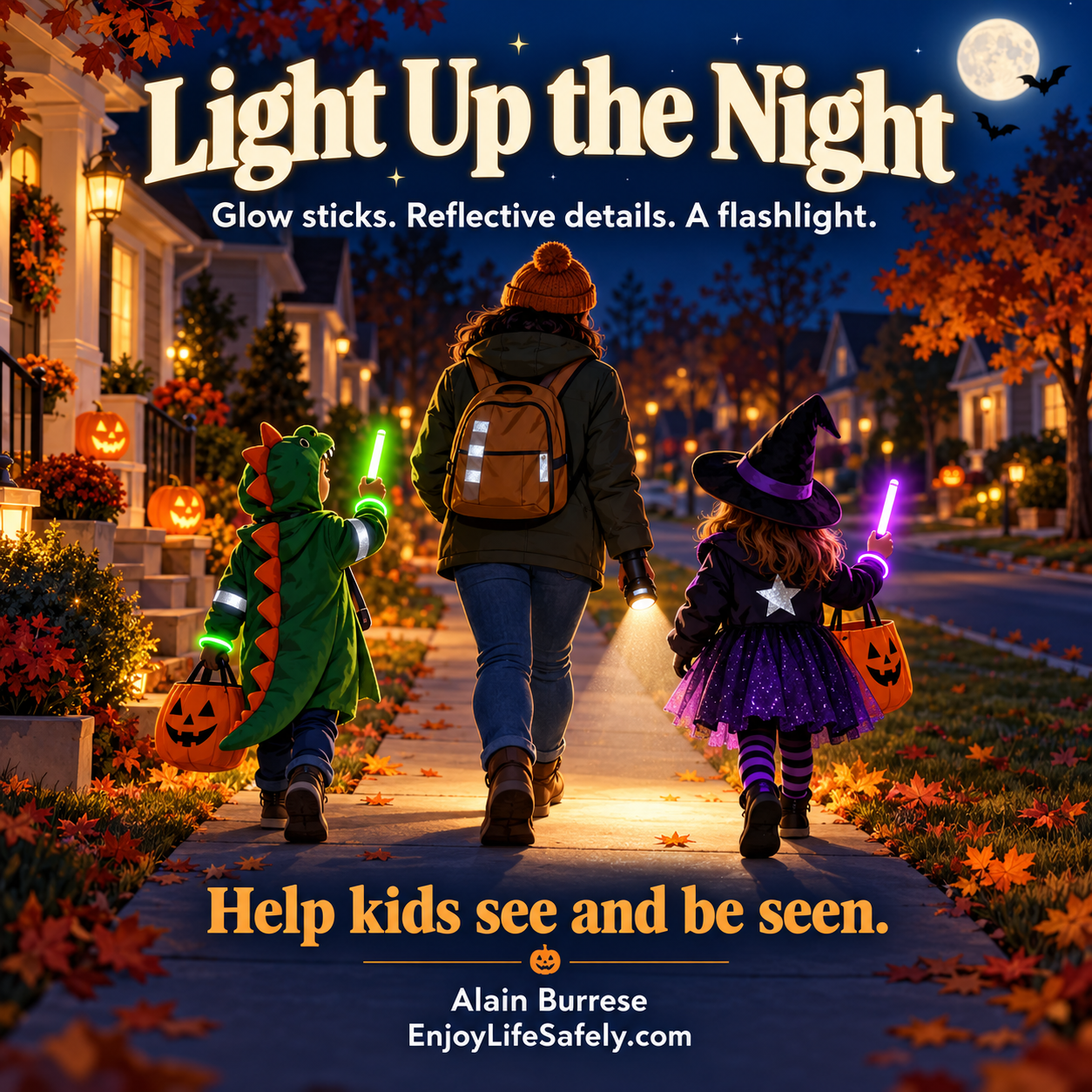
- Use reflective material and carry a flashlight. Glow sticks can help make the outing fun, too.
- Don’t assume a vehicle will stop simply because you have the right of way. Wait until it has stopped before crossing its path.
One useful family rule is to finish the houses on one side of the street before crossing together. It reduces the temptation to zigzag toward whichever porch has the most exciting decorations.
Glow Sticks: A Little Light and a Lot of Fun
One thing I’ve found really useful for Halloween is glow sticks. They’re inexpensive, kids enjoy them, and they can help make children a little more visible in the dark. Glow bracelets and necklaces can become part of the costume, which makes them an easy addition to the evening.
Give each child a few before heading out. You can also attach glow sticks securely to treat bags or costume accessories, keeping them visible rather than tucked under a coat. If you’re handing out treats, they can be a fun non-food option, too.
Use them alongside reflective details and a flashlight. Each has a different job: glow sticks add a little light, reflective material catches vehicle headlights, and a flashlight helps you see where you’re walking. Children still need to stop, look, and cross carefully.
Keep glow sticks out of mouths and remind kids not to chew on them. If one breaks, its liquid can irritate the eyes, skin, or mouth.
For Everyone Behind the Wheel
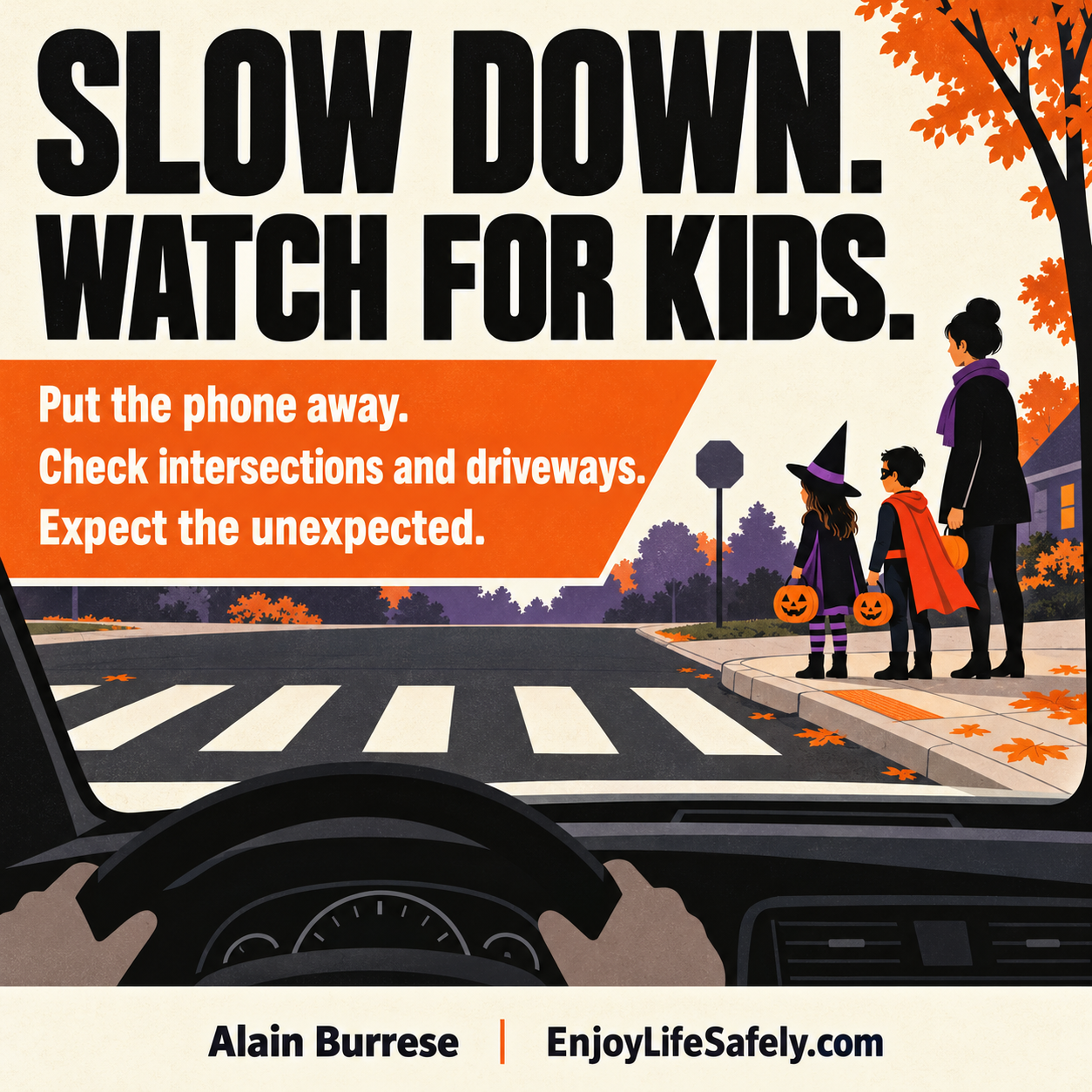
Slow down and actively look for children, especially near parked cars, driveways, and intersections. Expect a child to do something unexpected. Put the phone away and give driving your full attention.
If you’re taking children to a different neighborhood, decide where you’ll park before arriving. Choose a legal spot that preserves visibility at crossings and driveways. Have children get out on the sidewalk side when possible, and gather everyone before moving off.
Try parking once and walking a reasonable route together. Moving a vehicle from house to house adds another moving car to streets already full of children.
These precautions matter on the evenings of Halloween events and parties, too. Keep looking for pedestrians when you head home later.
Make a Simple Trick-or-Treating Plan
Young children should have an adult with them. For older children ready to go without a parent, discuss their route, companions, return time, and how to reach you. Encourage them to stay together. Readiness depends on the child and the setting, not simply a birthday.
Keep the conversation practical. “Show me where you’ll cross” is more useful than “Be careful out there.”
Set clear boundaries. Treats stay at the doorstep. Children should not enter a home or vehicle to get candy. If something feels wrong, they can leave and contact you.
For a crowded event, choose a meeting point in case someone gets separated. Point out the event staff or other people they can approach for help.
And allow some flexibility. A shorter outing with warm, happy kids is a success. Nobody needs to finish the neighborhood to earn Halloween credit.
Choose a Costume You Can Actually Move In
Before leaving, have your child walk around in the complete costume. Can they see to both sides? Can they climb a step without catching a hem? Can they carry their treat bag and light?
The FDA recommends well-fitting costumes that won’t cause trips, reflective details, and makeup or hats instead of masks that obstruct vision. Choose flame-resistant costumes, remembering that flame-resistant does not mean fireproof. Test makeup on a small patch of skin 24 to 48 hours beforehand.
In Montana, Plan for the Halloween You Actually Get
Here in Montana, Halloween weather depends on the year. Some years are comfortable for an evening walk. Other years, Halloween can be very cold. A costume that works well indoors may be nowhere near enough for a night outside.
Check the forecast before heading out, including the temperature, wind, and chance of rain or snow. Then build the costume around the weather.
- Leave room for warm layers and a coat.
- Bring hats and gloves when conditions call for them.
- Choose warm footwear with traction, especially if sidewalks are wet, snowy, or icy.
- Put reflective details where drivers can see them, including on the coat if it covers the costume.
- Plan a shorter route and a warm place to take a break.
Let the kids show off the full costume indoors and bundle up outside. If everyone is getting cold, head in. There’s no prize for staying out until the last porch light goes off.
Adults going to parties need to plan for the cold, too. Bring a coat even if you expect only a short walk between the car and the door.
A Quick Costume Check for Adults, Too
Adults need the same costume check, especially before driving. Remove anything that interferes with your view or your ability to operate the vehicle.
And those dramatic costume contact lenses? They require a prescription and proper fitting, even if they don’t correct vision. The FDA warns that improperly obtained or used lenses can cause serious eye injury and infection.
Check Treats for Everyday Food Risks
Candy sorting can be part of the fun. It’s also a chance to remove hard candy, gum, small toys, and other choking hazards from young children’s collections.
For children with food allergies, read the label on the actual product. Food Allergy Research & Education, or FARE, cautions that miniature or fun-size versions may have different ingredients from the full-size candy. If you cannot verify that a treat is suitable, set it aside and offer something you know your child can have.
People handing out treats can help by offering a separate bowl of non-food choices, such as stickers or bookmarks. FARE’s Teal Pumpkin Project uses a teal pumpkin to signal that non-food treats are available. Choose items appropriate for the ages receiving them.
There’s also a preventable risk inside homes: cannabis edibles being confused with ordinary sweets. Keep them locked up, out of children’s sight and reach, and separate from Halloween treats. This is a storage responsibility for adults.
Make Your Home Welcoming and Easy to Navigate
Take a quick walk from the sidewalk to your front door. Look at the route from a visitor’s perspective.
Clear away hoses, toys, cords, and decorations that could trip someone. Sweep wet leaves off steps, turn on outdoor lights, and secure pets away from the doorway. Even a normally friendly dog may find masks and repeated doorbell ringing overwhelming.
Use battery-operated candles in pumpkins and keep decorations away from heat sources. Keep exits clear, including at parties and haunted displays.
Leave the pumpkin cutting to adults; younger children can draw designs or decorate instead.
Finally, give children a little grace. Some may not say “trick or treat,” tolerate a mask, or want to approach a loud display. A friendly welcome doesn’t require a performance.
Adult Halloween Parties: Plan the Ride Before the First Drink
Adults deserve a fun Halloween, too. A little planning helps everyone get home safely.
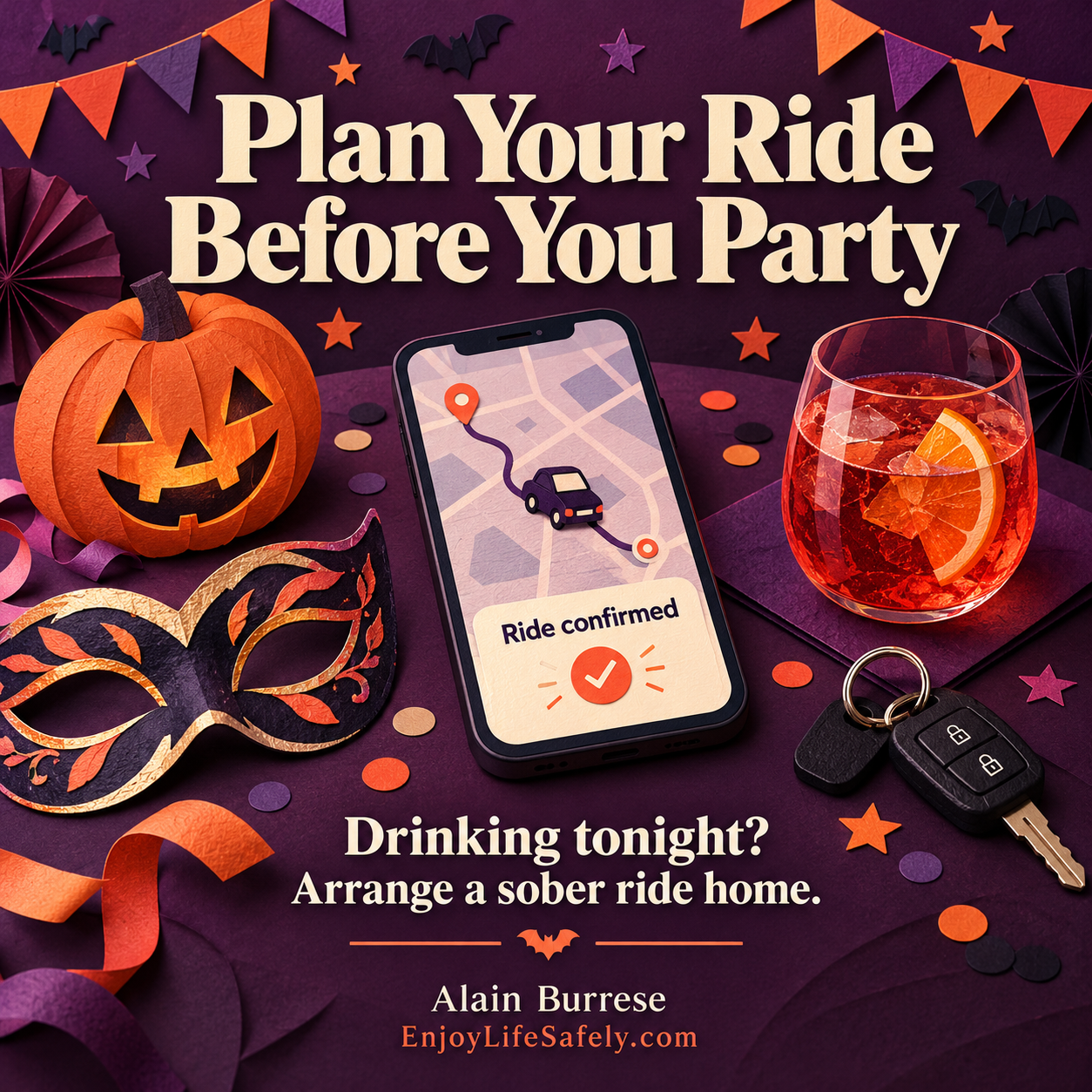
If you’re drinking, arrange a sober ride before the party begins. Choose a driver who will stay sober, book a taxi or rideshare where available, or arrange to stay overnight. Have a backup if transportation falls through. NHTSA advises that even small amounts of alcohol can affect driving ability.
Don’t make the decision from behind the wheel, and don’t rely on feeling “fine.” Coffee does not sober you up or make you safe to drive. Neither does a cold shower. Time is necessary for the body to clear alcohol.
Hosts can make good decisions easier:
- Offer appealing nonalcoholic drinks without pressuring anyone to drink alcohol.
- Ask about rides early, while plans are easy to make.
- Be ready to help arrange transportation or offer a place to stay.
- Support someone who decides to leave their vehicle overnight.
If you’re walking home, keep traffic safety in the plan. A sober companion and a well-lit route with sidewalks are useful choices. Being on foot still requires attention at crossings.
For the party itself, label alcoholic punches clearly and keep alcohol away from children. Keep cannabis products secured. Refrigerate perishable food within two hours, or one hour if temperatures are above 90°F.
Know when someone needs medical help. If a person is difficult to wake, has slow or irregular breathing, has a seizure, or shows other signs of alcohol overdose, call 911 immediately. Stay with them. Don’t assume they can safely “sleep it off.”
Enjoy the Holiday, and Look Out for Each Other
Halloween gives us a chance to enjoy our neighborhoods, admire some creativity, and have a little fun together.
Put a light in your child’s hand. Slow down behind the wheel. Clear the front steps. Check the candy labels. Arrange the ride home before the party starts.
Those are simple actions with a useful purpose. Make them part of the plan, then enjoy the costumes, the neighbors, the laughter, and whatever candy the kids are willing to share.
Have a happy Halloween, and enjoy life safely.
Author