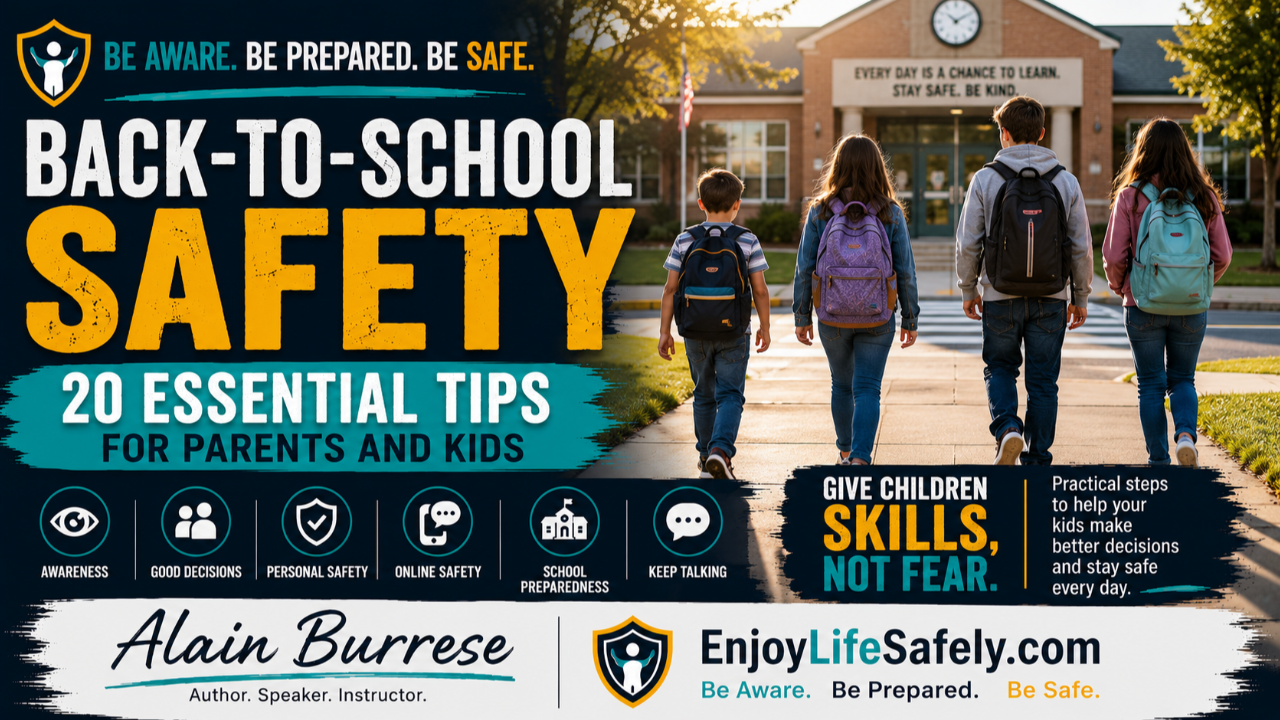
Back-to-School Safety: 20 Essential Tips for Parents and Kids
This back-to-school season feels a little different for me.
For the first time in about 16 years, my daughter isn't heading back to school. She graduated from college this past spring and is now a working adult, which is still a little hard for me to believe.
It doesn't seem that long ago that I was walking to school with her when she was little.
Those memories come back when I see the back-to-school displays in stores and families getting ready for another school year. New clothes and backpacks. School supplies. New teachers and classes. Sports and activities. And, depending on their age, maybe a little more independence than they had the year before.
As a parent, I've experienced many of those back-to-school seasons myself.
And as someone who has spent years teaching safety, self-defense, awareness, and emergency response, I also look at this time of year through the lens of safety.
That's especially true as I continue developing the Enjoy Life Safely Blueprint, which is built around a simple idea: we can't eliminate every danger or prevent every bad thing from happening, but we can become more aware, better prepared, and more capable of taking action when necessary.
Our children are among the most precious gifts in our lives. We want them to learn, grow, make friends, experience new things, and gradually become more independent. At the same time, we want to do everything reasonably possible to help keep them safe.
That's why I wanted to put together this comprehensive back-to-school safety guide.
Whether your child is starting elementary school, entering middle or high school, or heading off to college, the specific risks and responsibilities may change, but the basic principles of personal safety remain remarkably consistent.
Pay attention. Recognize potential problems. Make good decisions. Know where to get help. And have a plan for when things don't go as expected.
Back-to-school safety also involves much more than buying the right backpack, knowing where the school bus stops, or reminding children to look both ways before crossing the street.
Think about how many different environments a child or young adult may move through during a normal school day.
They may walk through neighborhoods, wait at bus stops, ride buses, cross busy parking lots, drive to school, interact with adults and other students, participate in sports or activities, use phones and social media, attend events, and spend portions of the day without direct adult supervision.
For college students, that independence increases even more. They may be living away from home for the first time, walking across campus at night, attending parties, using rideshare services, meeting new people, and making many of their own safety decisions.
We can't be beside our children every moment.
What we can do is help prepare them.
The goal isn't to make them afraid of the world.
It's to help them become prepared, not scared.
Back-to-School Safety Starts Before the First Day
One of the best things parents can do is walk through their child's normal school routine before school starts.
Think about the entire day rather than just what happens inside the school.
How will your child get to school?
How will they get home?
Where will they wait?
Who is authorized to pick them up?
What happens if the normal plan changes?
Who can they call if they need help?
Where could they go if they felt unsafe?
For an older teenager or college student, the questions may be different.
What happens if their phone dies?
Do they have a safe way home if plans change?
Who knows where they are?
What will they do if a friend becomes intoxicated or incapacitated?
What are their plans for getting around after dark?
Who can they contact in an emergency?
Safety plans should evolve as children mature and become more independent.
But children of every age benefit from knowing what they will do before they encounter a problem.
Don't just tell them what to do.
Practice it.
Walk the route. Visit the bus stop. Identify safe locations. Discuss scenarios. Have the conversations.
Preparation builds confidence.
1. Teach Awareness Without Teaching Fear
One of the greatest safety skills we can give children is awareness.
Unfortunately, adults sometimes make awareness sound frightening:
"Watch out for bad people."
"Don't talk to strangers."
"Be careful because something could happen."
There is a better approach.
Teach children to notice what is happening around them.
Where are you?
Who is around you?
What are people doing?
Does anything seem unusual?
Where could you go if you needed help?
Children don't need to walk through life suspicious of everyone they meet. They simply need to learn that paying attention gives them more information and more options.
Phones and earbuds make this lesson increasingly important.
A child walking while staring at a phone may not notice a vehicle backing out of a driveway, another bicycle approaching, someone following them, or another potential problem developing nearby.
The same applies to older students walking across a high school or college campus.
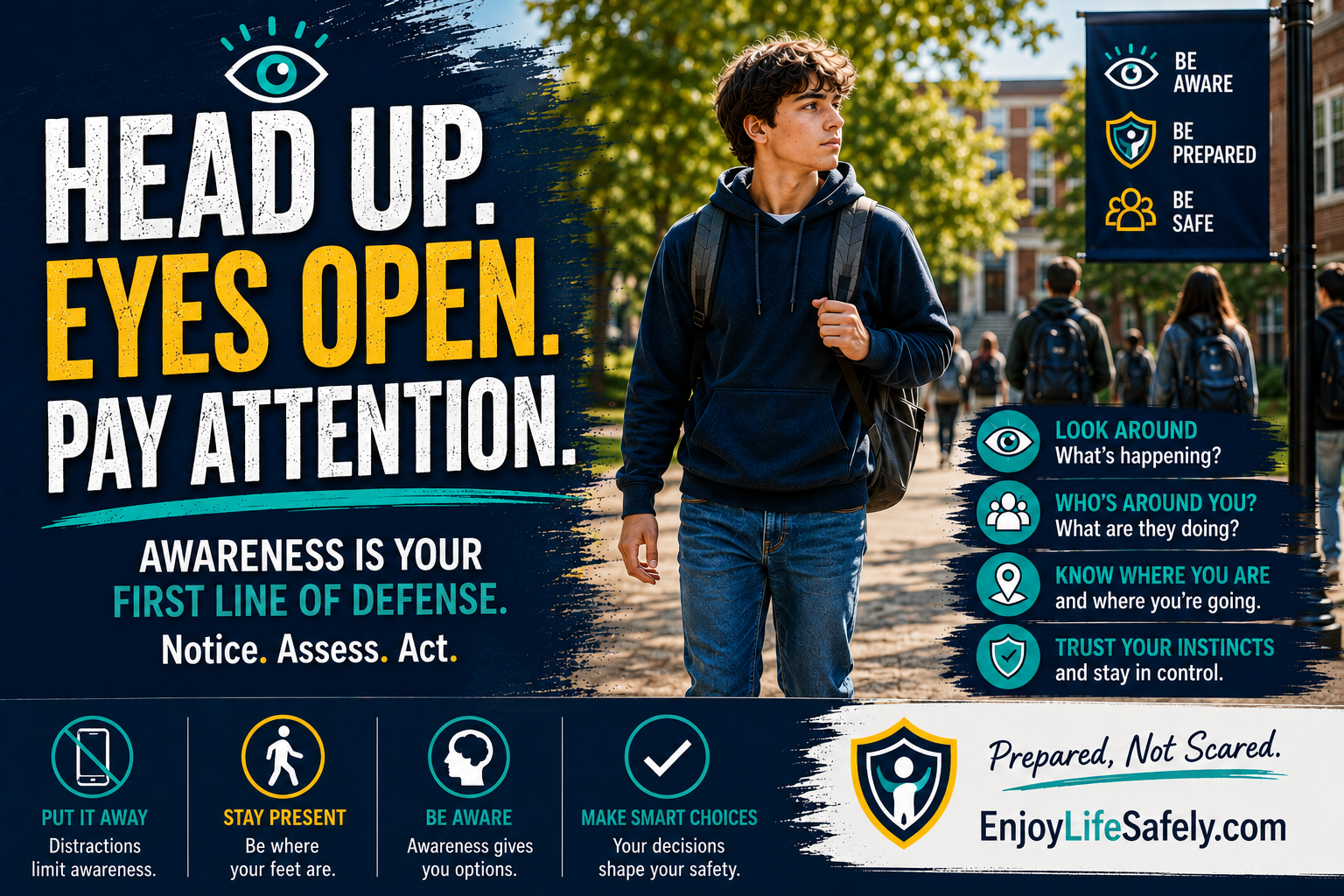
There are times when the phone needs to go away and attention needs to come up.
Head up. Eyes open. Pay attention.
That's a simple safety habit that can last a lifetime.
2. Know the Route to and From School
If your child walks to school, walk the route together before the school year begins.
Don't automatically choose the shortest route. Choose the safest practical route.
Look for sidewalks, designated walking paths, controlled intersections, marked crosswalks, crossing guards, good visibility, areas with regular pedestrian traffic, and businesses or other safe locations where your child could seek help.
Also identify potential trouble spots.
These might include busy intersections, isolated areas, construction zones, poorly maintained sidewalks, loose dogs, heavy traffic, or places where visibility is limited.
Children should use sidewalks when available and marked crosswalks whenever possible. They should also be taught to look left, right, and left again before crossing and to continue paying attention while crossing.
Most importantly, actually walk the route with your child.
A map cannot show you everything you will notice when you're physically standing there.
For older students, the same principle applies to a college campus. Learn the routes between dorms, classes, parking areas, libraries, athletic facilities, and other frequently visited locations. Pay particular attention to what those routes are like after dark.
3. Make the Bus Stop Part of Your Safety Plan
School buses are among the safest forms of transportation for students, but some of the greatest risks occur while children are approaching or leaving the bus.
Children waiting for a school bus should stay well back from the curb and avoid playing near traffic.
They should wait until the bus has completely stopped and the driver indicates it is safe before approaching.
Children should also understand one especially important rule:
Never walk behind the school bus.
If they need to cross in front of the bus, they should move far enough ahead of it that the driver can clearly see them and wait for the driver's signal before crossing.
If a child drops a book, phone, backpack, or another item near or underneath the bus, they should not crawl underneath or reach for it. They should tell the driver.
This is an excellent example of why safety lessons need to be specific.
"Be careful around the bus" is vague.
"Never go underneath the bus to retrieve something you dropped" gives a child an action they can remember.
4. Walking With Others Is Usually Better Than Walking Alone
When practical, encourage children to walk with siblings, friends, or groups.
There is often safety in numbers.
A child walking alone may also be more vulnerable to bullying, unwanted approaches, or other problems than several children traveling together.
For younger children, parents in a neighborhood may even coordinate a "walking school bus," with adults accompanying a group of children along an established route.
As children get older and begin traveling independently, establish expectations.
What route should they take?
Can they make stops along the way?
Should they text when they arrive?
What time should they be home?
What should they do if their normal route becomes unsafe?
For college students, walking with others can be especially important at night. Encourage them to learn what campus transportation, escort services, or other safety resources are available.
Independence should come with preparation and responsibility.
5. Bicycle Safety Requires More Than a Helmet
A properly fitted bicycle helmet is important, but bicycle safety doesn't end there.
Children riding bicycles to school should know the rules of the road and understand that bicycles need to travel predictably.
They should ride in the same direction as traffic, obey traffic signals and signs, and use bicycle lanes or designated paths when available.
Phones and other distractions should be put away while riding.
Before school begins, parents should also check the bicycle itself.
Are the brakes working properly?
Are the tires inflated?
Is the seat adjusted correctly?
Are reflectors and lights functioning?
Can the child control the bicycle while wearing their backpack?
And just like walking, ride the route together before allowing a younger child to ride it alone.
6. Create a Clear Pickup Plan
Children should know exactly who is allowed to pick them up from school, practices, clubs, and other activities.
This becomes especially important when plans change.
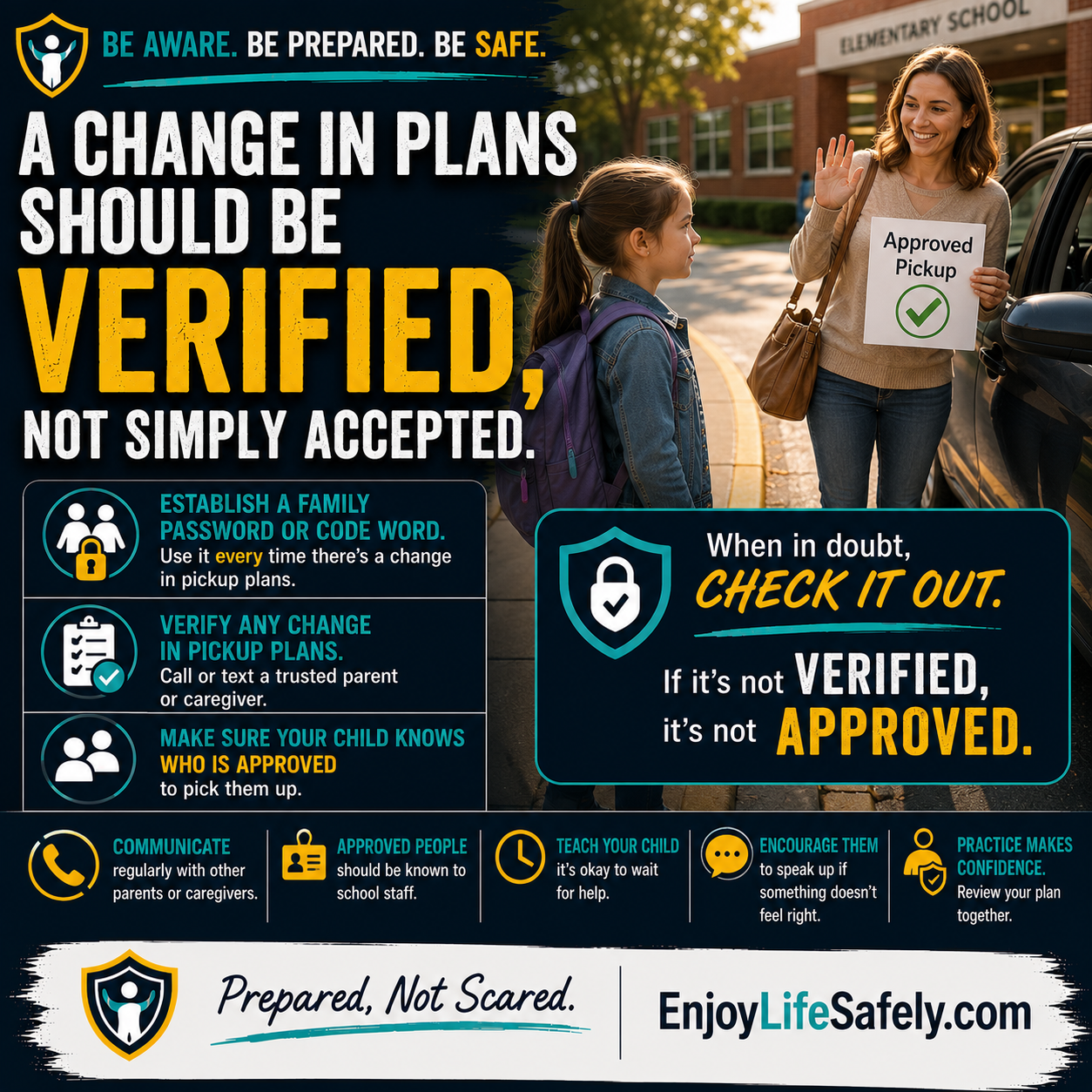
Families may want to establish a simple family password or code word for unexpected pickups. If someone the child wasn't expecting says, "Your mom asked me to pick you up," the child can ask for the family code word.
The details can be adapted to the child's age, but the larger principle is important:
A change in plans should be verified, not simply accepted.
Children should also understand that an adult who genuinely has permission to pick them up should not object to them verifying that permission.
Teach children that they don't have to go somewhere simply because an adult tells them to.
7. Move Beyond "Stranger Danger"
"Don't talk to strangers" sounds simple, but it isn't always useful.
Children may need to ask a stranger for help.
A store employee, teacher they don't know, another parent, police officer, firefighter, librarian, or other responsible adult may be exactly the person they need during an emergency.
Instead of focusing entirely on strangers, teach children to recognize concerning behavior.
An adult shouldn't ask a child to keep secrets from their parents.
An adult shouldn't ask a child to go somewhere without parental permission.
An adult shouldn't ask a child for help finding a lost puppy, carrying something to a vehicle, or doing another task that takes them away from a safe area.
Adults normally seek significant help from other adults, not children.
Children should know they have permission to say:
No.
They have permission to move away.
They have permission to make noise.
They have permission to seek help.
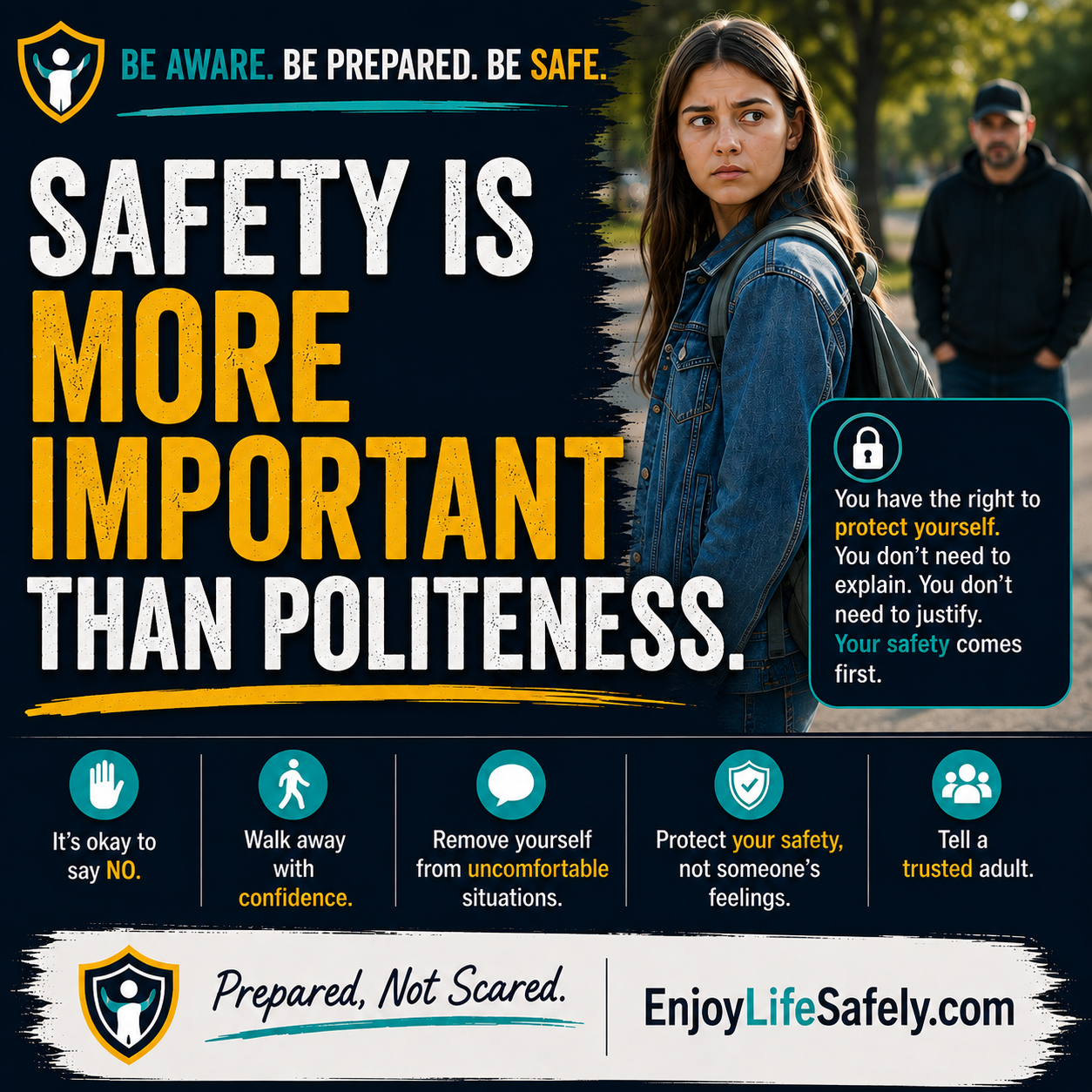
And they should know that being polite is never more important than being safe.
8. Teach Children to Trust Their Warning Signals
Children often recognize that something isn't right before they can explain why.
Someone is making them uncomfortable.
A situation feels strange.
A person is standing too close.
Someone keeps following them.
A friend wants them to go somewhere they aren't supposed to go.
Teach your child that they don't need absolute proof that someone is dangerous before creating distance.
If something feels wrong, they can move toward people, enter a safe public place, contact a trusted adult, or get help.
We want children to develop the habit of noticing warning signs before a situation becomes an emergency.
9. Identify Safe Adults and Safe Places
Ask your child:
"If you couldn't reach me and you needed help, who could you call?"
Don't assume they know.
Identify several trusted adults.
Depending on your situation, that might include grandparents, relatives, neighbors, family friends, teachers, coaches, counselors, or other responsible adults.
Then identify safe places along the child's normal routes.
A school office.
A fire station.
A library.
A busy store.
A trusted neighbor's home.
Teach the principle rather than trying to create a perfect list:
If you are in trouble, move toward safety and people who can help you.
For students away at college, identify these resources on and around campus before they're needed. Know where campus security or police, health services, counseling resources, residence staff, and other assistance can be found.
10. Make Sure Children Know Important Information
Technology makes life easier, but it can also make us dependent on our phones.
Many children know how to tap "Mom" or "Dad" on a screen but don't actually know their parent's phone number.
Children old enough to do so should know basic information such as their full name, their parents' or guardians' full names, at least one important phone number, their home address, how to call 911, and when calling 911 is appropriate.
Younger children can learn this information gradually.
Older children should absolutely know it.
11. Talk About Bullying Before It Happens
Back-to-school safety isn't limited to traffic accidents or crimes committed by strangers.
For some students, the person making school feel unsafe may be another student.
Talk about bullying before there's a problem.
Make sure your child knows they can tell you if someone is threatening, intimidating, harassing, humiliating, or repeatedly targeting them.
Children should also know that asking for help isn't weakness.
Parents should watch for changes that may indicate a problem, including unexplained injuries or damaged belongings, suddenly avoiding school, declining grades, sleep problems, losing friends, withdrawing from activities, or significant changes in mood or behavior.
Not every change means a child is being bullied.
But changes are information.
Pay attention.
Ask questions.
And listen.
12. Don't Forget Cyberbullying
School problems don't necessarily end when the final bell rings.
Phones, messaging apps, gaming platforms, group chats, and social media can bring conflicts directly into a child's bedroom.
Parents should have ongoing conversations about what children are doing online, which platforms they're using, who they're communicating with, and what information they're sharing.
Teach children not to share passwords with friends and to be cautious about sharing personal information, photographs, locations, schedules, or other details publicly.
Privacy settings matter too.
Parents should periodically review privacy and location settings with their children rather than assuming default settings provide adequate protection.
Most importantly, children need to know they can come to you when something goes wrong online.
If their first thought is, "If I tell Mom or Dad, they'll take my phone away," they may hide the very problem you need to know about.
Keep communication open.
13. Teach Children That Online People Are Still Strangers
Young people can develop what feels like a real friendship with someone they have never met in person.
Gaming platforms, social media, messaging apps, and other online communities make this extremely easy.
Teach children that someone online may not be who they claim to be.
They shouldn't provide personal information simply because someone seems friendly.
They shouldn't secretly arrange an in-person meeting with someone they've only met online.
And they should tell a trusted adult if someone begins asking sexual questions, requesting photographs, offering gifts or money, threatening them, asking them to keep the relationship secret, or trying to move conversations to private channels.
Online safety is now part of everyday personal safety.
14. Know Your School's Emergency Procedures
Parents should familiarize themselves with the school's emergency plans.
How does the school communicate during an emergency?
Where will official information come from?
What are the reunification procedures if students must evacuate?
Who is authorized to pick up your child?
What happens if phone systems become overloaded?
Schools prepare for a variety of emergencies, including severe weather, fires, hazardous-material incidents, violence, and other events. Emergency plans and drills help students and staff understand what to do when something happens.
Parents should reinforce an important lesson:
During an emergency, follow instructions and act.
Children don't need to understand every possible emergency scenario. They do need to understand that when something serious happens, paying attention and taking appropriate action matters.
15. Talk About Reporting Concerning Behavior
Children and teenagers sometimes notice warning signs adults never see.
A student makes a threat.
Someone talks repeatedly about hurting people.
A classmate brings a weapon to school.
Someone posts threatening material online.
A student talks about committing violence.
Children should understand the difference between tattling to get someone in trouble and reporting something because someone may be in danger.
Teach them:
If you see or hear something that makes you believe someone could be hurt, tell a responsible adult.
If the first adult doesn't take it seriously and the concern remains, tell another.
Safety is more important than worrying about whether someone will be angry because you spoke up.
16. Discuss What to Do If Violence Occurs
We shouldn't make children afraid to attend school.
At the same time, age-appropriate emergency preparation is reasonable.
Schools conduct drills for fires, severe weather, and other emergencies because people respond better when they have considered what to do beforehand.
The same principle applies to violence.
For older students especially, parents can reinforce a simple idea:
If something dangerous happens, act to improve your position of survival.
Depending on the situation, that could mean escaping from the danger, denying access to your location, following school emergency procedures, calling for help when safe, or, as a last resort when there is no other option, taking action to stop an attacker.
The exact conversation should be appropriate for the child's age and the school's procedures.
The purpose isn't fear.
It's preparation.
17. Parking Lots and School Drop-Off Zones Deserve Extra Attention
School parking lots can become chaotic.
Cars are entering and leaving. Parents are distracted. Children move between parked vehicles. Drivers are watching for open spaces while students may be looking at their phones.
Teach children not to assume drivers see them.
Whenever possible, children should use designated walkways and crosswalks rather than cutting between vehicles.
Drivers need to slow down, put the phone away, and expect children to do unpredictable things.
Being two minutes late is better than causing an accident because you're rushing.
18. Have a Family Communication Plan
"What do I do if I can't reach you?"
Every child should know the answer.
Create a basic family communication plan.
Identify a backup contact.
Determine where children should go if they can't get home.
Discuss what happens if school closes unexpectedly.
Make sure children understand that during a major emergency, text messages may sometimes get through when voice calls don't.
For older students living away from home, the plan may be as simple as establishing who they will contact during an emergency and how family members will let one another know they're safe.
The plan doesn't have to be complicated.
It just needs to exist before you need it.
19. Teach Boundaries and Give Children Permission to Use Them
Children should know they are allowed to establish personal boundaries.
They can say no to unwanted touching.
They can move away from someone who makes them uncomfortable.
They can refuse to keep an inappropriate secret.
They can tell a trusted adult.
They can yell for help if necessary.
Children are often taught to obey adults and be polite.
Those are generally good lessons.
But children also need to understand that an adult doesn't automatically get to ignore their boundaries simply because they are an adult.
Safety takes priority over politeness.
20. Keep Safety Conversations Going All Year
Perhaps the biggest mistake parents can make is having one major safety conversation before school starts and then considering the subject finished.
Safety should be an ongoing conversation.
Ask questions occasionally.
"How are things going at the bus stop?"
"Who do you usually walk home with?"
"Anything weird happen at school today?"
"How are things going with your friends?"
"Anyone giving you a hard time?"
"What apps are everybody using now?"
With older children, the questions change, but the conversations shouldn't disappear simply because they're adults.
These don't need to feel like interrogations.
They can simply become part of normal family conversation.
The more comfortable our children are talking with us about ordinary things, the more likely they may be to talk with us when something isn't ordinary.
Give Children Skills, Not Fear
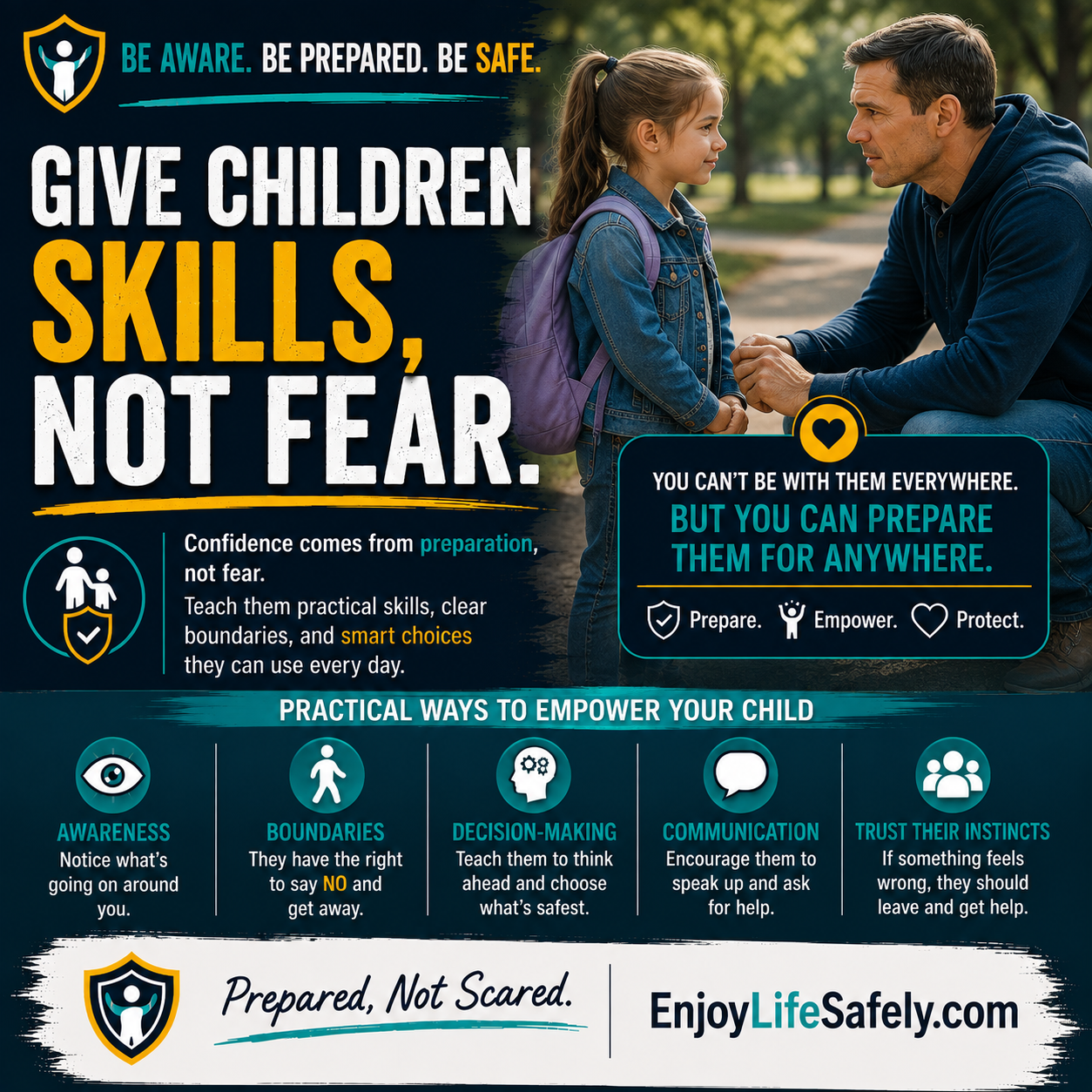
Parents naturally want to protect their children.
I know I always wanted to protect my daughter.
But eventually our children move beyond our immediate reach.
They walk to school without us.
They ride bicycles.
They visit friends.
They join teams.
They get phones.
They start driving.
And eventually, as I'm experiencing now, they graduate from college, begin careers, and build lives of their own.
We can't personally protect them every second of every day.
What we can do is give them tools.
Teach awareness.
Practice good habits.
Create communication plans.
Set boundaries.
Talk about online safety.
Teach them how to find help.
Encourage them to report warning signs.
And most importantly, make sure they know they can come to us when something goes wrong.
Back-to-school safety isn't about convincing children that the world is dangerous.
It's about helping them understand that their actions matter.
We want our children to learn, explore, make friends, experience new things, become more independent, and enjoy this stage of their lives.
A little awareness and preparation can help them do all of those things more safely.
Whether you're walking a little one to elementary school, watching a teenager drive away to high school, or helping a young adult move into a college dorm, the goal is ultimately the same:
Help them become capable of making good decisions and taking appropriate action when you're not standing beside them.
Prepared, not scared.
That's a lesson worth taking back to school.