A Familiar Place A Stark Reminder
Just last week, I shared a photo on social media of my family enjoying burgers at an In-N-Out in Las Vegas. Someone commented that a brand-new In-N-Out had just opened in Twin Falls, Idaho. Since we live in Montana, that would actually be the closest In-N-Out to us.
I replied that it was still a little too far for a quick burger run, so we'd continue making In-N-Out one of our favorite stops whenever we traveled. The last time my wife and I did that was during our 25th anniversary trip to Las Vegas, where we enjoyed seeing Rod Stewart and Penn & Teller before grabbing one of our favorite burgers.
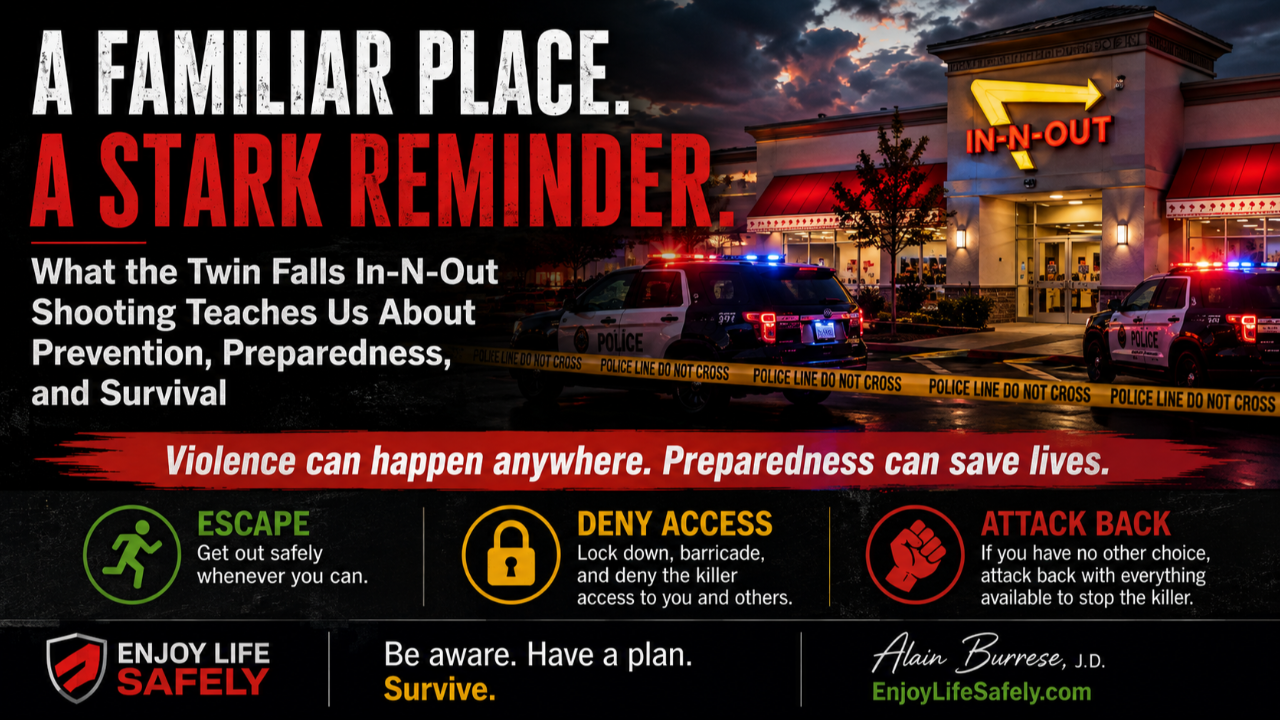
Then Saturday I learned that the Twin Falls In-N-Out had become the scene of a fatal shooting.
According to police, multiple people were killed, including the suspected gunman, while several others were injured during what authorities described as a chaotic active shooter incident.
It's heartbreaking.
It's also a reminder that violence doesn't just happen in places we think of as dangerous. It happens in restaurants, grocery stores, churches, schools, shopping malls, movie theaters, concerts, hospitals, workplaces, and countless other locations where ordinary people gather every day.
That is why I continue teaching active shooter response and why I wrote Survive a Shooting. Unfortunately, these incidents continue to remind us that preparation still matters.
Prevention Comes First
While I spend a great deal of time teaching people what to do during an active shooter incident, I would much rather prevent one from ever happening.
That should always be our first goal.
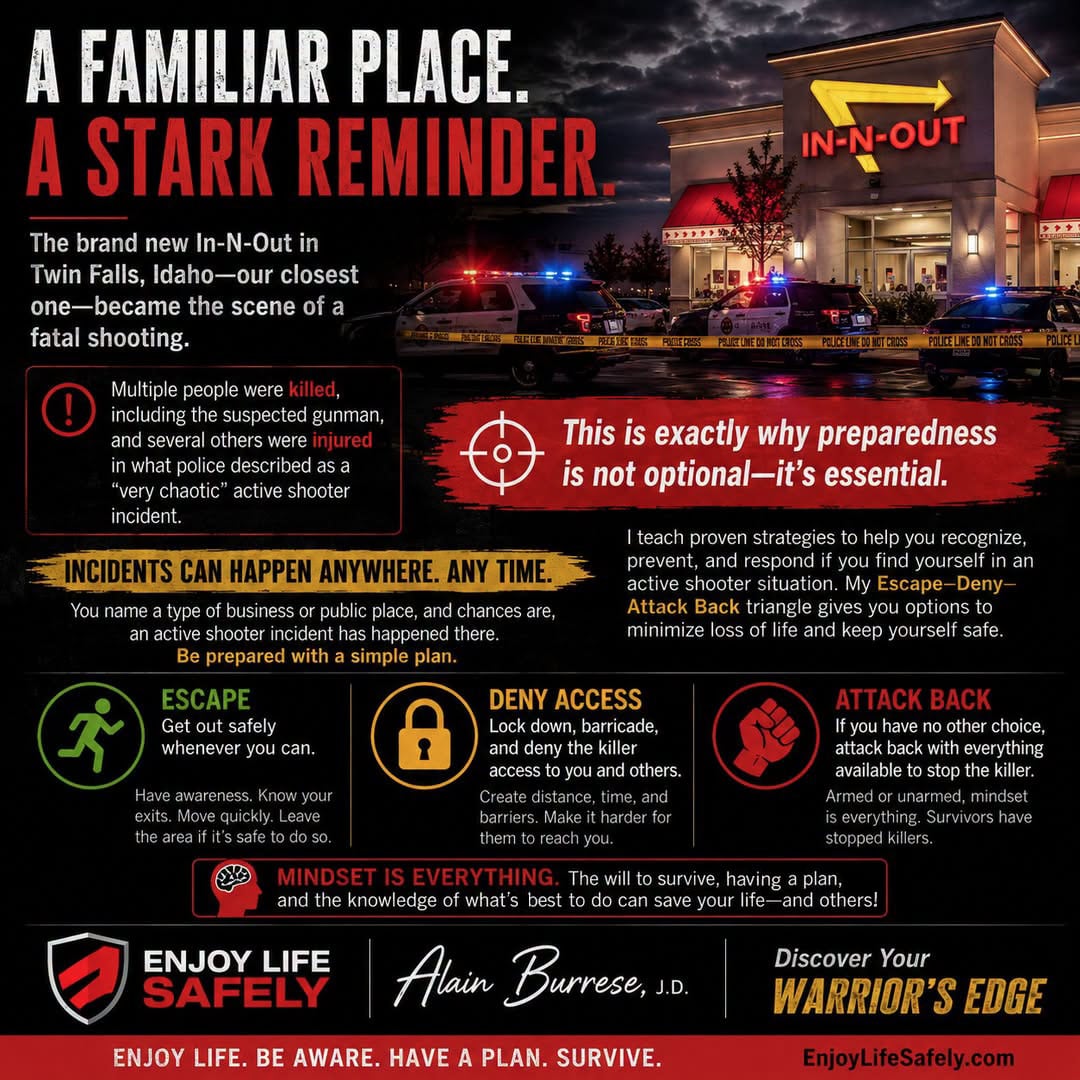
Many attackers don't simply wake up one morning and commit violence without warning. In many cases, there are behaviors, warning signs, threats, or significant changes that concern family members, coworkers, classmates, teachers, neighbors, or friends long before an attack occurs.
Sometimes people dismiss those warning signs.
Sometimes they don't know what to look for.
Sometimes they are afraid to report what they've seen because they don't want to overreact.
And sometimes the individual desperately needs help before they reach a crisis point.
We need to become better at recognizing concerning behavior, reporting legitimate threats, and connecting people with the help they need before violence occurs. Prevention isn't about treating everyone as a suspect. It's about caring enough to notice when someone appears to be heading down a dangerous path and taking responsible action before lives are lost.
Every attack prevented is a tragedy avoided.
But We Must Also Be Prepared
As much as I wish prevention alone were enough, we know it isn't.
Some attacks happen despite everyone's best efforts.
That is why everyone should have a simple plan if they ever find themselves in an active shooter situation.
Under extreme stress, people often freeze because they have never considered what they would do. Having a simple framework gives your mind something to work from when every second matters.
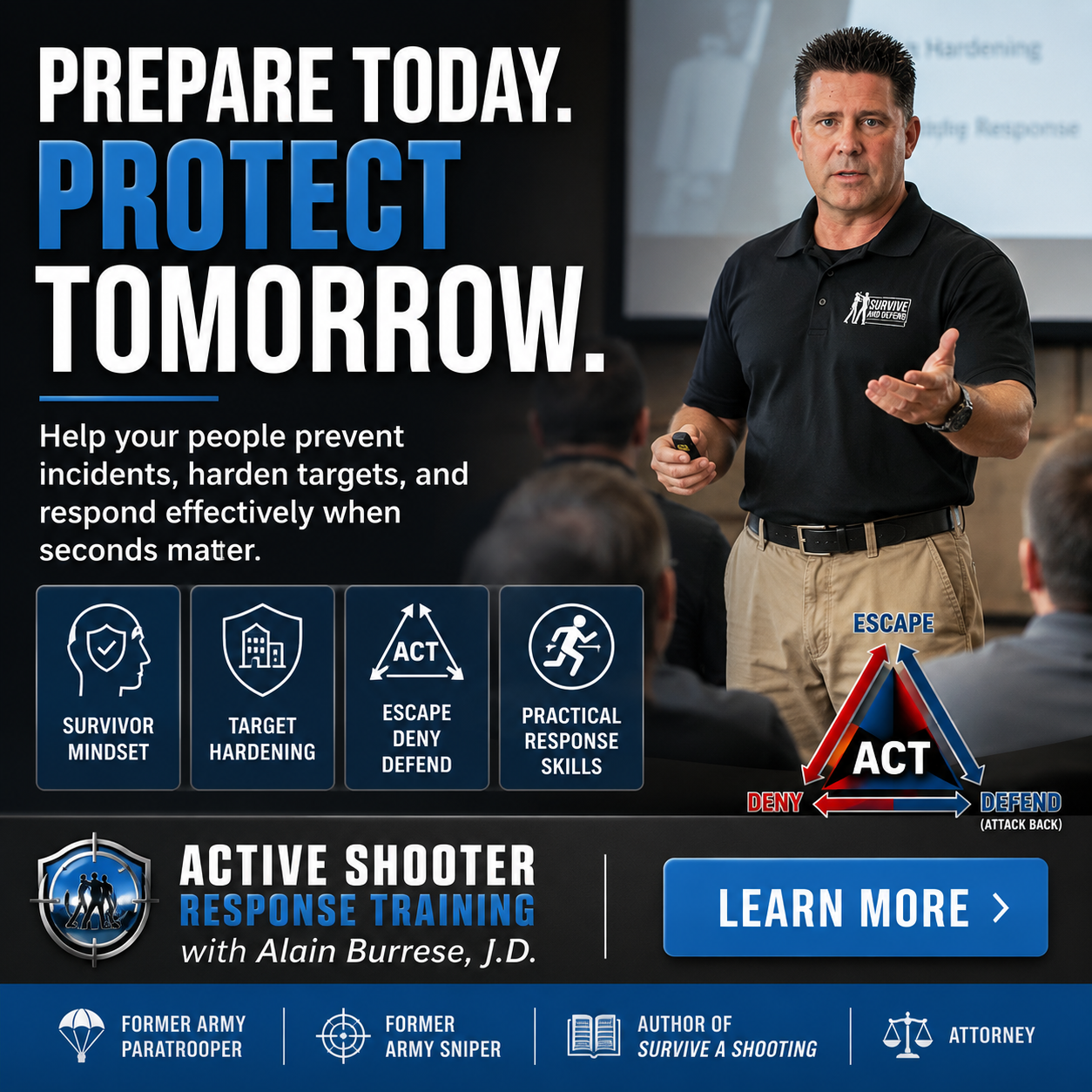
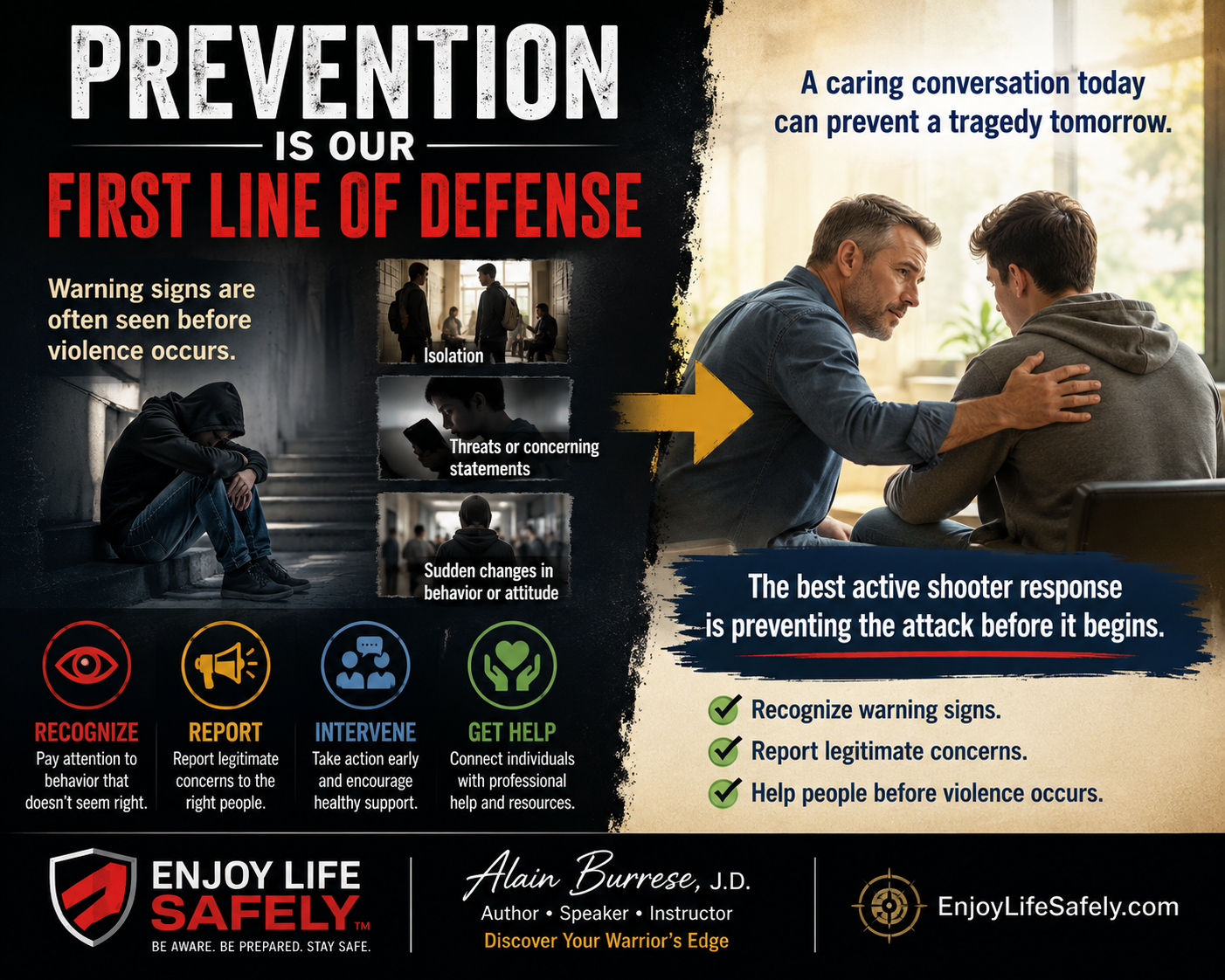
The response model I teach is built around three primary options:
Escape
If you can safely leave the area, do so immediately.
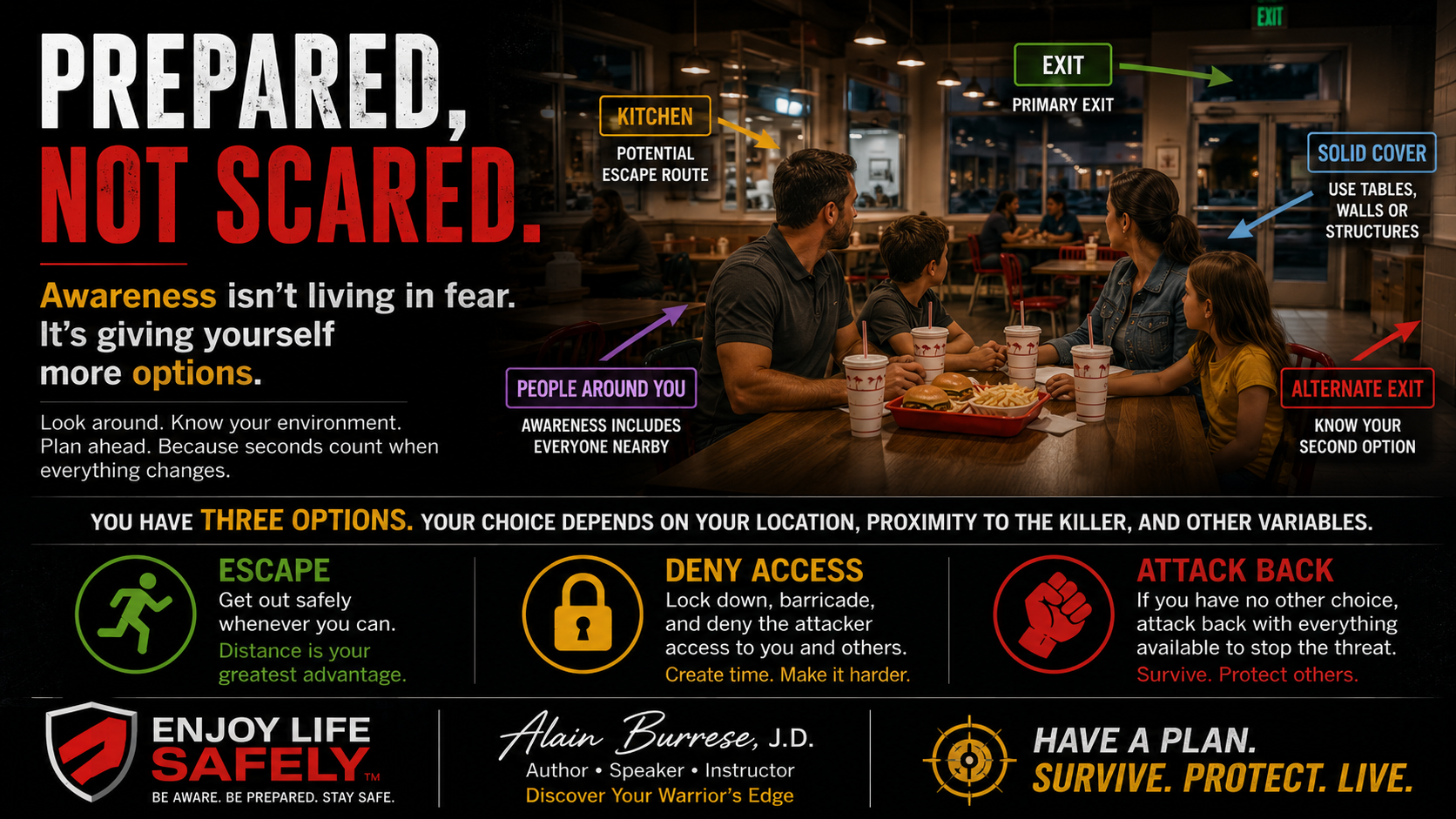
Know where exits are whenever you enter a building. Don't wait for others to decide what to do. Distance is one of your greatest allies.
Deny
If escaping isn't possible, deny the attacker access to you.
Lock doors.
Barricade entrances.
Turn off lights.
Remain quiet.
Create obstacles that slow or prevent the attacker from reaching you.
Sometimes a few seconds can make all the difference.
Attack Back
If you have no safe avenue of escape and the attacker reaches you, you may have no choice but to attack back.
This is not about being aggressive.
It is about surviving.
History has shown that both armed and unarmed citizens have successfully stopped active killers. People have fought back using firearms, improvised weapons, and even their bare hands. They acted because they understood that doing nothing was no longer an option.
The key is committing fully to stopping the threat.
The Twin Falls tragedy provides another example of why decisive action can matter. During the attack, an armed citizen returned fire at the killer, interrupting the assault and forcing the gunman to react. Authorities have credited the armed citizen and an off-duty law enforcement officer with helping prevent additional casualties. The killer ultimately turned the gun on himself before responding officers were able to stop him. Incidents like this remind us that, in many active shooter attacks, it is often the actions of armed or unarmed citizens in those first critical moments that make the greatest difference before law enforcement can fully intervene.
Mindset Is Everything
More important than any technique is your mindset.
If you have already accepted that you will do whatever is necessary to survive, you are far more likely to take decisive action when it matters.
That mindset can help you move instead of freezing.
It can help you protect your family.
It can help you help others.
Throughout my books and training, I emphasize that developing the survivor's mindset is one of the most valuable things you can do before you ever face a crisis.
Prepared, Not Scared
Some people mistakenly believe that talking about active shooter response encourages fear.
I believe the opposite.
Preparation reduces fear.
When you understand your options, you become more confident.
You can continue traveling, attending concerts, eating at your favorite restaurants, shopping, and enjoying life because you've taken the time to think through what you would do if something unexpected happened.
That is what Enjoy Life Safely is all about.
I don't want people living in fear.
I want people living fully while being prepared.
Final Thoughts
My heart goes out to everyone affected by the tragedy in Twin Falls. Families have lost loved ones. Others are recovering from injuries and emotional trauma that may last a lifetime.
The best outcome is always preventing these attacks before they begin. That requires awareness, responsible reporting, intervention, and getting help to people who are showing signs they may become a danger to themselves or others.
But until we eliminate these tragedies entirely, each of us should also have a plan.
Think ahead.
Recognize warning signs.
Know your exits.
Understand your options.
Develop the mindset to survive.
Because violence can happen almost anywhere.
Being prepared may one day save your life or the life of someone you love.
Alain Burrese, J.D.
Author of Survive a Shooting
Founder, Enjoy Life Safely