Targeting Matters: Hitting the Right Target for Maximum Effect
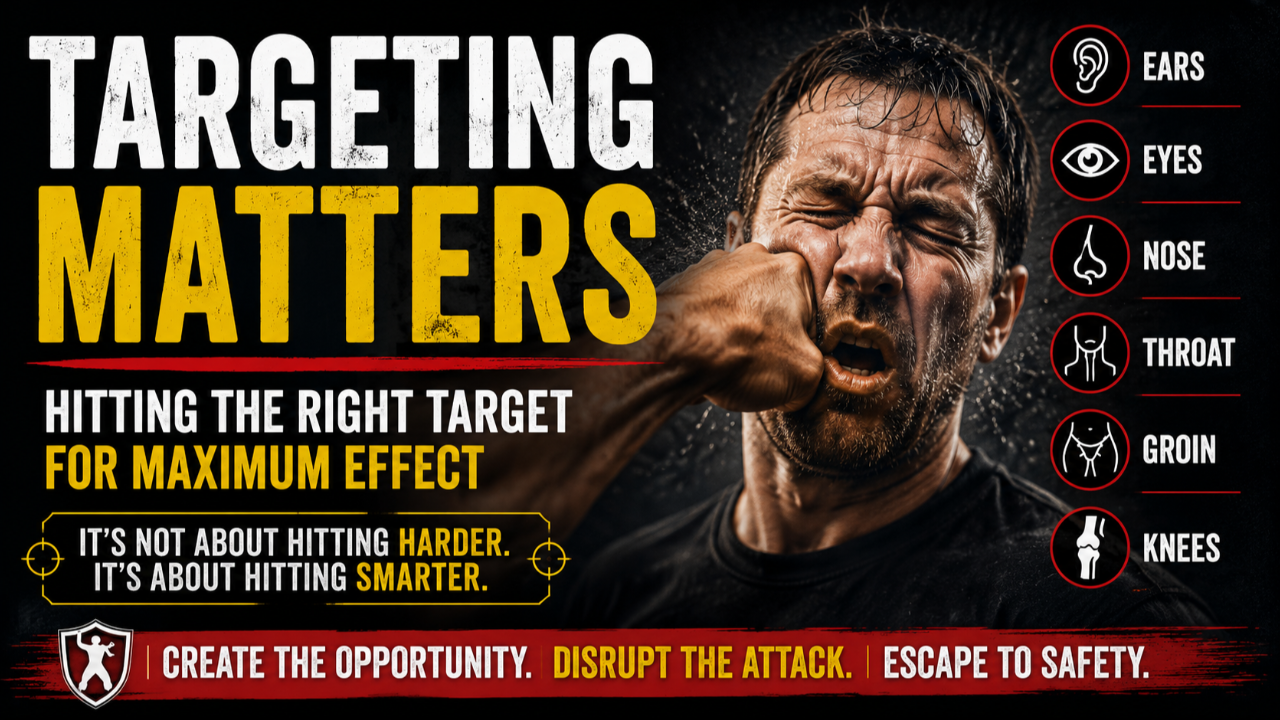
One of the demonstrations I often use in my self-defense classes is simple, but it drives home an important lesson. I'll throw a very hard punch close to a student—fast enough to get their attention, but not actually touching them. Then I'll ask, "Did that hurt?" or "How much did that hurt?"
The answer is always the same: "Not at all."
My response is, "Exactly. I didn't hit the target."
The lesson is straightforward. Power alone is not enough. You can throw the hardest punch in the world, but if it misses the target or lands in an area that doesn't significantly affect the attacker, it may accomplish very little. I've also pointed out that punching a large, strong person square in the chest often won't have much effect. The chest is a relatively durable area. Compare that to a strike aimed at a more vulnerable target, and the results can be dramatically different.
This is why targeting is one of the most important concepts in self-defense.
Targeting Vulnerable Areas
In a self-defense situation, your primary objective is not to win a fight. Your goal is to stop the attack long enough to escape, create distance, or get help. To do that, you need to focus on areas of the body that are more vulnerable and more likely to disrupt an attacker's ability to continue.
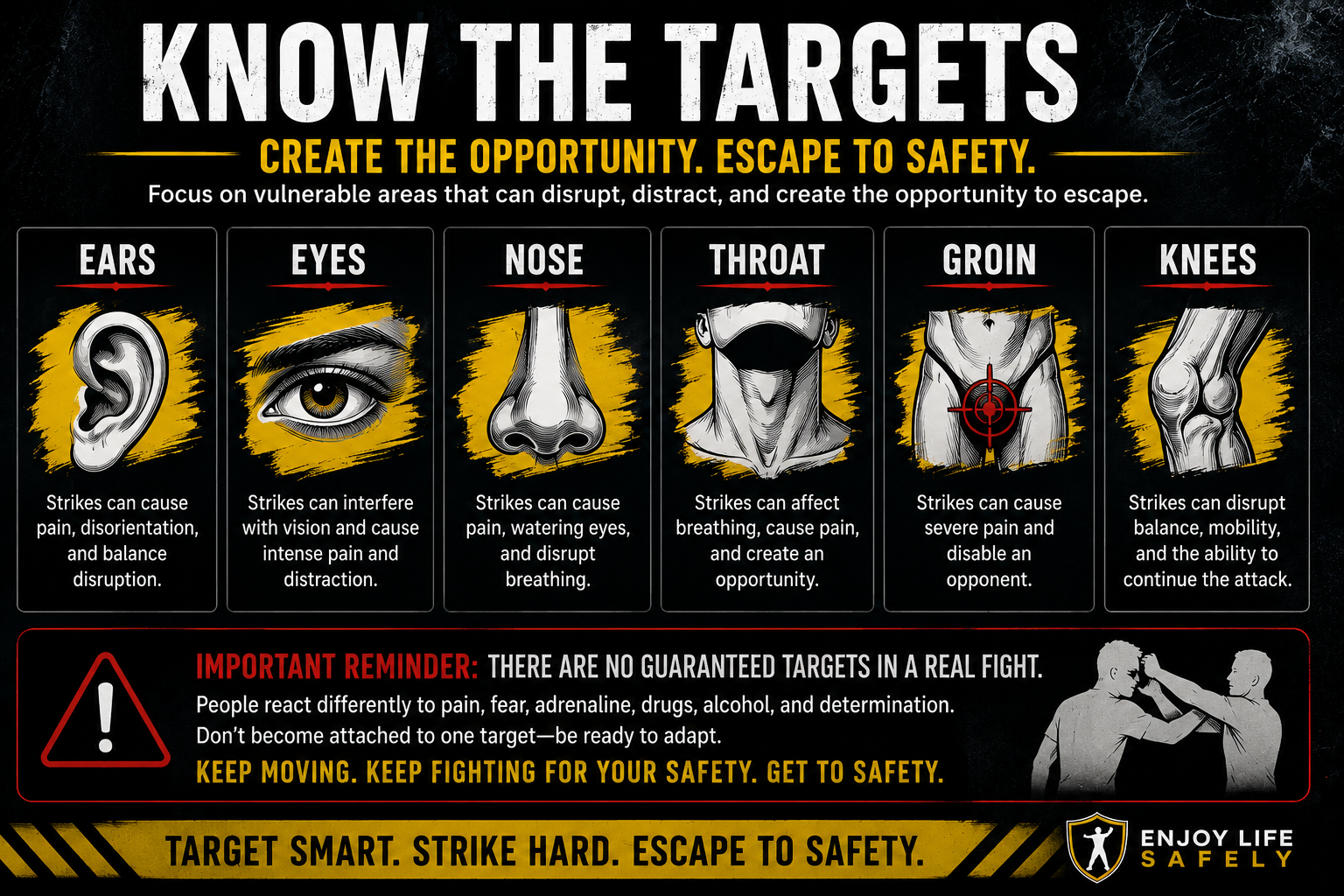
Some of the most commonly taught vulnerable areas include the eyes, ears, nose, throat, groin, and knees. These targets can produce pain, distraction, loss of balance, impaired vision, or other physical effects that create an opportunity to escape.
A strike to the eyes can interfere with vision. A strike to the ears can cause pain, disorientation, and balance disruption. A strike to the nose can create pain, watering eyes, and distraction. The throat is sensitive and can affect breathing. The groin is highly vulnerable for many attackers, and the knees can be targeted to disrupt mobility and balance.
However, it's important not to become overly attached to any single target. There are no guaranteed targets in a real fight. Human beings are unpredictable, and people react differently to pain, fear, adrenaline, drugs, alcohol, and determination.
For example, I've personally seen people take extremely hard groin strikes that didn't even slow them down. Many people assume a groin shot is an automatic fight-stopper, but real violence doesn't always follow the script. Sometimes a target works exactly as expected. Sometimes it doesn't.
That's why self-defense is about creating opportunities, not looking for a magic button that instantly ends the fight. If one target doesn't produce the desired result, you may need to continue moving, striking, creating distance, or targeting another vulnerable area. The goal is to keep fighting for your safety until you can escape.
The key isn't just knowing these targets exist. The key is learning to recognize opportunities to access them under stress and understanding that no single target should ever be relied upon as a guaranteed solution.
Use Your Strongest Weapons
Once you've identified an appropriate target, you want to use the most effective tool available. Depending on the situation, that could be your palm, elbow, knee, forearm, foot, or an improvised object you have access to.
Many people mistakenly focus on complicated techniques. Under stress, simple and powerful usually works better. Gross motor movements directed at vulnerable targets are often more reliable than intricate techniques that require perfect timing and precision.
The combination of a vulnerable target, a powerful strike, and the willingness to adapt if your first choice doesn't work dramatically increases the effectiveness of your self-defense response.
Accuracy Beats Strength
One of the biggest misconceptions about self-defense is that bigger and stronger always wins. Strength certainly helps, but accuracy often matters more.
I've seen smaller martial artists and students generate impressive results because they understood targeting. They didn't rely on brute force. They relied on hitting the right target at the right time.
Think of it this way: a flashlight shines light everywhere, while a laser focuses energy into a precise point. Effective self-defense works much the same way. Focused effort on a vulnerable target produces far greater results than random strikes delivered with maximum effort.
Training Builds Confidence
Knowing where to strike is important, but training is what helps you apply that knowledge under pressure. Self-defense training develops awareness, decision-making, timing, and confidence. It also helps you understand what targets may be available in different situations and how to access them effectively.
The more you train, the more likely you are to react decisively when seconds matter.
Final Thoughts
When it comes to self-defense, targeting matters. Power without accuracy is often wasted effort. A hard strike that misses or lands on a durable area may have little effect, while a well-placed strike to a vulnerable target can create the opportunity you need to escape danger.
At the same time, don't fall into the trap of believing any target is guaranteed to work every time. Real violence is unpredictable. Successful self-defense requires adaptability, determination, and a willingness to continue fighting for your safety if your first tactic doesn't produce the desired result.
Remember, the goal isn't to stay and fight. The goal is to stop the attack, create an opportunity, and get to safety. Understanding vulnerable targets and learning how to strike them effectively can significantly improve your ability to protect yourself when it matters most.
Train smart, stay aware, and remember: it's not just how hard you hit—it's where you hit that counts.