Trust Your Instincts: Your Built-In Early Warning System
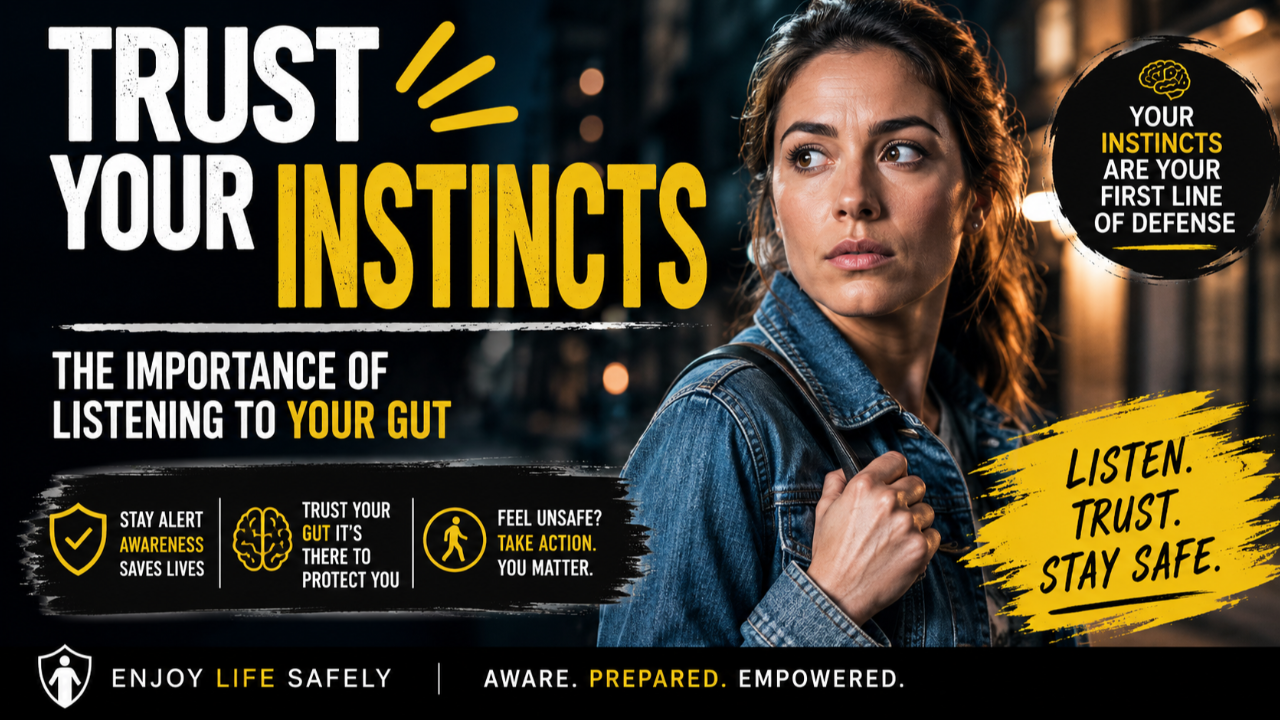
One of the simplest and most powerful safety tools you have is something you carry with you everywhere: your instincts.
Have you ever met someone who seemed perfectly normal, yet something just didn't feel right? Have you ever walked into a place and immediately felt uncomfortable, even though you couldn't explain why? Maybe you've had a sudden urge to leave a situation, change directions, or be more alert.
When those feelings happen, pay attention.
Your intuition, often called a gut feeling, is your body's built-in early warning system. It exists for a reason. Throughout human history, the ability to recognize danger quickly has helped people survive. Long before we had security cameras, smartphones, or modern self-defense training, people relied on their awareness and instincts to recognize threats and avoid danger.
That same ability still exists today.
Understanding Intuition
Many people think intuition is mysterious, but in reality, it is often your brain processing information faster than your conscious mind can understand it.
Your subconscious constantly notices details around you. It picks up on body language, tone of voice, unusual behavior, environmental changes, and other subtle clues. Sometimes your brain recognizes a potential problem before you can clearly identify what it is.
The result is that uneasy feeling in your stomach, the hairs standing up on the back of your neck, or that little voice telling you that something isn't right.
Those feelings deserve your attention.
Why People Ignore Their Instincts
Unfortunately, many people talk themselves out of listening to their gut feelings.
One reason is social pressure. We don't want to appear rude, paranoid, or unfriendly. Someone may feel uncomfortable around a stranger but continue the conversation because they don't want to hurt someone's feelings.
Another reason is self-doubt. People often tell themselves they're overreacting or imagining things.
Sometimes people simply aren't paying attention. Modern life is full of distractions. Phones, headphones, and busy schedules can make it easy to miss the signals our instincts are trying to send.
The truth is that you do not need to justify feeling uncomfortable. If something feels wrong, that feeling alone is enough reason to create distance, leave the area, or become more alert.
Your safety is more important than being polite.
How to Strengthen Your Intuition
Like any skill, learning to trust your instincts gets easier with practice.
Pay Attention to Your Feelings
Notice how you feel in different situations. If you suddenly feel nervous, tense, or uneasy, don't immediately dismiss those feelings. Ask yourself why you might be feeling that way.
Reflect on Past Experiences
Think about times when you had a gut feeling. How often was it correct? Most people can remember situations where they ignored their instincts and later wished they had listened.
Stay Present
Situational awareness and intuition work together. The more aware you are of your surroundings, the more information your brain has available to recognize potential problems.
Don't Overanalyze
Your first instinct is often your most honest one. While it's important not to panic, it's equally important not to spend so much time rationalizing that you ignore warning signs.
Take Action
If something feels wrong, do something about it. Move to a safer location. Leave the area. Call a friend. Ask for help. Create distance. Small actions taken early can prevent much bigger problems later.
Better Safe Than Sorry
Throughout my years teaching self-defense, personal safety, and situational awareness, I've heard countless stories from people who avoided becoming victims because they listened to their instincts.
Many of them couldn't explain exactly what was wrong at the time. They simply felt that something wasn't right and acted on that feeling. Later, they discovered they had avoided a dangerous situation.
The opposite is true as well. Many victims can look back and remember a moment when they felt uncomfortable but ignored the warning signs.
That's why I encourage people to trust themselves.
You don't have to wait for proof that something is wrong before taking steps to protect yourself.
Final Thoughts
Your intuition is one of the most valuable safety tools you possess. It costs nothing, requires no special equipment, and is available every moment of every day.
When you feel something isn't right, listen to that inner voice. It may be noticing something your conscious mind hasn't yet recognized.
Trust your instincts. Stay aware. Take action when necessary.
You may never know exactly what danger you avoided, and that's okay. The goal isn't to prove you were right. The goal is to get home safely.
As I often say:
"Trust your gut instinct when you feel unsafe; these feelings exist for a reason, so don't ignore them."
Stay safe, stay aware, and enjoy life safely.