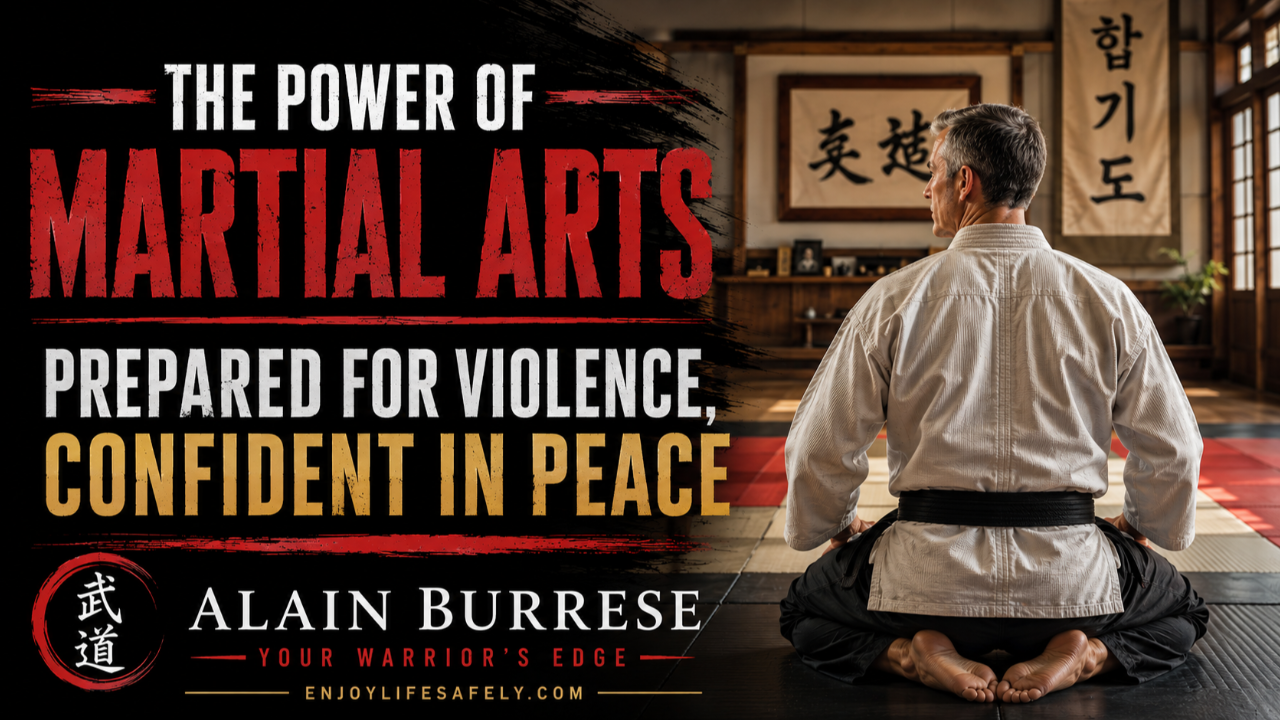
The Power of Martial Arts: Prepared for Violence, Confident in Peace
Martial arts are often viewed primarily as a way to learn how to fight or defend yourself. And make no mistake, I believe the ability to physically protect yourself is an important part of martial arts training.
If violence becomes unavoidable, I want to have the skills, mindset, and determination to protect myself and the people I care about.
But after decades of martial arts training, I believe the greatest benefits of training extend far beyond punching, kicking, throwing, grappling, joint locking, or any other physical technique.
Martial arts should prepare you for violence while helping you become more confident in peace.
I say should because I don't believe every martial artist trains this way, and I certainly don't believe every instructor teaches this way.
Simply putting on a uniform, earning a black belt, or becoming skilled at fighting doesn't automatically make someone disciplined, honorable, respectful, or wise. Martial arts can provide the environment for developing those qualities, but ultimately, each person has to choose to embrace them.
That's the philosophy behind much of what I teach and write about.
It's also at the heart of what I call Your Warrior's Edge.
What Is the Warrior's Edge?
The Warrior's Edge is the edge you develop in life by training with warrior principles and embracing the philosophy I believe should accompany martial arts training.
It's about developing qualities such as:
- Honor
- Integrity
- Courage
- Awareness
- Preparedness
- Resilience
- Adaptability
- Discipline
- Determination
- Lifelong learning
- Confidence
These qualities certainly help you become a better martial artist. But more importantly, they can help you become better at life.
That's why I share so many articles, posts, lessons, and thoughts about these topics. It's why I teach the things I do. Physical self-defense is important, but I want people to gain something from their training that remains useful even when there isn't a physical threat in front of them.
Your Warrior's Edge isn't just about what you can do to another person.
It's about who you become through your training.
Prepared for Violence
There is an uncomfortable reality that sometimes gets lost when people talk about the philosophy of martial arts.
Violence exists.
There are people who will hurt others. There are situations where talking won't work, walking away isn't possible, and someone may have to physically defend themselves or another person.
Martial arts training should help prepare you for those moments.
You learn how your body moves. You learn how to strike, control, escape, grapple, throw, or defend against attacks. Depending on the martial art and how you train, you may learn to function under pressure and continue when you're tired, uncomfortable, frustrated, or afraid.
You also learn that skills require practice.
Techniques don't magically appear when danger arrives. Confidence that isn't backed by preparation can disappear quickly when tested.
That's why I believe in being prepared, not scared.
Preparation isn't paranoia.
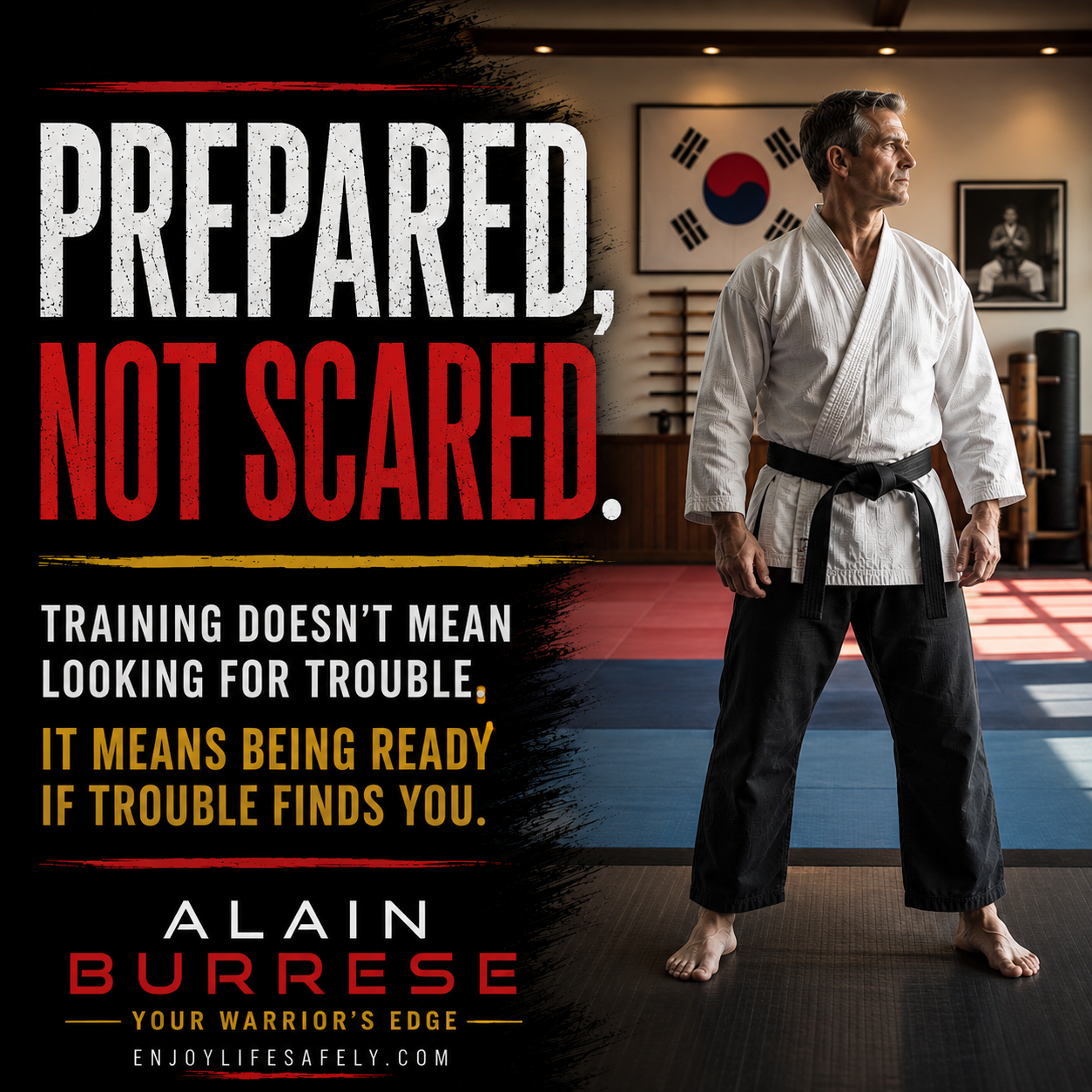
Training doesn't mean walking around looking for danger or expecting violence around every corner. In fact, good training should have the opposite effect.
Preparation can allow you to move through life with greater confidence because you've taken responsibility for developing your abilities.
Confident in Peace
One of the paradoxes of martial arts is that becoming more capable of violence should also teach you greater respect for its consequences.
When you have trained seriously, you understand that physical confrontations are unpredictable.
People get injured. People fall and hit their heads. Weapons can appear. Friends can join in. Police arrive after seeing only part of what happened. Legal and financial consequences can follow.
There are very few prizes for "winning" a fight that didn't need to happen.
That's why one of the most important martial arts skills is knowing when not to fight.
A confident person doesn't need to answer every insult.
A disciplined person doesn't have to prove how tough they are.
A person with self-control can sometimes walk away when their ego is telling them to stay.
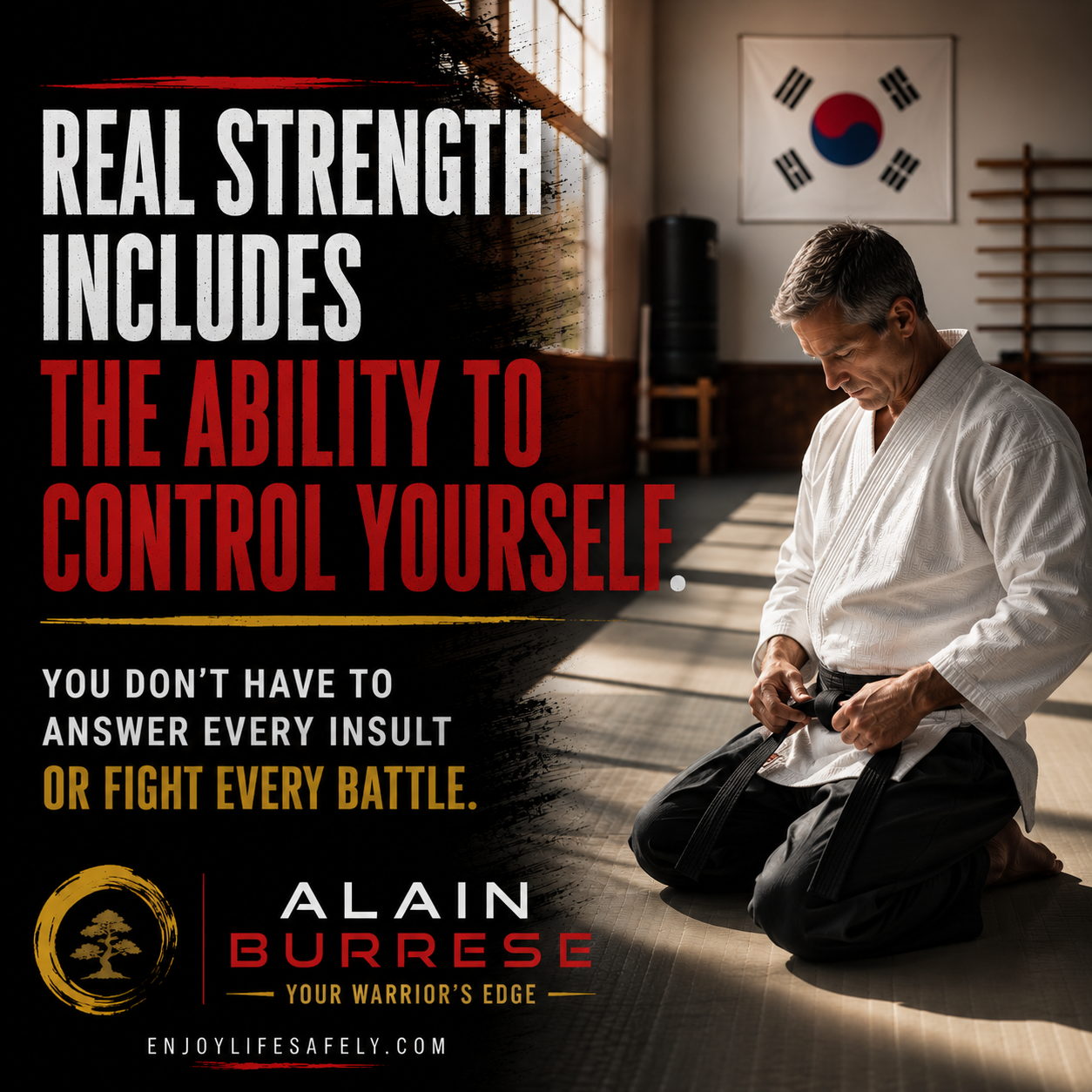
That isn't weakness.
It can require far more strength to control yourself than to lose control.
Capability Creates Responsibility
As your abilities increase, so should your sense of responsibility.
The more capable you become of hurting someone, the more seriously you should consider when those abilities are justified.
That doesn't mean hesitating when you truly need to protect yourself. If violence is unavoidable and you must defend yourself or someone else, you need the ability to act decisively.
But there is an enormous difference between being capable of violence and being eager for violence.
The martial artist I strive to be, and the kind of martial artist I try to encourage others to become, understands that difference.
We train hard so that we have options.
We develop awareness so we can recognize trouble sooner.
We develop confidence so fear doesn't automatically control our decisions.
We develop discipline so ego doesn't control them either.
And we develop physical skills so that if avoidance, communication, de-escalation, or escape fails, we have something else to fall back on.
Calmness Is a Skill Too
People sometimes imagine martial arts confidence as fearlessness.
I don't.
Fear is a normal human response. What matters is what you do with it.
Training gives you opportunities to experience pressure in controlled environments. Someone is trying to hit you. Someone has grabbed you. You're trying to escape a hold. You're sparring, grappling, competing, testing, or simply struggling to learn something that isn't coming easily.
Over time, you learn something important:
You can be uncomfortable and still function.
You can be under pressure and still think.
You can be afraid and still act.
You can become frustrated and continue working.
Those lessons extend far beyond self-defense.
Life provides plenty of situations where we need to remain calm under pressure, adapt when something goes wrong, recover from setbacks, and keep moving forward.
That's part of the Warrior's Edge too.
The Person You Become
When we're younger, we may be attracted to martial arts because of the physical abilities.
We want to learn how to kick higher, punch harder, throw someone, apply a joint lock, win a match, earn a belt, or defend ourselves.
Those things can be worthwhile goals.
But the longer I've trained, the more I've come to value something else.
The person you become through the training may ultimately be more important than any individual physical skill you acquire.
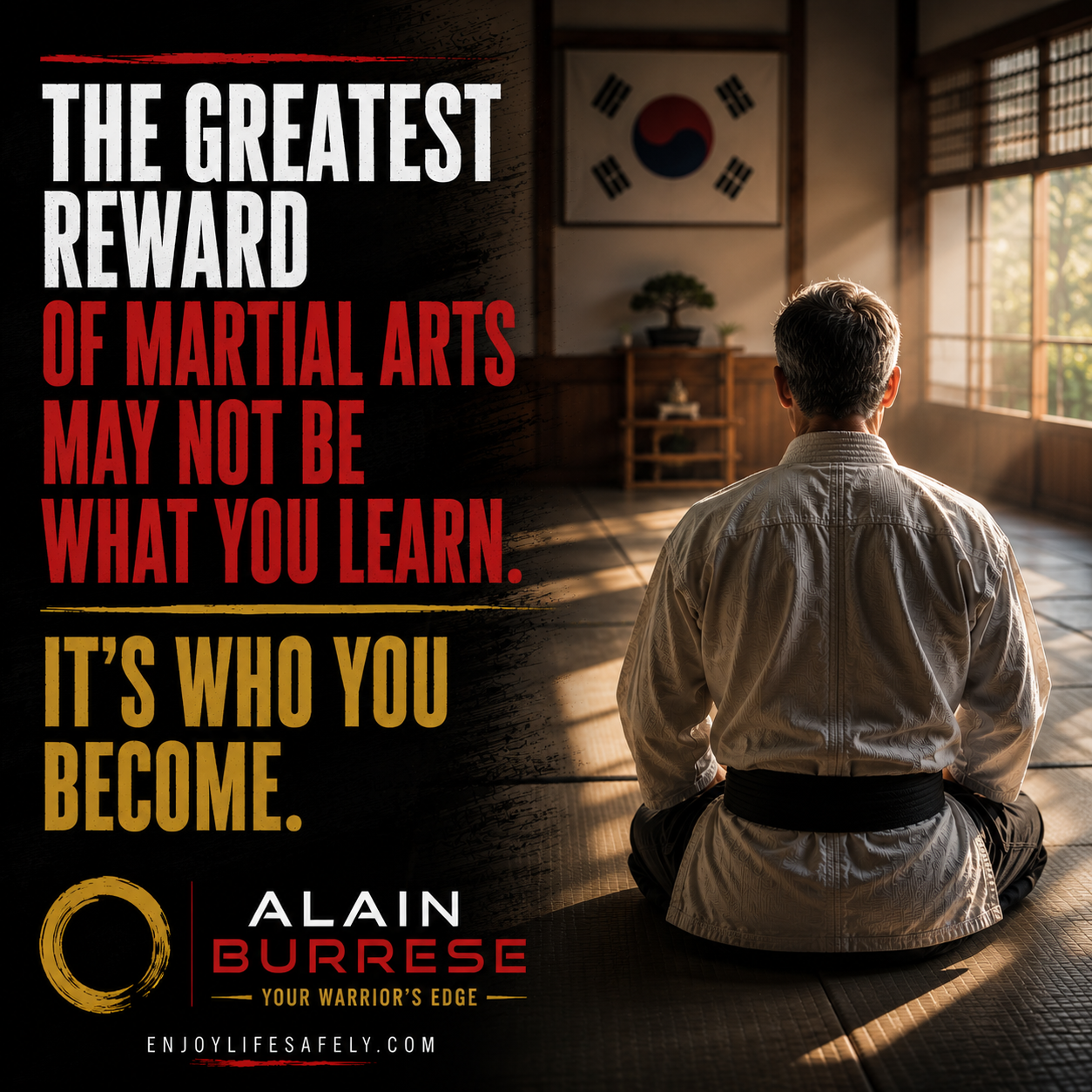
Physical abilities change. Age changes us. Injuries change us. Our speed, strength, flexibility, and athletic ability won't remain exactly the same forever.
But the discipline you developed can remain.
The determination can remain.
The resilience can remain.
The ability to keep learning can remain.
The confidence earned by doing difficult things can remain.
The courage to face challenges can remain.
The awareness to recognize problems earlier can remain.
The integrity to do what's right when doing what's easy would be simpler can remain.
Those qualities become part of who you are.
Taking the Warrior's Edge Into Everyday Life
The real test of martial arts philosophy isn't what happens inside the training hall.
It's what happens when you leave.
Do you show discipline when nobody is watching?
Do you keep your word?
Do you treat people with respect?
Can you control your temper?
Can you remain calm when someone else is losing theirs?
Do you keep learning?
Do you prepare rather than simply hope things work out?
When life knocks you down, do you work to get back up?
When circumstances change, can you adapt?
When something frightens you, can you still move forward?
That's where martial arts becomes much more than physical training.
You begin taking the lessons learned through training and applying them to your career, relationships, health, goals, setbacks, and everyday decisions.
That's when the Warrior's Edge becomes an edge in life.
Prepared, Not Scared
I don't train martial arts because I want violence.
I train so I'm better prepared if violence ever finds me.
I don't teach awareness because I want people walking around afraid.
I teach awareness because recognizing problems sooner gives us more options for avoiding them.
I don't believe strength means dominating other people.
I believe real strength includes the ability to control yourself.
And I don't believe the ultimate goal of martial arts is simply becoming better at fighting.
I believe martial arts, practiced with the right principles and philosophy, can help us become more disciplined, aware, resilient, adaptable, confident, courageous, and capable human beings.
Again, not everyone approaches martial arts this way.
But I do.
It's what I strive for in my own training. It's what I try to teach. It's why I write and share so much about these principles.
And it's what I mean when I talk about discovering Your Warrior's Edge.
Train so you are prepared for violence.
Develop the confidence to live peacefully.
And take the lessons you learn through martial arts with you into everything else you do.
That's the Warrior's Edge.