Taking Care of Your Health Is Part of Protecting Yourself
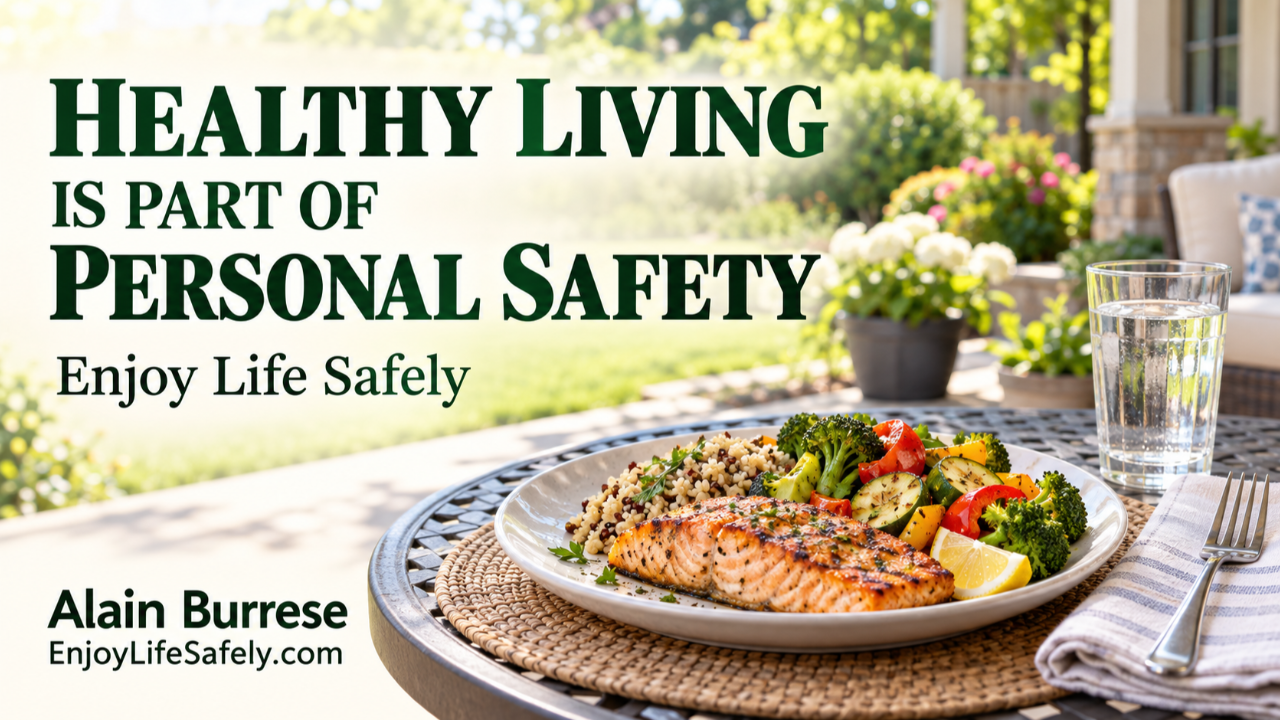
When I talk about keeping yourself safe and enjoying life, I’m not just talking about protecting yourself from the bad guys out there in the world. We also need to take care of ourselves and our health.
It makes little sense to spend hours practicing combative arts, buying guns, and training with defensive tools while ignoring how we eat, how much we move, and how we care for our bodies. Those defensive measures have value. I teach physical self-defense because I believe those skills matter. But looking after your health deserves a place in your personal safety plan, too.
Part of enjoying life safely is living healthy.
And yes, I like my burgers.
If you follow me on social media, you’ve probably seen pictures of burgers I’ve tried in different towns when I travel. I enjoy finding a good burger and sharing it. But I’m not eating burgers 24/7. Those pictures don’t show every meal I eat. At home, I often eat very healthy meals.
I also try to include a variety of exercise in my life: mountain hikes with Rocky, DDP Yoga, lifting weights, bodyweight exercises, riding the stationary bike at the house, martial arts, and other activities that keep me moving.
I’m not presenting myself as someone who does everything perfectly. I’m working on this, too. But I believe taking care of our health is equally as important as learning how to defend ourselves from others.
We want to protect a life we can actually enjoy. Here are ten practical ways to make that part of your everyday routine.
1. Think About What You Want Your Health to Help You Do
Looking better or reaching a particular weight can be motivating. But give yourself reasons that reach beyond the mirror and the scale.
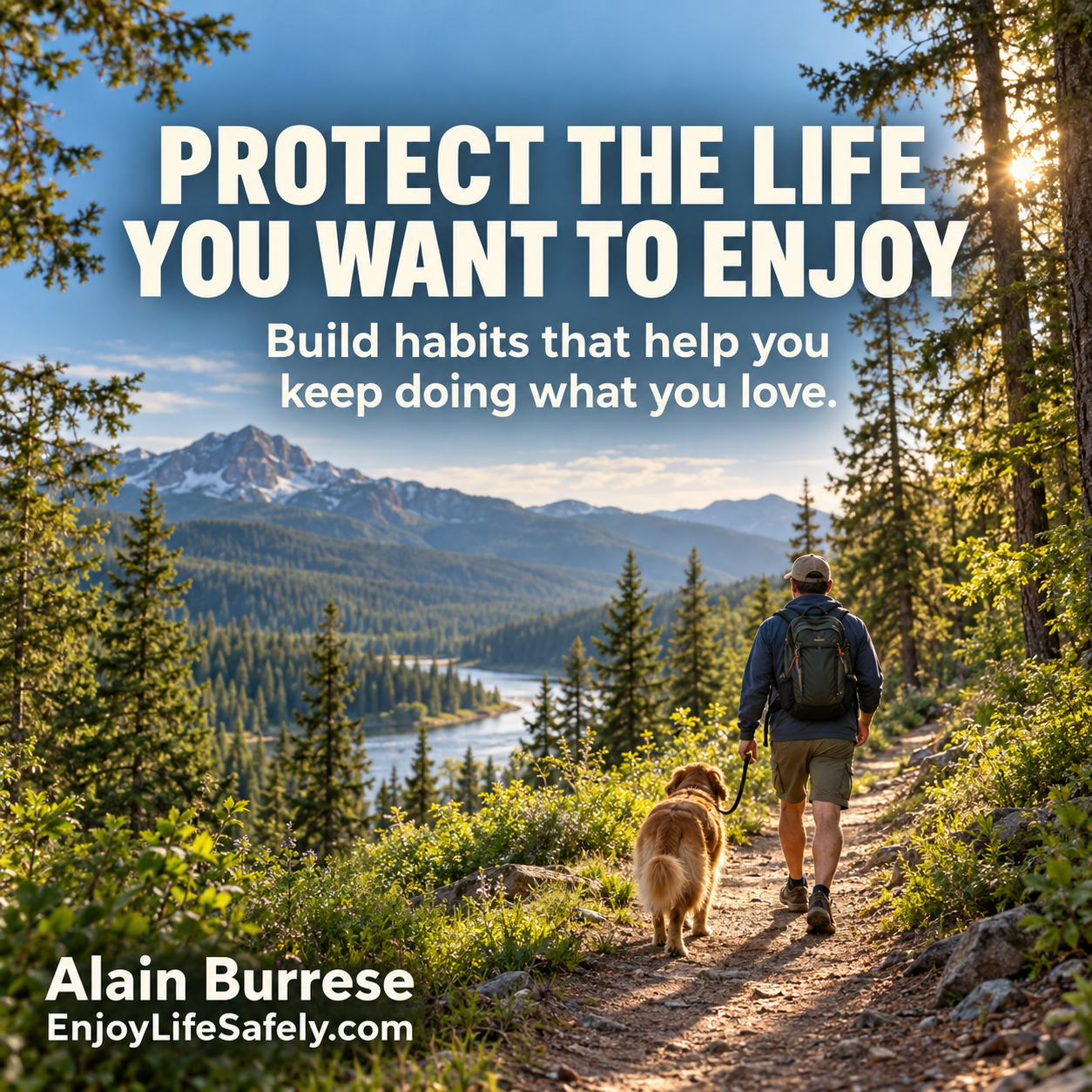
Maybe you want to hike with your dog, travel comfortably, play with your children or grandchildren, or keep practicing your martial art. Maybe you want everyday tasks to feel easier.
For me, getting outside with Rocky is part of the enjoyment I’m trying to preserve. Exercise supports the life I want to live.
Ask yourself: What do I want to keep doing, and what habits will help me do it?
Your answer gives you a reason to follow through when sitting on the couch sounds more appealing than getting up and moving.
2. Make Nourishing Meals Your Everyday Foundation
You don’t need to swear off every food you enjoy. Start by looking at what you eat most often.
Build regular meals around vegetables, fruit, whole grains, beans, and protein foods you enjoy. Include a variety of foods that fit your needs and preferences.
Make that practical. Add vegetables to a meal you already cook. Keep fruit available. Have ingredients for a few simple dinners so being tired doesn’t leave you without a plan.
Healthy eating also needs to be enjoyable. Find meals you like enough to make again. Experiment with seasonings, vegetables, and different ways of preparing your food.
The question is bigger than whether you ate one burger. What does your usual week of eating look like?
3. Pay Attention to Portions
A restaurant’s serving size doesn’t have to determine how much you eat.
Pause before you start. If the meal is more than you need, save some for later or share it. At home, put a portion of a snack in a bowl rather than eating straight from a large bag.
Give yourself time to enjoy your meal and notice when you’ve had enough. You don’t have to finish something simply because it’s on your plate.
You can enjoy your food and still be deliberate about the amount. Portion awareness is one useful part of managing your weight.
4. Notice What You’re Drinking
Food gets most of our attention, but drinks deserve a look, too.
Regular soda, sweetened coffee, and other sugary drinks can add calories without contributing much nutrition. Make water or unsweetened drinks your usual choice, and decide when a sweetened drink is something you really want.
You don’t need to make this complicated. Look at an ordinary day and ask whether your drinks support the habits you’re trying to build.
Sometimes a useful change is as simple as changing what you regularly reach for with lunch.
5. Make Your Surroundings Support Your Choices
Good intentions are easier to follow when you prepare for them.
Put walking shoes where you’ll see them. Have your workout space ready. Keep ingredients for a simple meal on hand. If a particular snack is hard for you to leave alone, think about how much you buy and where you keep it.
We often prepare our surroundings for safety. We check locks, improve lighting, and keep useful equipment accessible. We can apply that same practical thinking to healthy living.
Choose one thing you can arrange today that will make tomorrow’s healthy choice easier.
That might mean preparing lunch, clearing space around your exercise equipment, or laying out clothes for a morning walk.
6. Move Throughout the Day
A workout is useful, but movement doesn’t have to wait for workout time.
Take a walk during a break. Get up between tasks. Do some yardwork. Walk the dog. Use the stairs when they suit your abilities.
For adults, the general activity guideline is at least 150 minutes of moderate-intensity aerobic activity a week, along with muscle-strengthening activity on at least two days. A brisk walk is one example of moderate-intensity activity. You can spread your activity across the week in smaller amounts, and some activity is better than none.
Start with an amount you can manage safely, then build from there.
If you spend much of your day sitting, look for opportunities to get up and move. A short walk between tasks is something you can practice today.
7. Include Strength Work and Activities You Enjoy
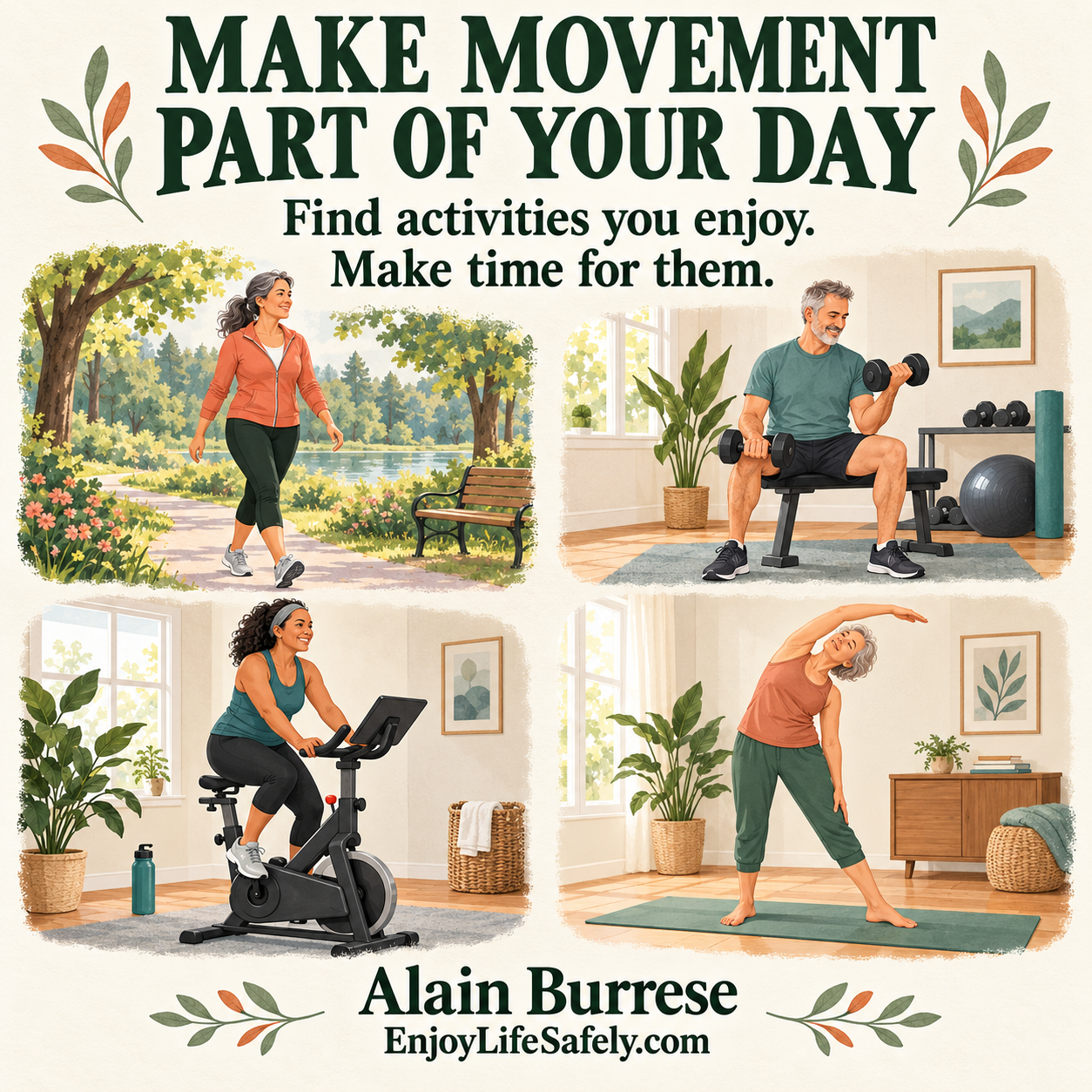
I like having several ways to stay active. A mountain hike with Rocky is different from lifting weights, DDP Yoga, riding my stationary bike, or practicing martial arts. That variety gives me options.
Find your own mix. Include strength work appropriate to your abilities, and choose other activities you look forward to doing.
You might enjoy swimming, dancing, cycling, gardening, or walking with a friend. You don’t have to copy someone else’s routine to build your own.
Adapt the plan to your body. If an injury or health condition affects what you can do, a qualified health professional can help you choose suitable activities.
Working within your current abilities gives you somewhere useful to start. You can challenge yourself while respecting the limitations you need to work around.
8. Put Activity on the Calendar—and Have a Shorter Version Ready
“I’ll exercise when I have time” is easy to postpone.
Decide when you’ll move and what you’ll do. Then have a smaller option for a busy day: a short walk, a brief bike ride, or a few appropriate exercises.
If your planned session gets squeezed out, ask yourself what you can still reasonably do.
Don’t turn a shortened session into a reason to do nothing. A manageable routine gives you something to repeat, even when the week gets crowded.
I have busy days with travel, teaching, writing, and other responsibilities. Having different ways to exercise gives me more opportunities to fit something in.
9. Use Support and Realistic Goals
An encouraging friend, family member, or training partner can help you follow through.
Make your goals specific enough to act on. “Get in shape” is a desire. “Walk after lunch on Monday, Wednesday, and Friday” is a plan.
Notice what you complete. If you’re tracking weight, also keep track of the habits you’re practicing. Give yourself credit for showing up, preparing a good meal, or following through on a planned workout.
And when you get off track, return to the next useful choice.
One oversized meal or missed workout doesn’t require abandoning the week.
You don’t need to wait until Monday or the first of the month. You can make your next good decision today.
10. Give Recovery and Routine Health Care a Place in the Plan
Taking care of yourself includes allowing time for rest and sleep. It also means keeping up with appropriate health appointments and discussing concerns instead of continually putting them off.
Consider scheduling those things with the same seriousness you give your training.
Pay attention to how you’re feeling. If something is persistent, unusual, or affecting your daily life, get appropriate help rather than assuming you should simply push through it.
You pay attention to your surroundings because you want to catch a developing problem. Bring that same willingness to pay attention to your own well-being.
Choose Two Things to Practice This Week
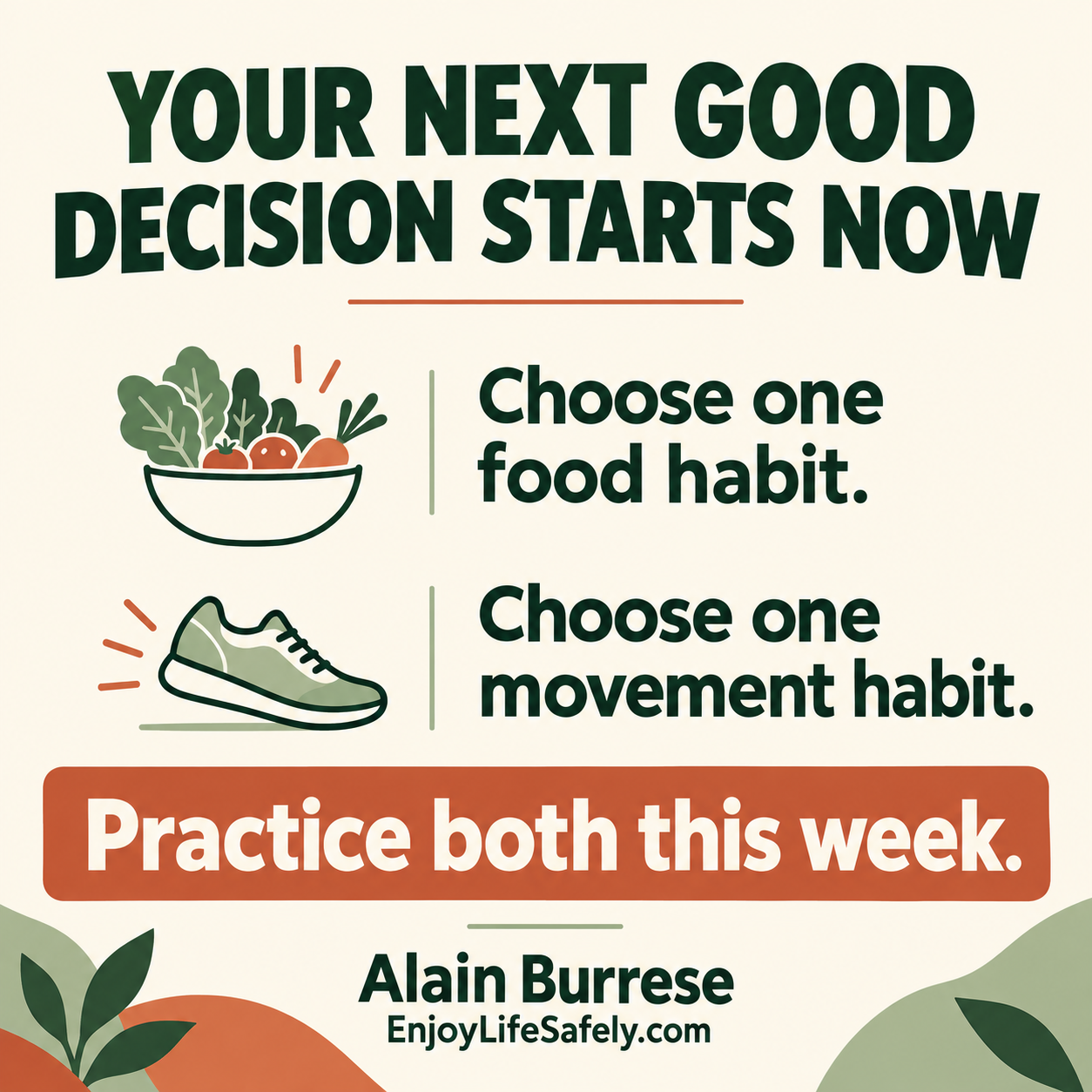
You don’t have to overhaul your life tomorrow. Choose one food habit and one movement habit.
For example:
- Add vegetables to dinner and walk for ten minutes afterward.
- Make water your usual drink and schedule two suitable strength sessions.
- Plan a few meals at home and set aside time for an activity you enjoy.
Be specific enough that you’ll know whether you followed through. Choose something that fits your current abilities and schedule.
At the end of the week, review what worked. Adjust what needs adjusting, and keep going.
Protect the Life You Want to Enjoy
I will continue teaching awareness, avoidance, boundaries, and physical self-defense. I believe in those skills, and I want people to have options when they need them.
I also want people to take care of the body they depend on every day.
Enjoy a good burger. Enjoy time with your family. Get outside. Find activities you like. Build eating and exercise habits that support the things you want to keep doing.
You are worth protecting, and your health deserves your attention.
Enjoy life safely—and make taking care of yourself part of how you do it.
For more practical ideas on safety, self-defense, and living well, subscribe to my Enjoy Life Safely newsletter!
Sources and inspiration: This article was inspired by “Ten Tips for Staying Lean” in the July/August 1999 issue of Nutrition Action Healthletter. For current guidance, see the CDC’s adult physical activity recommendations and NIH’s healthy eating and activity tips.