Situational Awareness: Noticing the Safety Resources Around You
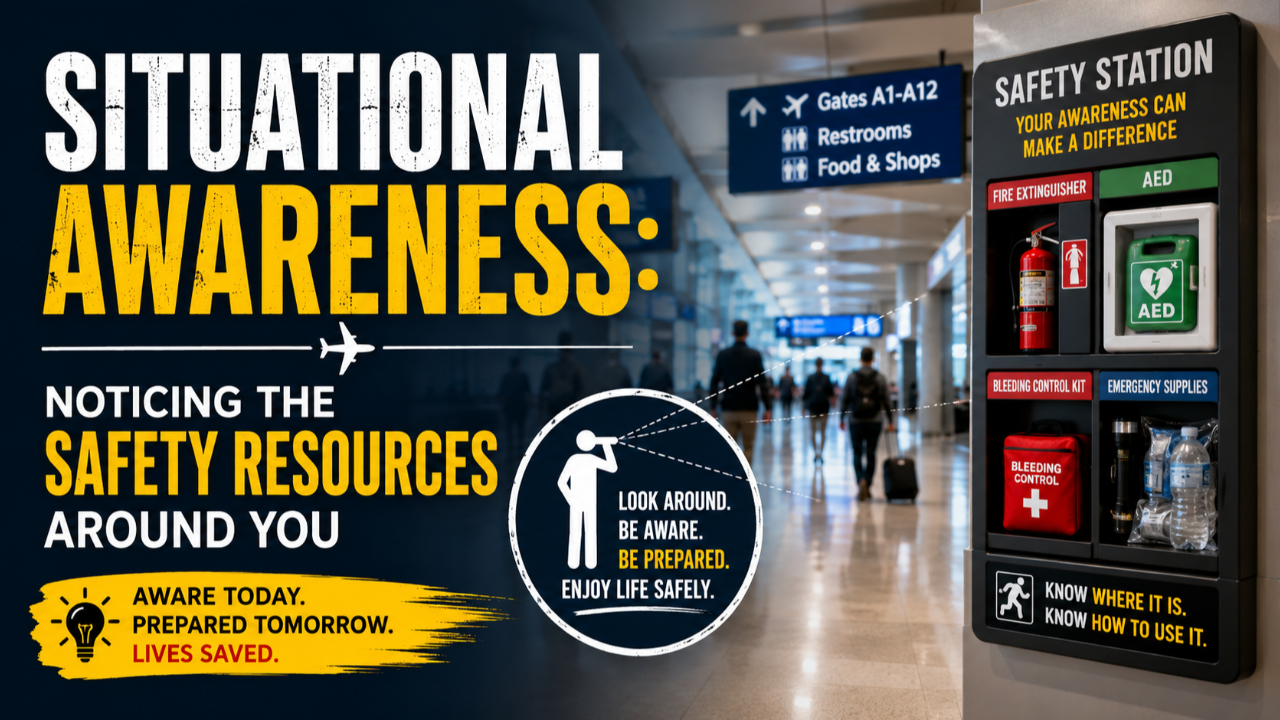
A few years ago, I was traveling through Seattle-Tacoma International Airport on my way to conduct training for a healthcare organization. As I walked through the terminal, I noticed something that most travelers seemed to be completely ignoring.
Strategically placed throughout the airport were safety stations containing fire extinguishers, automated external defibrillators (AEDs), bleeding control kits, and emergency supplies. Thousands of people were walking past these stations, focused on catching flights, checking phones, buying coffee, or finding their gates. Very few appeared to even notice these potentially life-saving resources.
I've seen similar safety stations in other airports over the years, and the same thing seems to happen almost everywhere. Most people walk right by them without giving them a second thought.
That observation reinforced an important lesson I teach in my self-defense and safety programs: situational awareness is not just about spotting danger. It's also about recognizing the resources available to help you if something goes wrong.
When I talk about awareness, I often tell people to pay attention to both the good and the bad. Notice the people around you. Notice what's happening in your environment. Notice potential problems, but also notice the things that could help you solve those problems. Emergency equipment falls into that category.
One of the first things I do when entering a building, hotel, restaurant, conference center, or airport is identify the exits. If an emergency occurs, I don't want to waste precious time figuring out how to get out. I already know. The same principle applies to emergency equipment. Knowing where a fire extinguisher, AED, or bleeding control kit is located before you need it can save valuable seconds during a crisis.
Think about a medical emergency. If someone suddenly collapses from cardiac arrest, every minute matters. Knowing the location of the nearest AED could significantly improve that person's chance of survival. The same is true for severe bleeding. Modern bleeding control kits often contain tourniquets, pressure dressings, and other supplies that can help keep someone alive until emergency responders arrive.
Even resources designed for less common emergencies are worth noticing. In some regions, airports and public facilities maintain supplies for earthquakes, severe weather, or other disasters. While we hope never to need them, it is always better to know where they are before an emergency occurs.
The challenge is that most people operate on autopilot. They move from place to place focused only on their immediate task. As a result, they miss both potential dangers and valuable resources.
Situational awareness means paying attention. It means taking a few moments to understand your environment. It means knowing where the exits are, where the safety equipment is located, and what options are available if circumstances suddenly change.
The good news is that this doesn't require paranoia or constant stress. In fact, true situational awareness should enhance your ability to enjoy life. When you're aware of your surroundings and prepared for potential problems, you can relax with greater confidence.
The next time you enter an airport, shopping center, hotel, school, church, or office building, take a moment to look around. Notice the exits. Notice the fire extinguishers. Notice the AEDs. Notice any emergency equipment that might be available.
Those few seconds of awareness could make a tremendous difference someday.
Stay alert. Stay prepared. Enjoy the good things around you. And always remember that awareness isn't just about recognizing danger—it's also about recognizing the resources that can help keep you and others safe.
That's how we Enjoy Life Safely.
Author