Flying Safely: Simple Habits That Can Make a Difference
This morning on Coffee with Alain, I mentioned a couple of trips coming up next year. Later, while looking through Jason Hanson’s book Spy Secrets That Can Save Your Life, I stopped at his chapter on travel safety.
It reminded me that I haven’t written about flying safely for a while.
I’m always reading, learning, and looking for information I can share through Enjoy Life Safely. Sometimes a book introduces a new idea. Other times, it reminds me of something worth revisiting. Hanson’s discussion of being ready to act and leaving belongings behind during an emergency did exactly that.
When we think about flying, we usually focus on buying tickets, packing, getting through security, and making our connections. Those things deserve attention. But there are also a few simple things we can do once we board that deserve a place in our travel routine.
You don’t need to spend your flight worrying about what might happen. Take a few practical precautions, then enjoy the trip.
Give the Safety Briefing Your Attention
You’ve heard it before. You know how to buckle a seat belt. You’re ready to put on your headphones and get back to your movie.
I understand.
On many flights, the safety briefing plays on the screen in the seat in front of you or on overhead screens throughout the cabin. In my travels, I see these videos more often than live demonstrations now, although flight attendants still give the briefing on some flights. Either way, give it your attention.
Familiarity can make us tune out information we may need. Watch the demonstration and look through the safety card for the airplane you’re actually sitting in. Locate the exits and review the instructions for the equipment aboard that aircraft. The FAA recommends paying attention to the briefing and reading the card.
If you’re traveling with family, encourage them to pay attention too. A short conversation before takeoff is much easier than trying to explain everything during an emergency.
Know More Than One Way Out
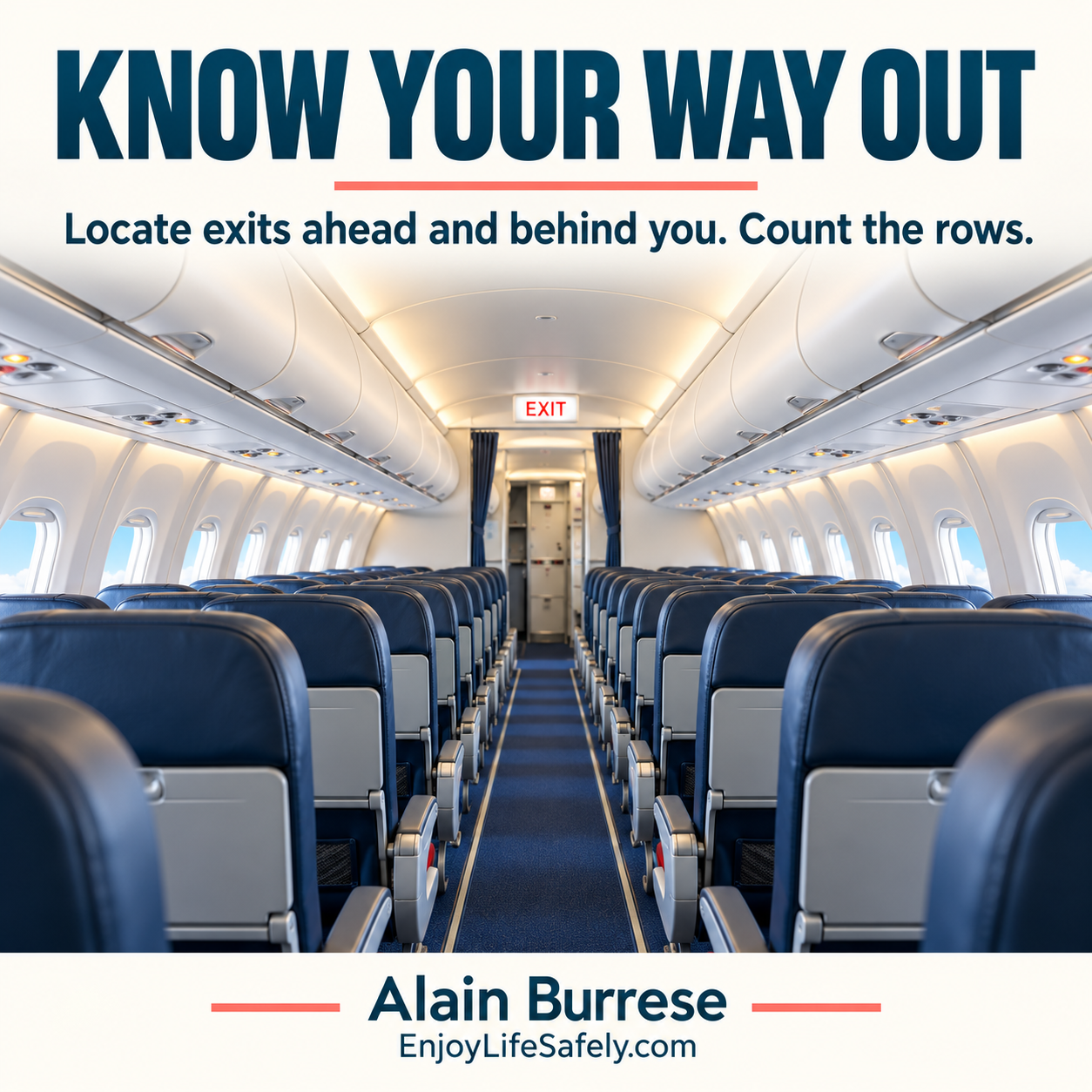
Once you’re seated, look for the exits ahead of you and behind you. Count the rows between your seat and those exits.
The FAA specifically recommends counting rows because smoke or darkness could make the exits difficult to see. During an evacuation, follow the crew’s directions to the nearest safe exit. That may be behind you.
This connects with something I teach in other safety programs: know your options before you need them.
Whether you’re in a restaurant, a hotel, a classroom, or an airplane, take a moment to understand how you could get out. Then return to enjoying what you’re doing.
If you or someone traveling with you may need help evacuating, discuss that with the airline and cabin crew before departure. Give people the opportunity to help you plan.
Keep Your Seat Belt Fastened While Seated
Some safety habits are so simple that we overlook their value.
Keeping your seat belt fastened is one of them.
The FAA recommends wearing it whenever you’re seated, with the belt low and snug across your hips. Unexpected turbulence is one reason to keep it buckled even when the seat belt sign is off.
You can read, watch a movie, talk, or sleep with your belt fastened. Once you sit back down after getting up, buckle it again.
It’s a small habit that takes almost no effort.
Make Yourself Ready to Move
When I travel, I want to be comfortable. I also want to be able to walk and move without my clothing or footwear getting in the way.
Choose shoes you can walk in comfortably and that stay securely on your feet. I recommend keeping them on during takeoff and landing. Stow your belongings properly and keep the space around your feet clear.
I also recommend being awake and attentive during takeoff and landing. Put your entertainment aside long enough to hear instructions and notice what’s happening around you.
You don’t have to sit there expecting trouble. Just give yourself a chance to recognize a problem and respond.
Keep Essential Items on Your Person
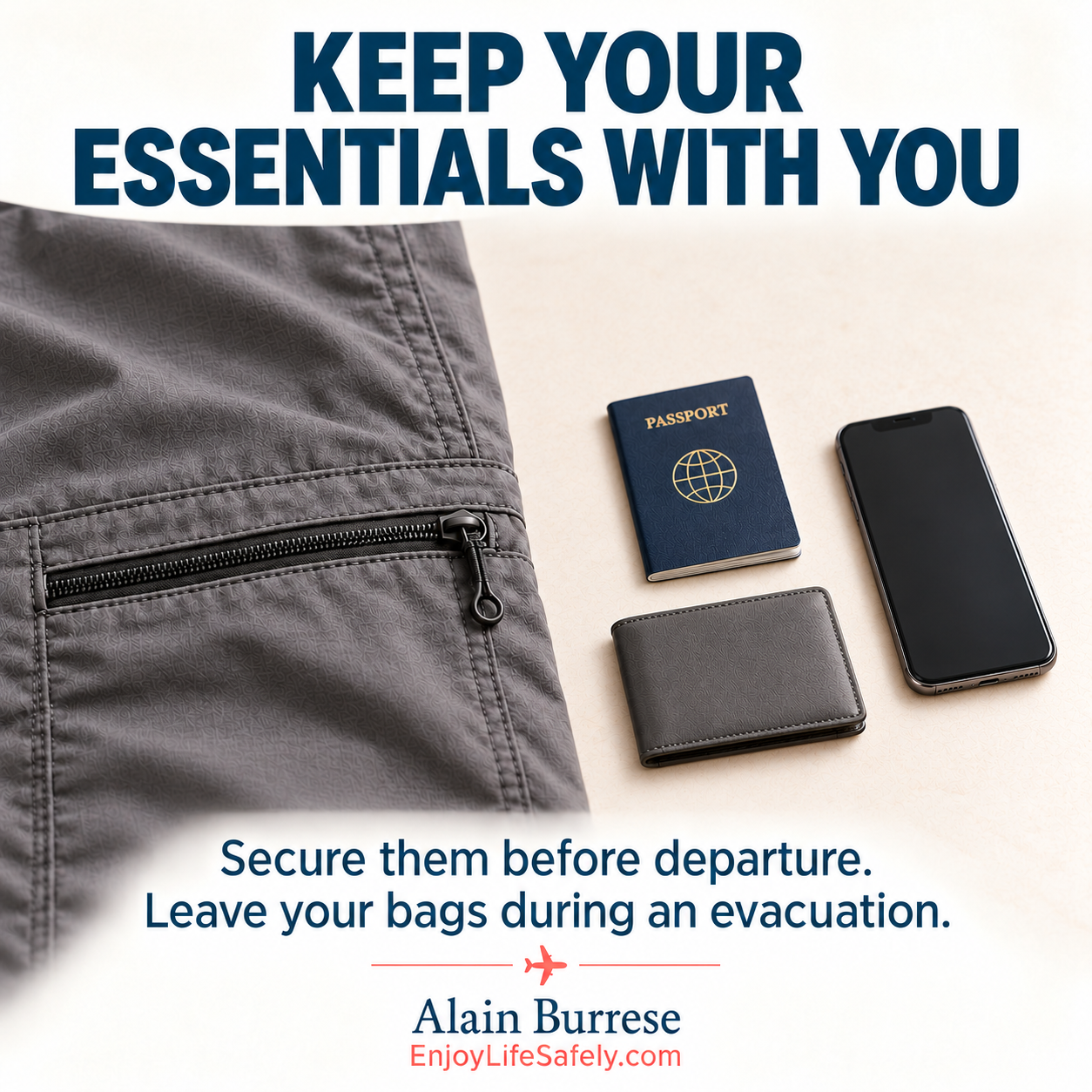
When I fly, I usually wear travel pants with zippered pockets. I keep my passport, wallet, and phone in those pockets so they stay secure and with me throughout the flight.
That’s convenient during an ordinary travel day. It also means that if I had to evacuate and leave my baggage behind, I would already have those important items with me.
A money belt or a travel pouch worn under your clothing is another option. Choose something comfortable that keeps your essentials secure without interfering with your seat belt or your ability to move.
The important part is getting organized before you need to act. Put those items in your pockets or wearable pouch before departure, rather than leaving them in a bag you might feel tempted to retrieve.
If an evacuation is ordered, don’t delay to transfer anything from your bags to your pockets. Having your essentials already on you can make things easier afterward, but getting out safely comes first.
Decide Ahead of Time: The Bags Stay Behind
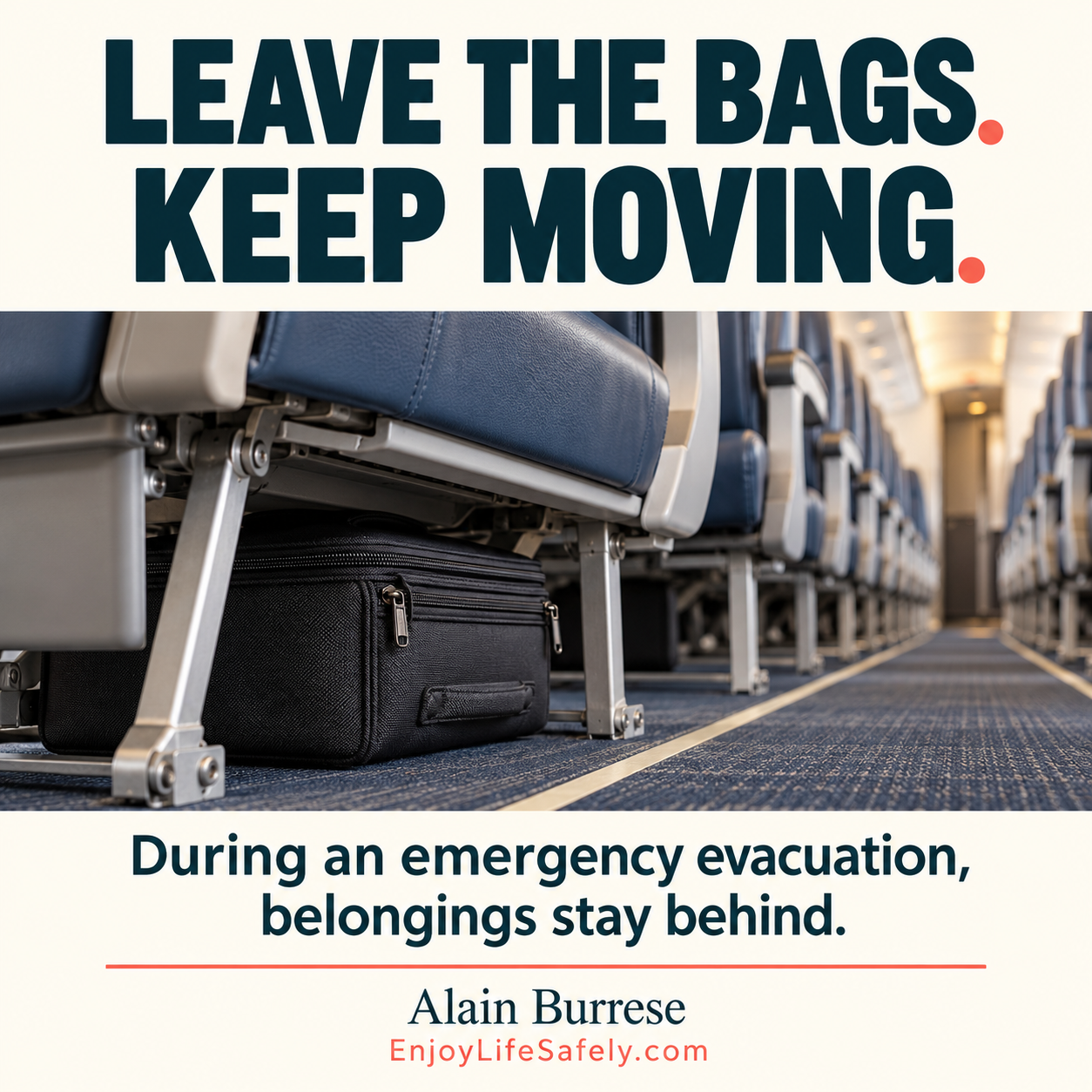
This is one point from Hanson’s travel chapter that deserves emphasis: during an emergency evacuation, leave your belongings.
The FAA gives the same direction. Retrieving carry-on items can impede an evacuation and put other passengers at risk.
That means leaving the suitcase in the overhead bin. It means leaving the backpack under the seat. It means getting out instead of stopping to collect your things.
Think about that decision now, while you’re sitting comfortably reading this. Make it before stress, confusion, and concern about losing something valuable enter the picture.
Your computer may contain important work. Replacing your passport may be a headache. Losing your belongings may create a considerable expense.
None of those things is worth blocking someone’s escape.
And keep your phone put away while evacuating. Your attention belongs on getting out and keeping the route clear.
Have a Simple Mental Plan
In my safety training, I encourage people to think through their options before an emergency happens. You can apply that same idea while flying.
After you sit down, briefly picture yourself responding to an evacuation command: release your seat belt, leave your belongings, follow the crew’s directions, and move toward a usable exit.
Then get back to your trip.
That brief mental review gives you something useful to draw on if you need it. You’ve already considered your first actions.
If an evacuation is ordered, follow instructions promptly. Once outside, move away from the airplane and keep clear of other people coming out.
Know What the Oxygen Masks Are For
If the oxygen masks deploy, follow the instructions given in the briefing and on the safety card. Put on your own mask before helping a child or another passenger. The reservoir bag may not inflate even when oxygen is flowing.
Helping yourself first makes it possible for you to continue helping someone else.
This is another reason to pay attention before departure. You want to recognize the equipment and understand what to do with it.
Include Your Electronics in Your Safety Planning
Phones, tablets, and portable chargers are part of travel now. Pack them thoughtfully.
Spare lithium batteries and power banks belong in your carry-on baggage, with terminals protected against short circuits. If your carry-on is checked at the gate, remove those items and keep them in the cabin. Check your airline’s current limits and rules before traveling.
If a device becomes unusually hot, swells, smokes, or burns, notify the flight crew immediately. Don’t wait to see whether it gets worse.
A Quick Check Before You Settle In
Before your next flight, take a moment to:
- Watch or listen to the safety briefing and read the safety card.
- Find exits ahead of you and behind you, and count the rows.
- Fasten your seat belt low and snug across your hips.
- Stow your belongings and keep your path clear.
- Secure your passport, wallet, and phone on your person.
- Make sure your traveling companions understand the basics.
- Remind yourself that bags stay behind during an evacuation.
Then relax and enjoy the flight.
I’m looking forward to the trips we have planned. Travel gives us opportunities to spend time with people we love, see new places, and create memories. I want to make the most of those opportunities.
A little preparation belongs in that picture. Give safety a few minutes of attention so you can spend the rest of your trip enjoying the experience.
Enjoy life safely.
Jason Hanson’s book, Spy Secrets That Can Save Your Life, particularly the travel safety chapter, helped prompt this article. Additional passenger safety guidance comes from the Federal Aviation Administration.